
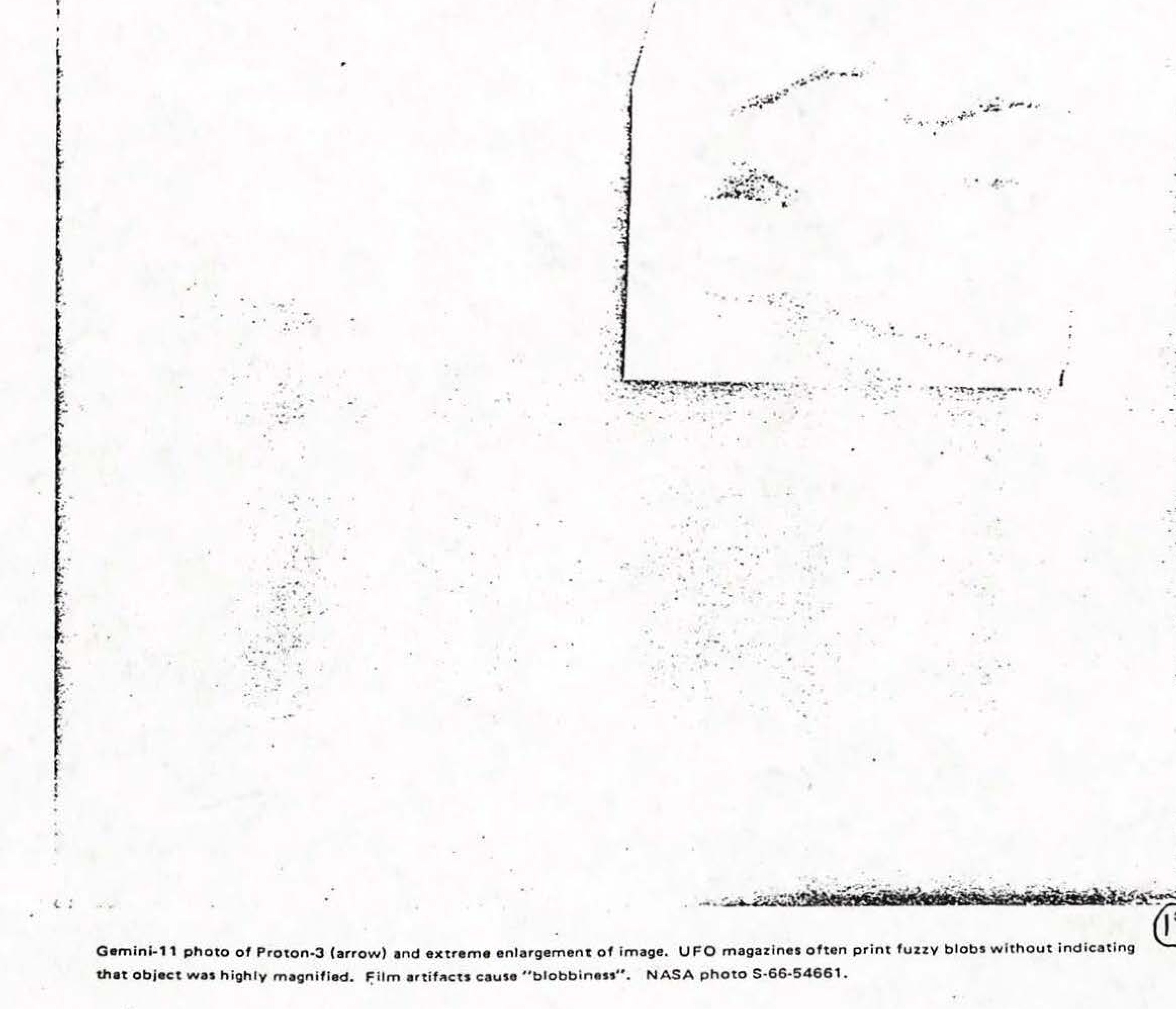
Gemini-11 photo of Proton-3 (arrow) and extreme enlargement of image. UFO magazines often print fuzzy blobs without indicating that object was highly magnified. Film artifacts cause "blobbiness". NASA photo S-66-54661.
photoRelated photos
A green file folder with a white label.
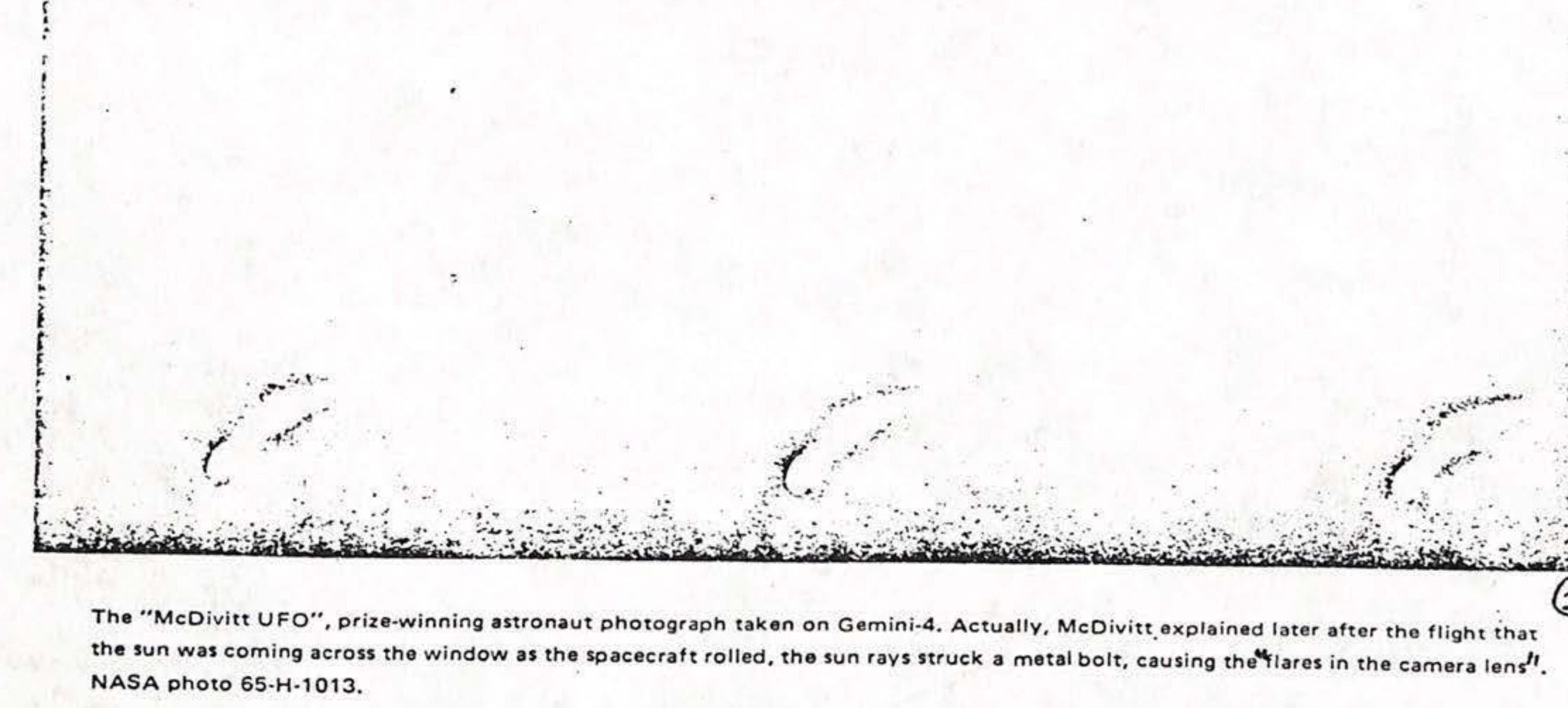
The "McDivitt UFO", prize-winning astronaut photograph taken on Gemini-4. Actually, McDivitt explained later after the flight that the sun was coming across the window as the spacecraft rolled, the sun rays struck a metal bolt, causing the flares in the camera lens. NASA photo 65-H-1013.
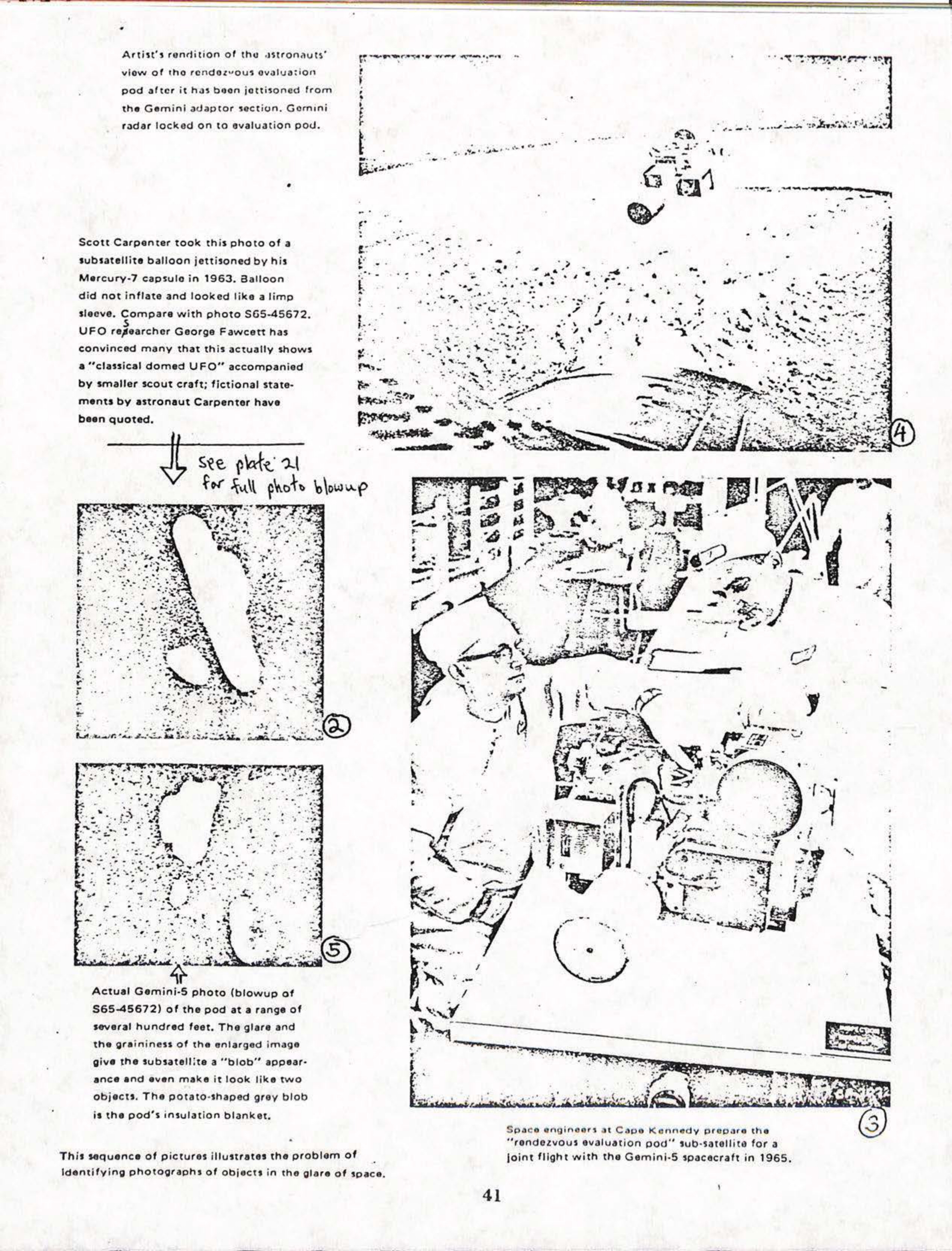
Artist's rendition of the astronauts' view of the rendezvous evaluation pod after it has been jettisoned from the Gemini adaptor section. Gemini radar locked on to evaluation pod.
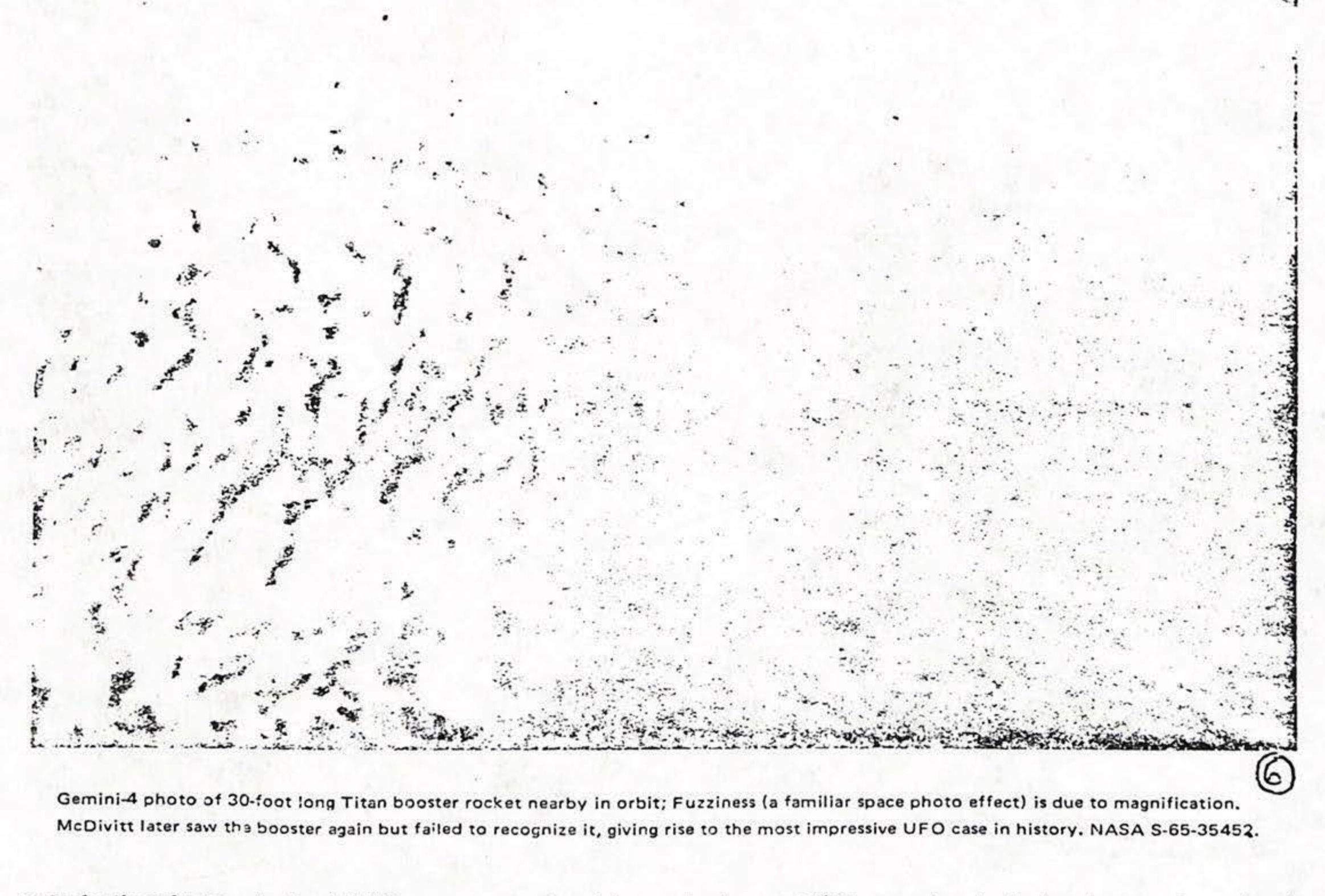
Gemini-4 photo of 30-foot long Titan booster rocket nearby in orbit; Fuzziness (a familiar space photo effect) is due to magnification. McDivitt later saw the booster again but failed to recognize it, giving rise to the most impressive UFO case in history. NASA S-65-35452.
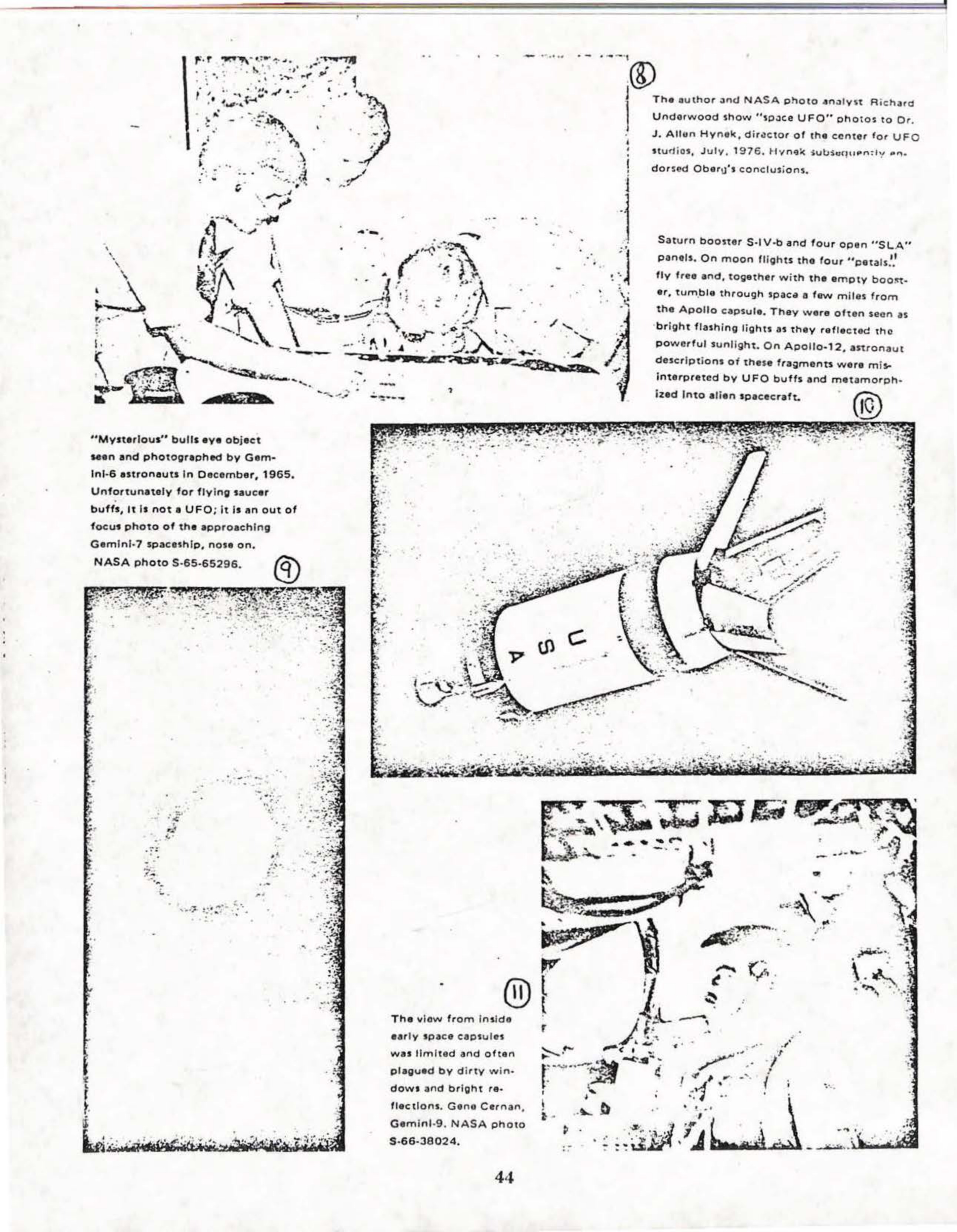
The author and NASA photo analyst Richard Underwood show "space UFO" photos to Dr. J. Allen Hynek, director of the center for UFO studios, July, 1976. Hynek subsequently endorsed Oberg's conclusions.
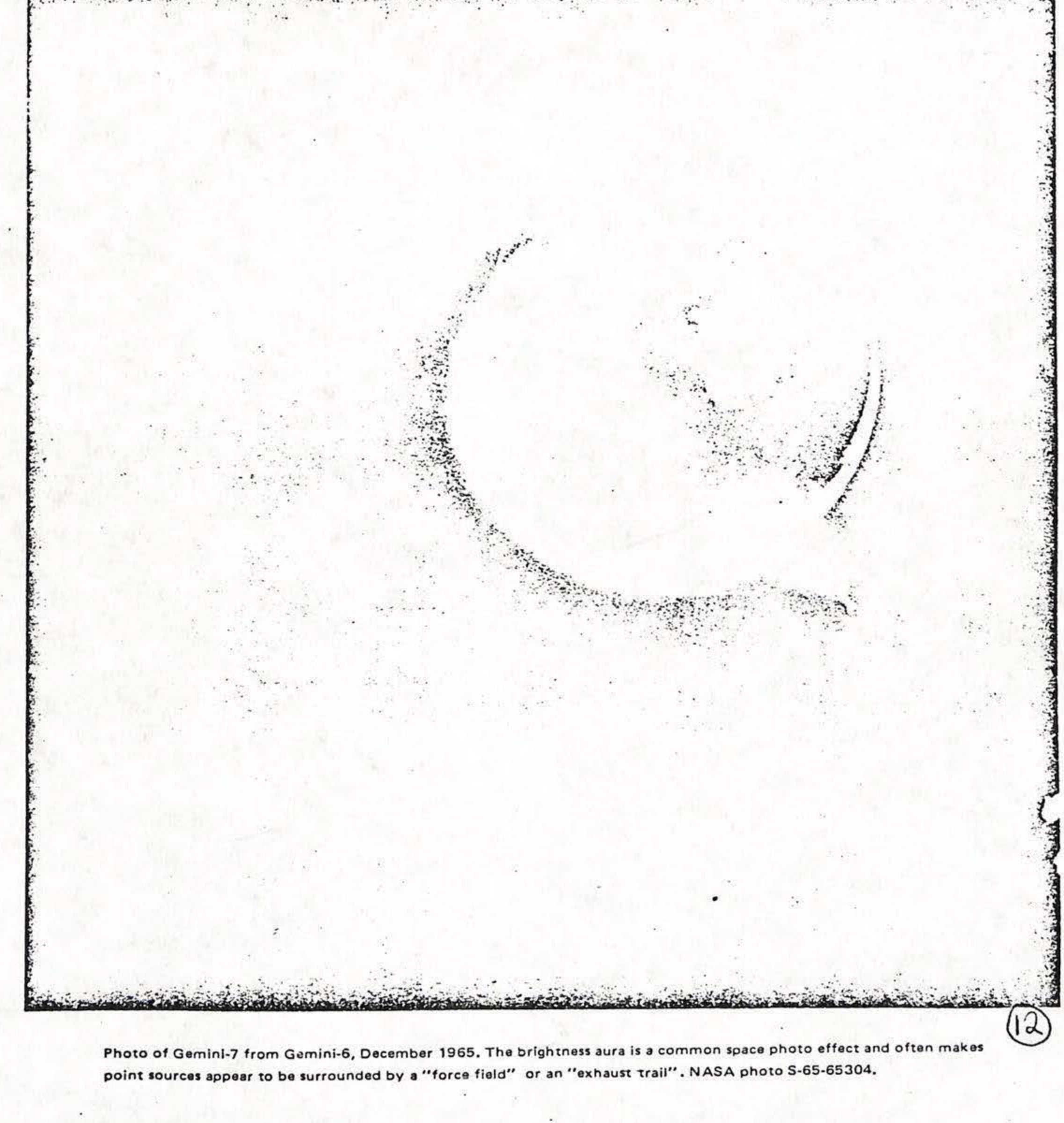
Photo of Gemini-7 from Gemini-6, December 1965. The brightness aura is a common space photo effect and often makes point sources appear to be surrounded by a "force field" or an "exhaust trail". NASA photo S-65-65304.
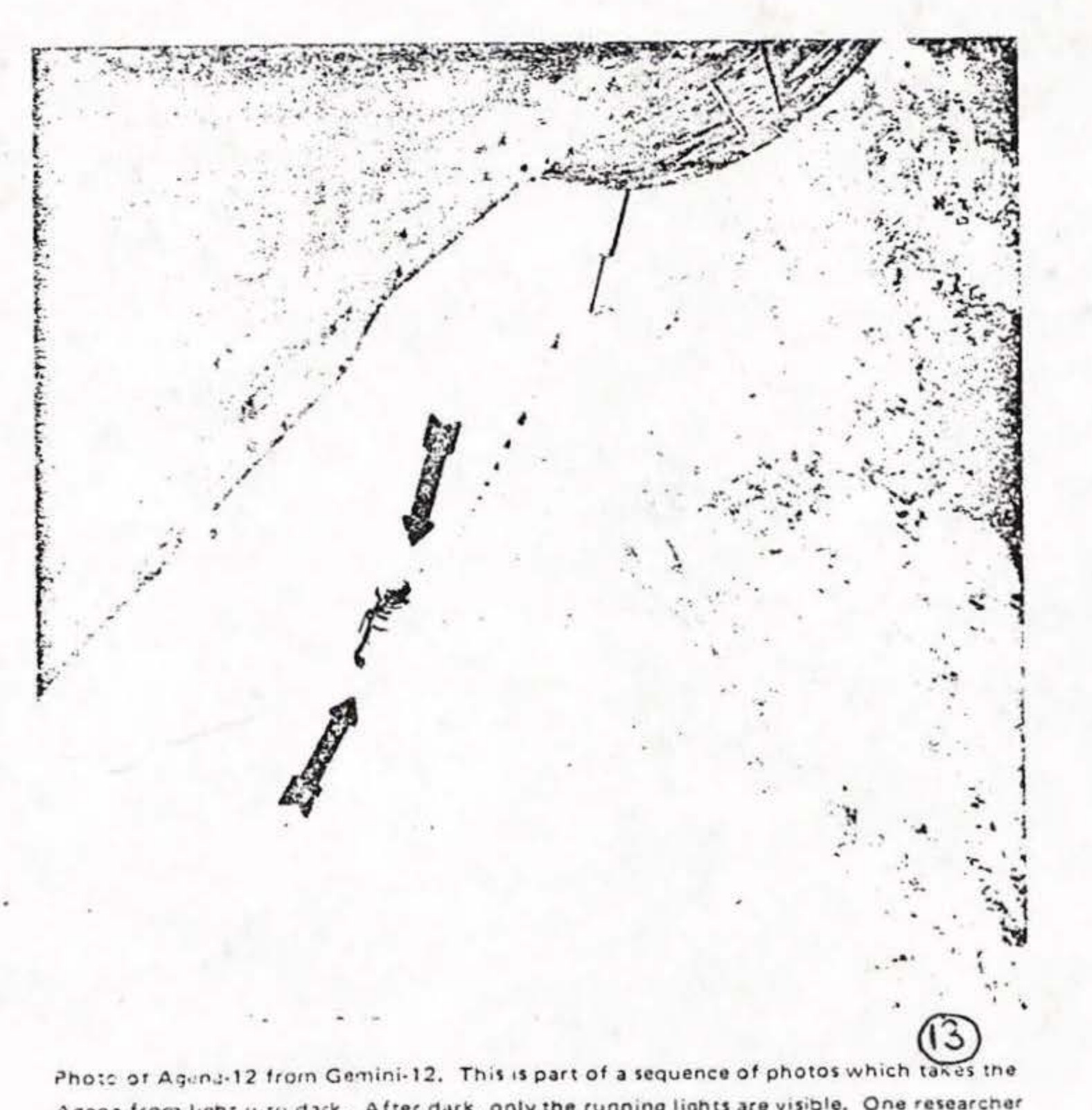
Photo of Agena-12 from Gemini-12. This is part of a sequence of photos which takes the Agena from light to dark. After dark, only the running lights are visible. One researcher has widely published this latter photograph as a "UFO", "said by NASA to be Agena tracking lights". NASA photo S-66-63101.
"Said to be ranging lights" on Gemini-12, according to Sandler. Compare with earlier photo showing Agena in the sunlight. Deliberate slanting of evidence.