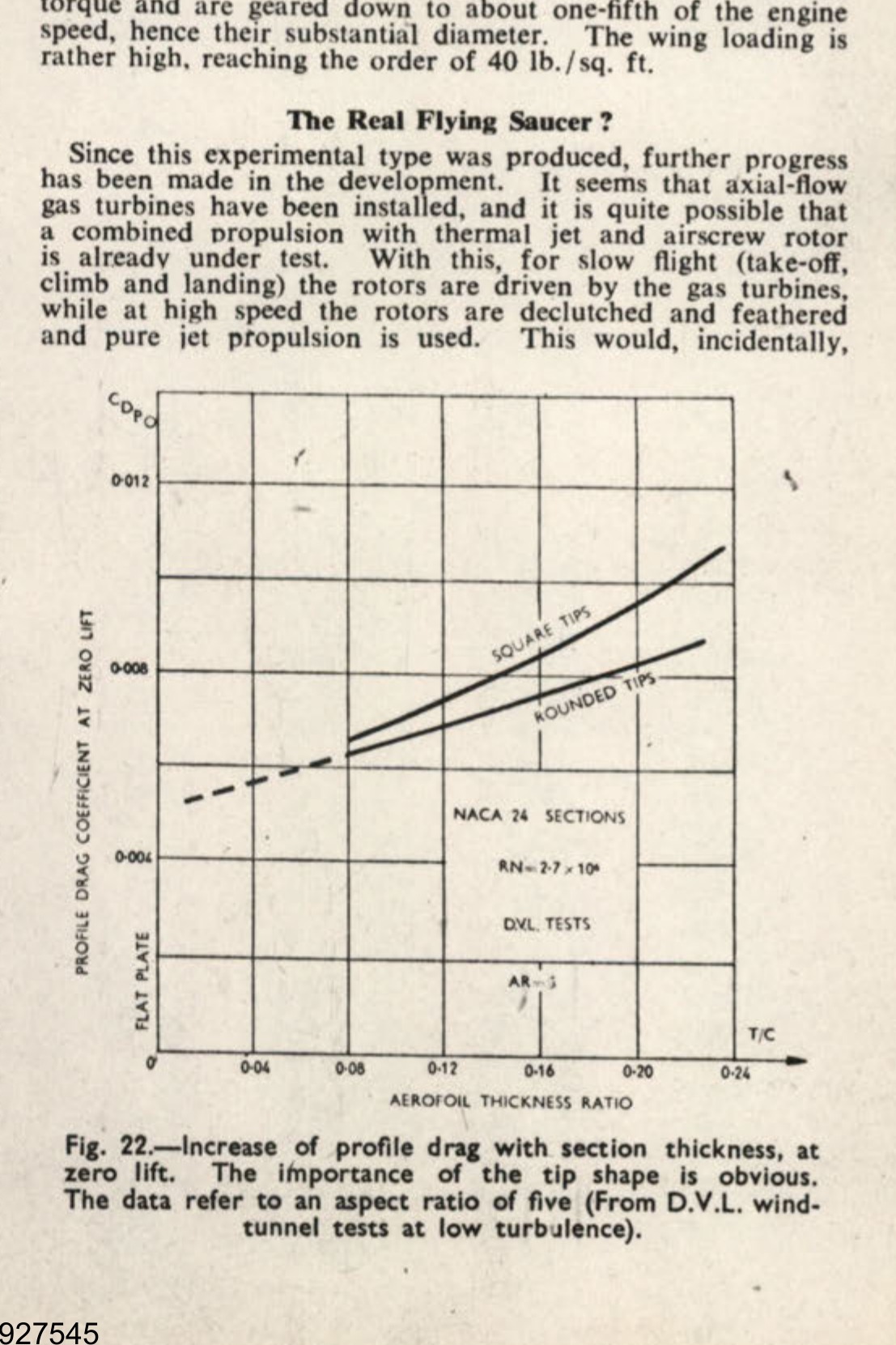
Fig. 22. Increase of profile drag with section thickness, at zero lift. The importance of the tip shape is obvious. The data refer to an aspect ratio of five (From D.V.L. wind-tunnel tests at low turbulence).

Fig. 22. Increase of profile drag with section thickness, at zero lift. The importance of the tip shape is obvious. The data refer to an aspect ratio of five (From D.V.L. wind-tunnel tests at low turbulence).

Related photos

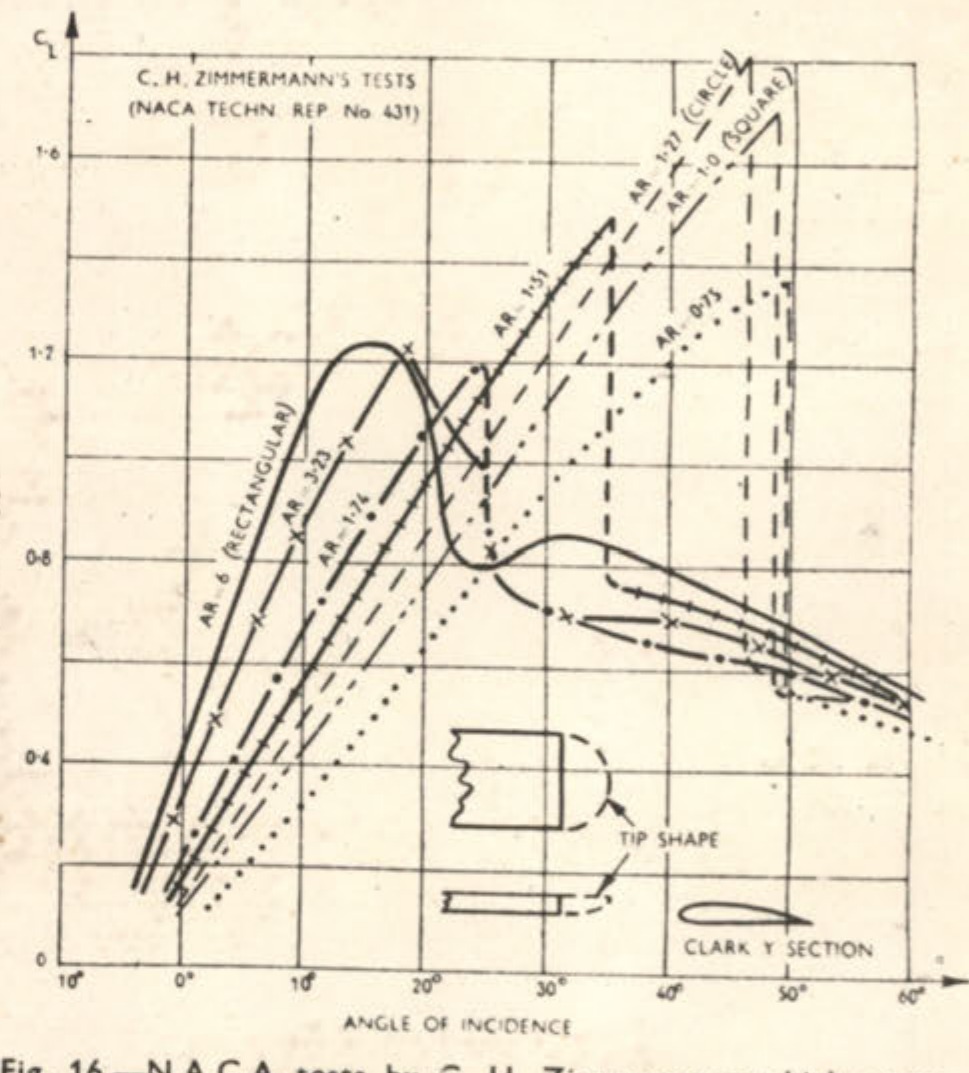
Fig. 16.-N.A.C.A. tests by C. H. Zimmermann which prove the extraordinary stalling qualities of disc wings.
Chart· p.41· Air Materiel Command (AMC)

Fig. 16.-N.A.C.A. tests by C. H. Zimmermann which prove the extraordinary stalling qualities of disc wings.

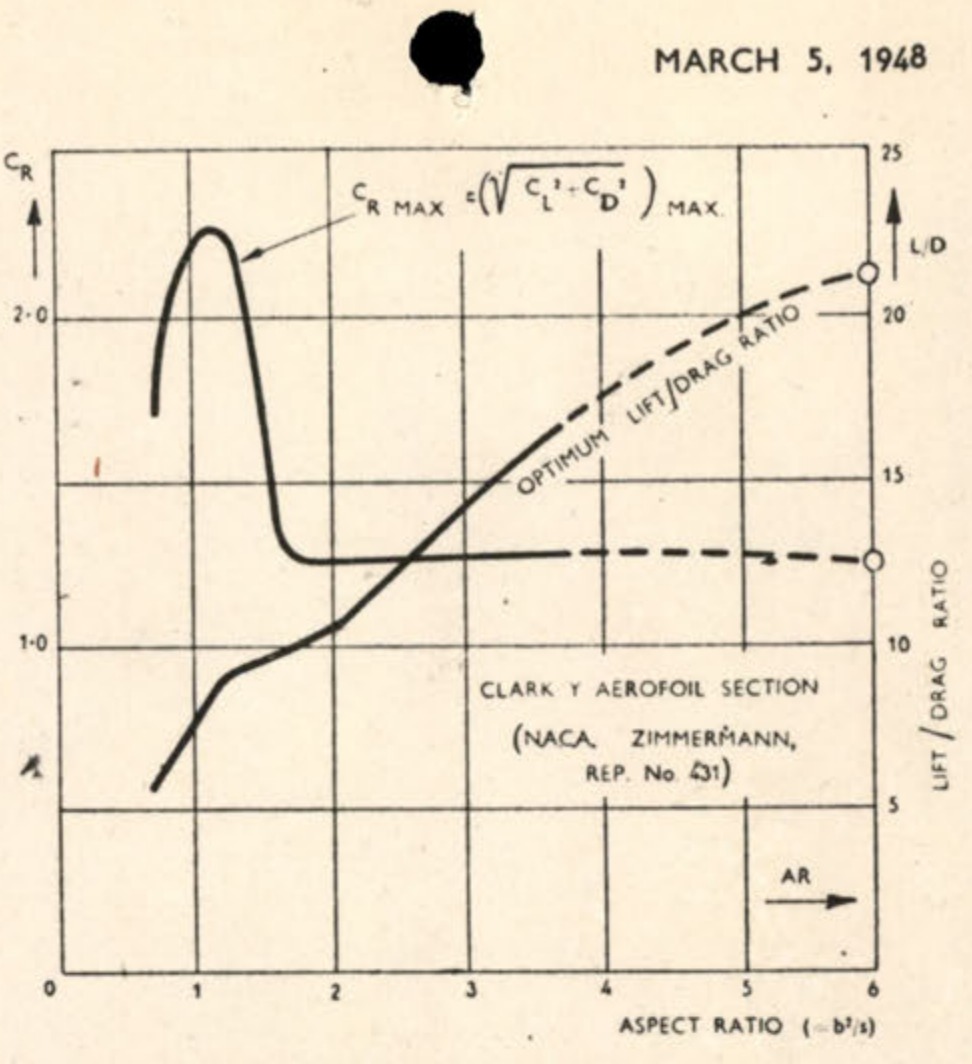
18. Further results from Zimmermann's tests shown here also indicate the advantages to be gained from disc wings.
Chart· p.42· Air Materiel Command (AMC)

18. Further results from Zimmermann's tests shown here also indicate the advantages to be gained from disc wings.

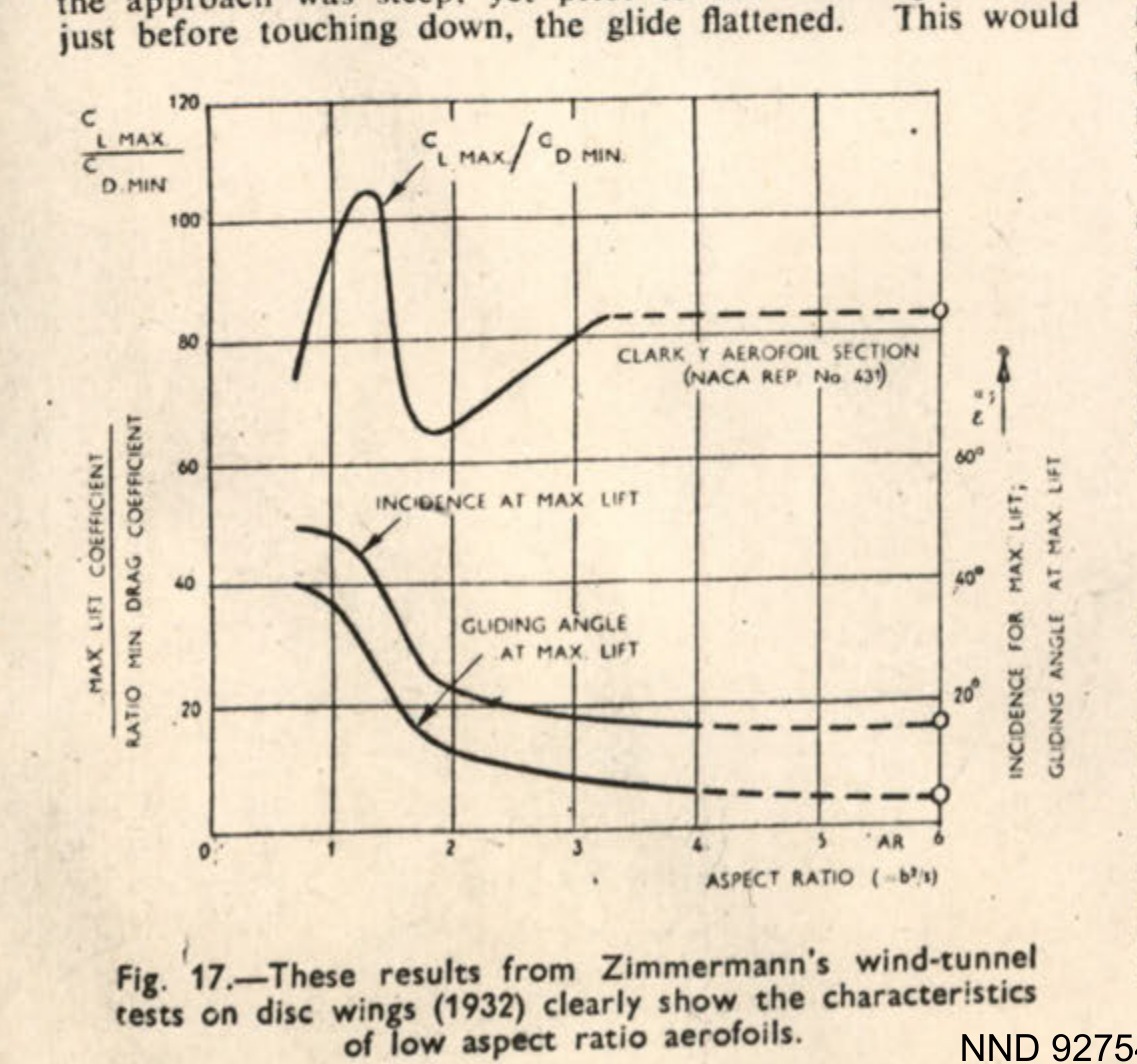
Fig. 17. These results from Zimmermann's wind-tunnel tests on disc wings (1932) clearly show the characteristics of low aspect ratio aerofoils.
Chart· p.42· Air Materiel Command (AMC)

Fig. 17. These results from Zimmermann's wind-tunnel tests on disc wings (1932) clearly show the characteristics of low aspect ratio aerofoils.

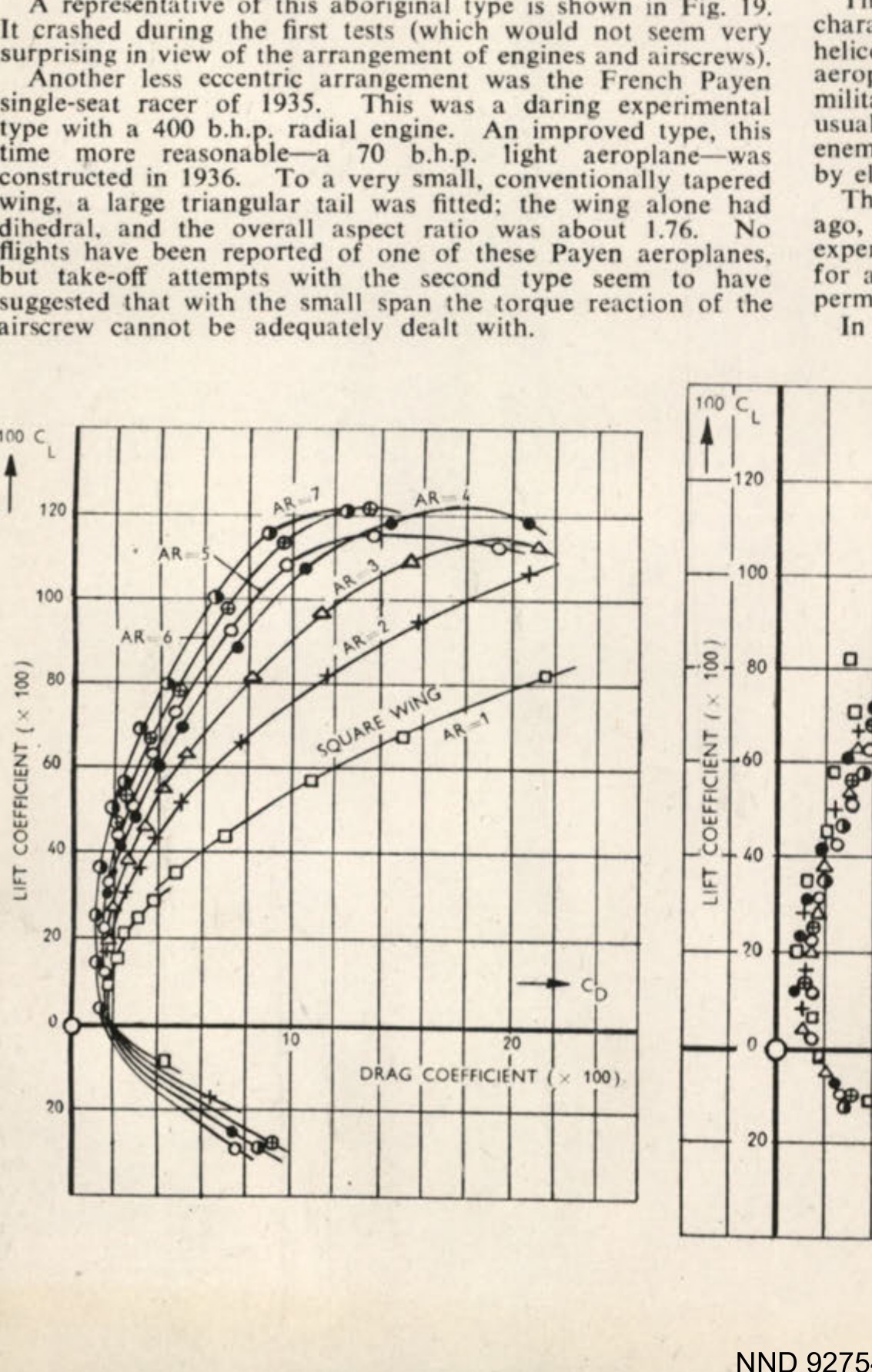
Chart showing lift coefficient vs drag coefficient for various aspect ratios (AR).
Chart· p.43· Air Materiel Command (AMC)

Chart showing lift coefficient vs drag coefficient for various aspect ratios (AR).

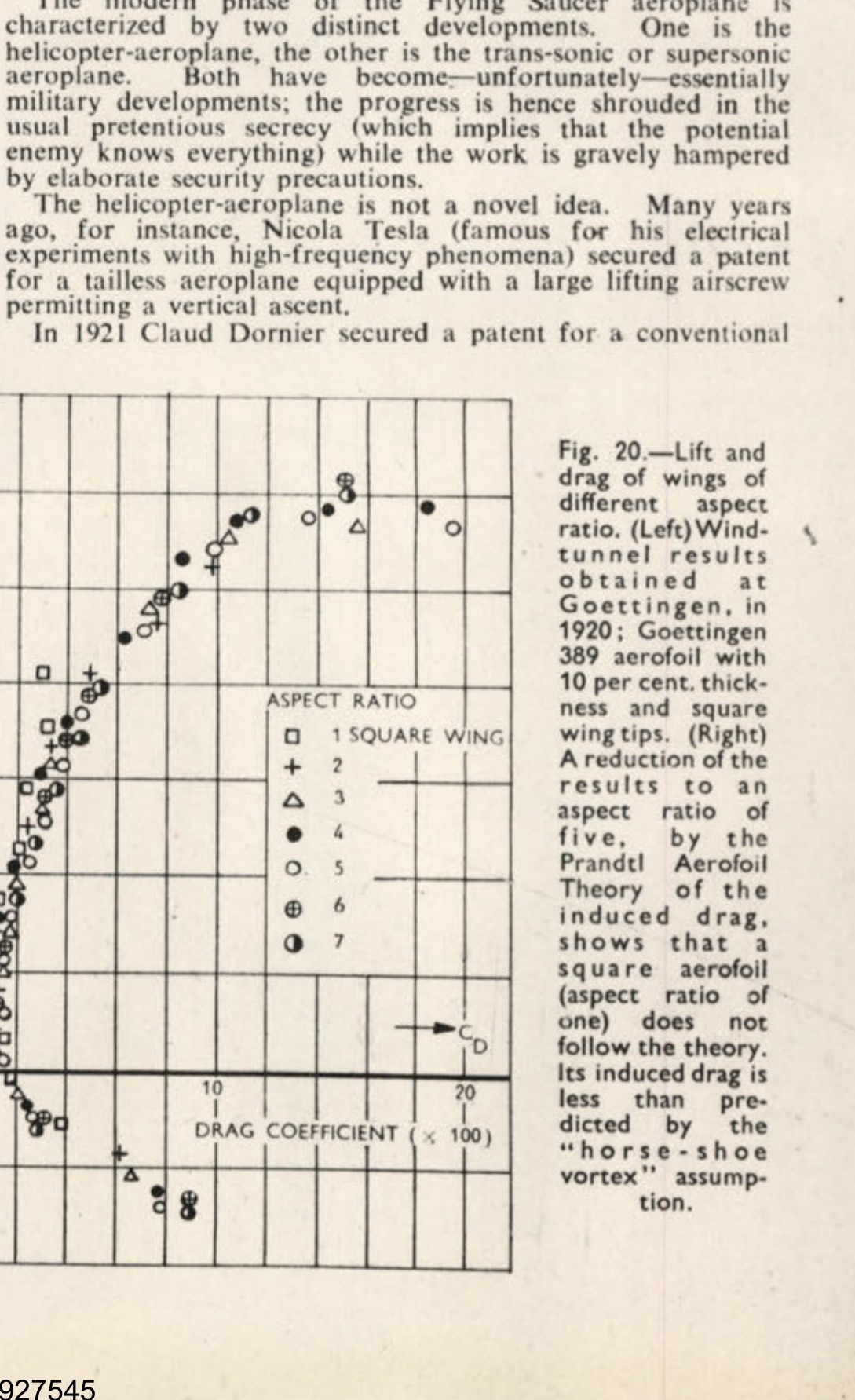
Fig. 20. Lift and drag of wings of different aspect ratio. (Left) Wind-tunnel results obtained at Goettingen, in 1920; Goettingen 389 aerofoil with 10 per cent. thickness and square wing tips. (Right) A reduction of the results to an aspect ratio of five, by the Prandtl Aerofoil Theory of the induced drag, shows that a square aerofoil (aspect ratio of one) does not follow the theory. Its induced drag is less than predicted by the "horse-shoe vortex" assumption.
Chart· p.43· Air Materiel Command (AMC)

Fig. 20. Lift and drag of wings of different aspect ratio. (Left) Wind-tunnel results obtained at Goettingen, in 1920; Goettingen 389 aerofoil with 10 per cent. thickness and square wing tips. (Right) A reduction of the results to an aspect ratio of five, by the Prandtl Aerofoil Theory of the induced drag, shows that a square aerofoil (aspect ratio of one) does not follow the theory. Its induced drag is less than predicted by the "horse-shoe vortex" assumption.

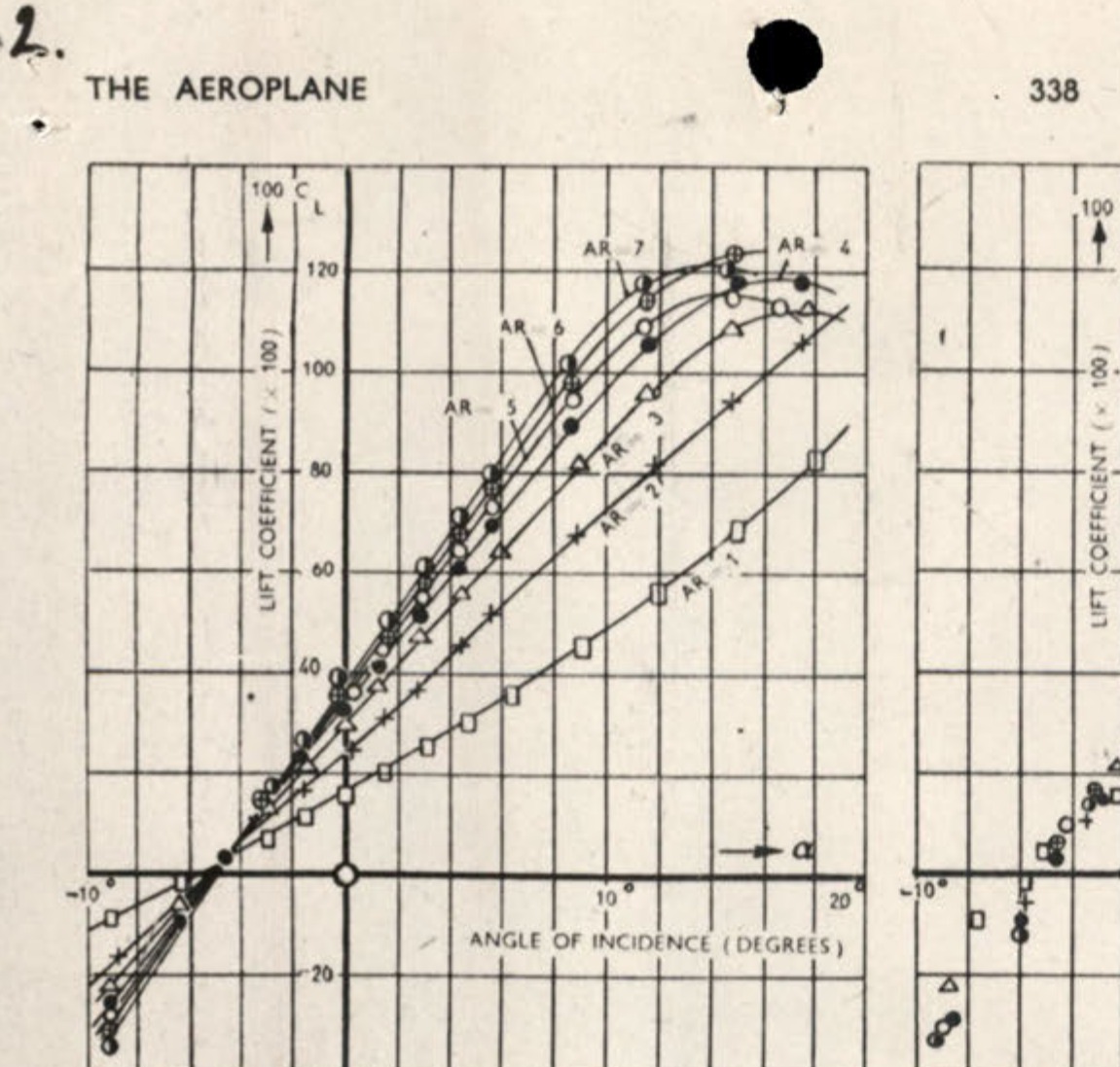
Chart showing lift coefficient vs angle of incidence for various aspect ratios (AR).
Chart· p.44· Air Materiel Command (AMC)

Chart showing lift coefficient vs angle of incidence for various aspect ratios (AR).

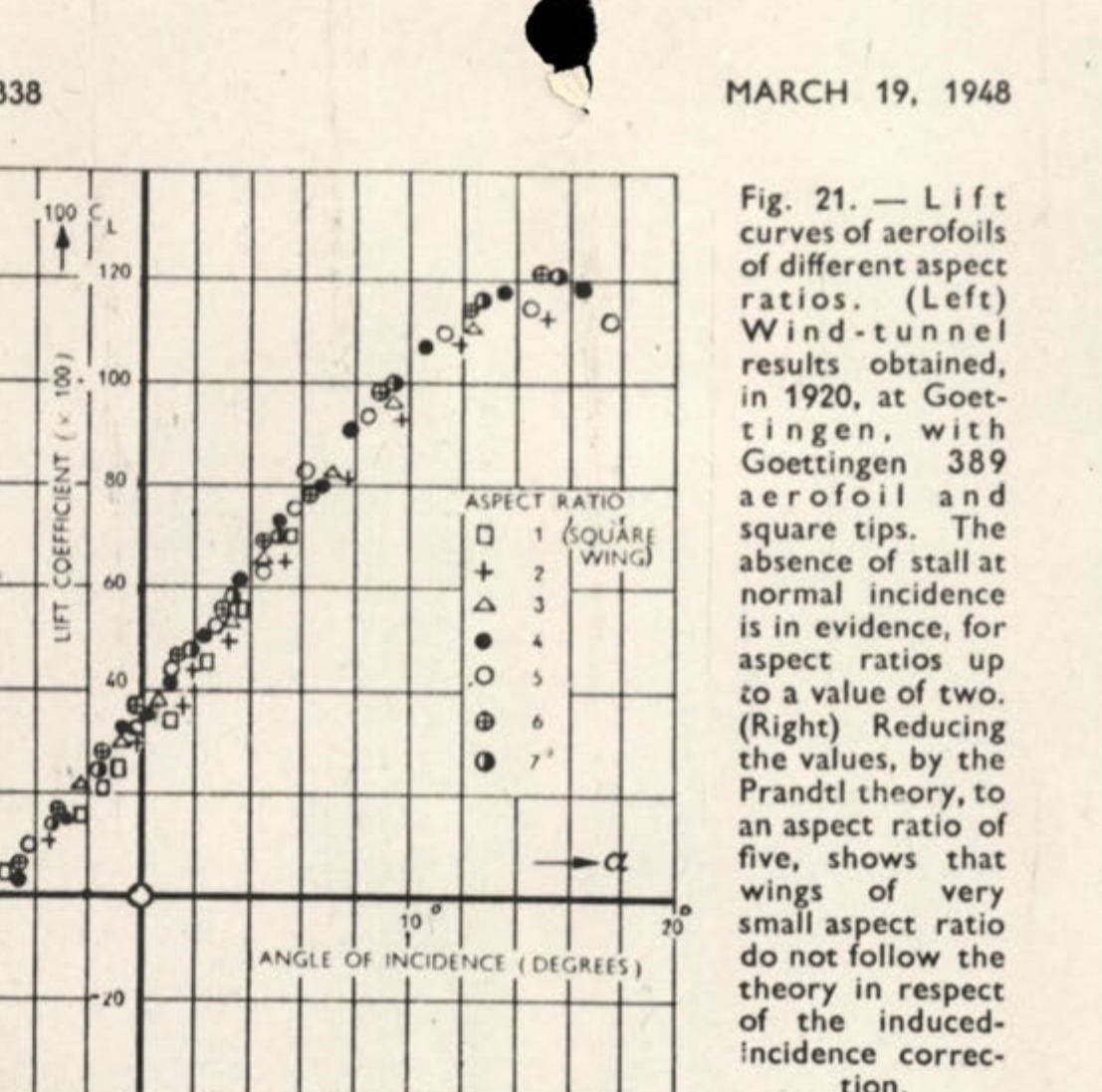
Fig. 21. Lift curves of aerofoils of different aspect ratios. (Left) Wind-tunnel results obtained, in 1920, at Goettingen, with Goettingen 389 aerofoil and square tips. The absence of stall at normal incidence is in evidence, for aspect ratios up to a value of two. (Right) Reducing the values, by the Prandtl theory, to an aspect ratio of five, shows that wings of very small aspect ratio do not follow the theory in respect of the induced-incidence correction.
Chart· p.44· Air Materiel Command (AMC)

Fig. 21. Lift curves of aerofoils of different aspect ratios. (Left) Wind-tunnel results obtained, in 1920, at Goettingen, with Goettingen 389 aerofoil and square tips. The absence of stall at normal incidence is in evidence, for aspect ratios up to a value of two. (Right) Reducing the values, by the Prandtl theory, to an aspect ratio of five, shows that wings of very small aspect ratio do not follow the theory in respect of the induced-incidence correction.

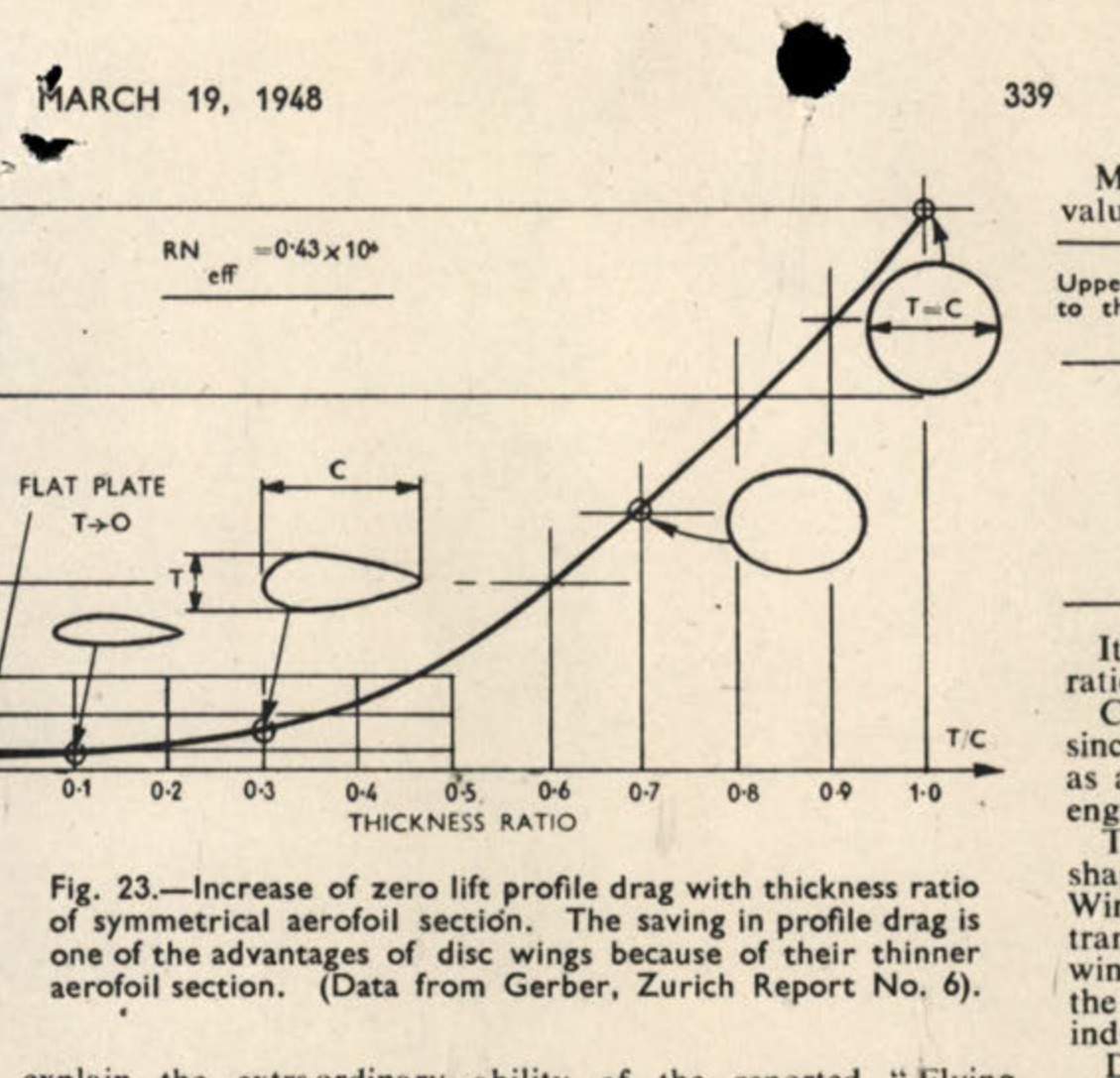
Fig. 23. Increase of zero lift profile drag with thickness ratio of symmetrical aerofoil section. The saving in profile drag is one of the advantages of disc wings because of their thinner aerofoil section. (Data from Gerber, Zurich Report No. 6).
Chart· p.45· Air Materiel Command (AMC)

Fig. 23. Increase of zero lift profile drag with thickness ratio of symmetrical aerofoil section. The saving in profile drag is one of the advantages of disc wings because of their thinner aerofoil section. (Data from Gerber, Zurich Report No. 6).