
USAF Air Intelligence Division Study No. 203
USAF Air Intelligence Division Study No. 203, dated 10 December 1948, analyzes flying object incidents in the U.S. It discusses patterns, observer credibility, object shapes, and considers both domestic and foreign (Soviet) origins for the phenomena.
Generated from extracted text. Verify important claims against the original document.
Related documents
Files connected by shared people, places, and events — and by appearing together in our cross-document analysis.
- pdfUSAF Air Intelligence Report 100-203-79tscheranowsky · dr. guenther bock · william rhoads
- pdfUSAF Project SIGN filetscheranowsky · portland, oregon · phoenix, arizona
- pdf38_143685_box7_Incident_Summaries_1-100kenneth arnold · ohio · oregon
- pdfDOW-UAP-D087, U.S. Air Force Analysis of Flying Objects in the United States, 1-100oregon · portland, oregon · usaf
- pdfFBI File 62-83894ohio · u.s. weather bureau · air force
- pdfDOW-UAP-D088, U.S. Air Force Analysis of Flying Objects in the United States, 101-172washington, d. c. · usaf · v-2
Extracted images
Images flagged by the classifier as photographs, maps or sketches.
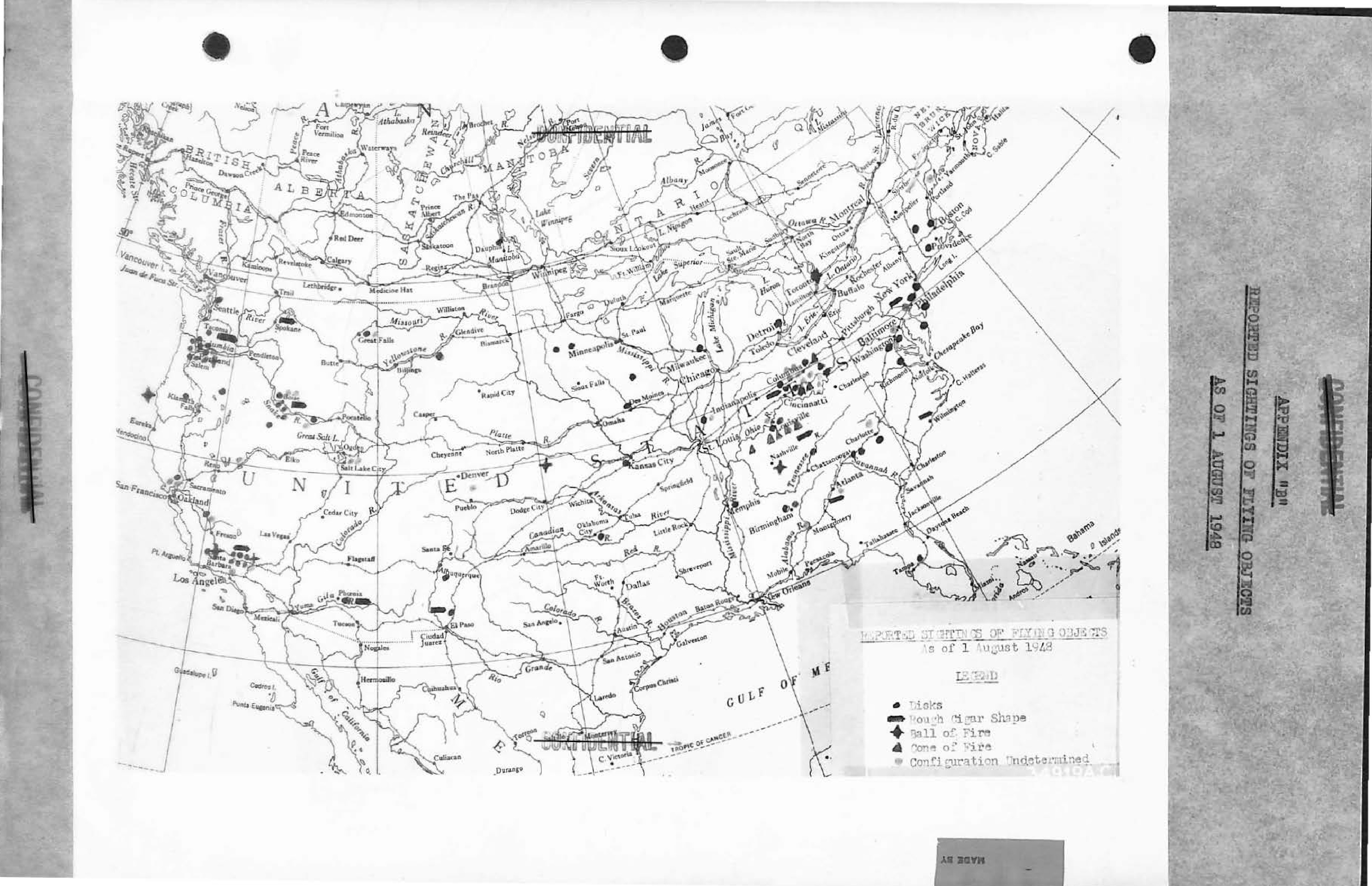
Map of North America showing reported sightings of flying objects as of 1 August 1948.

Fig. 1

Fig. 2
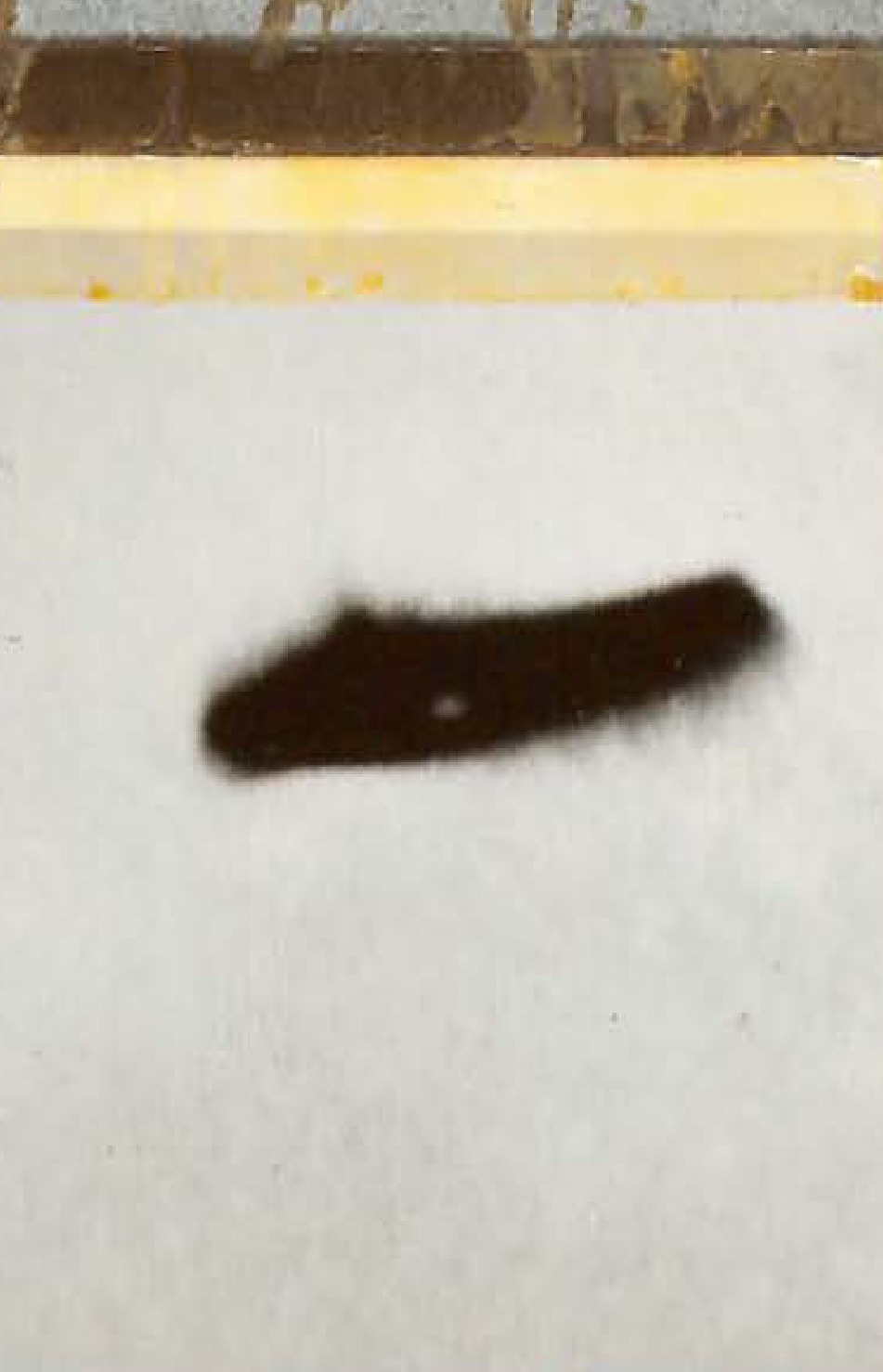
Fig. 3
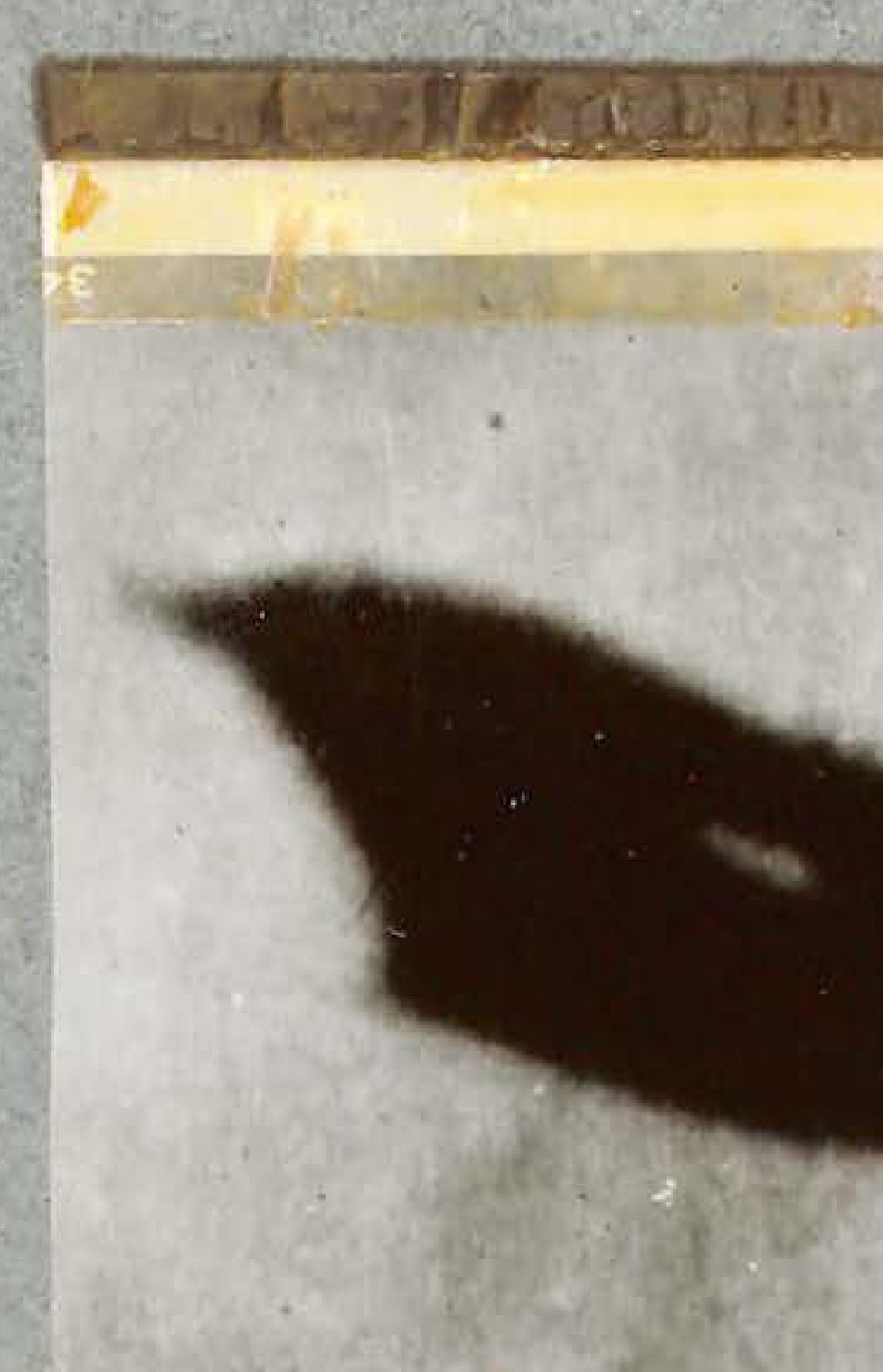
Fig. 4
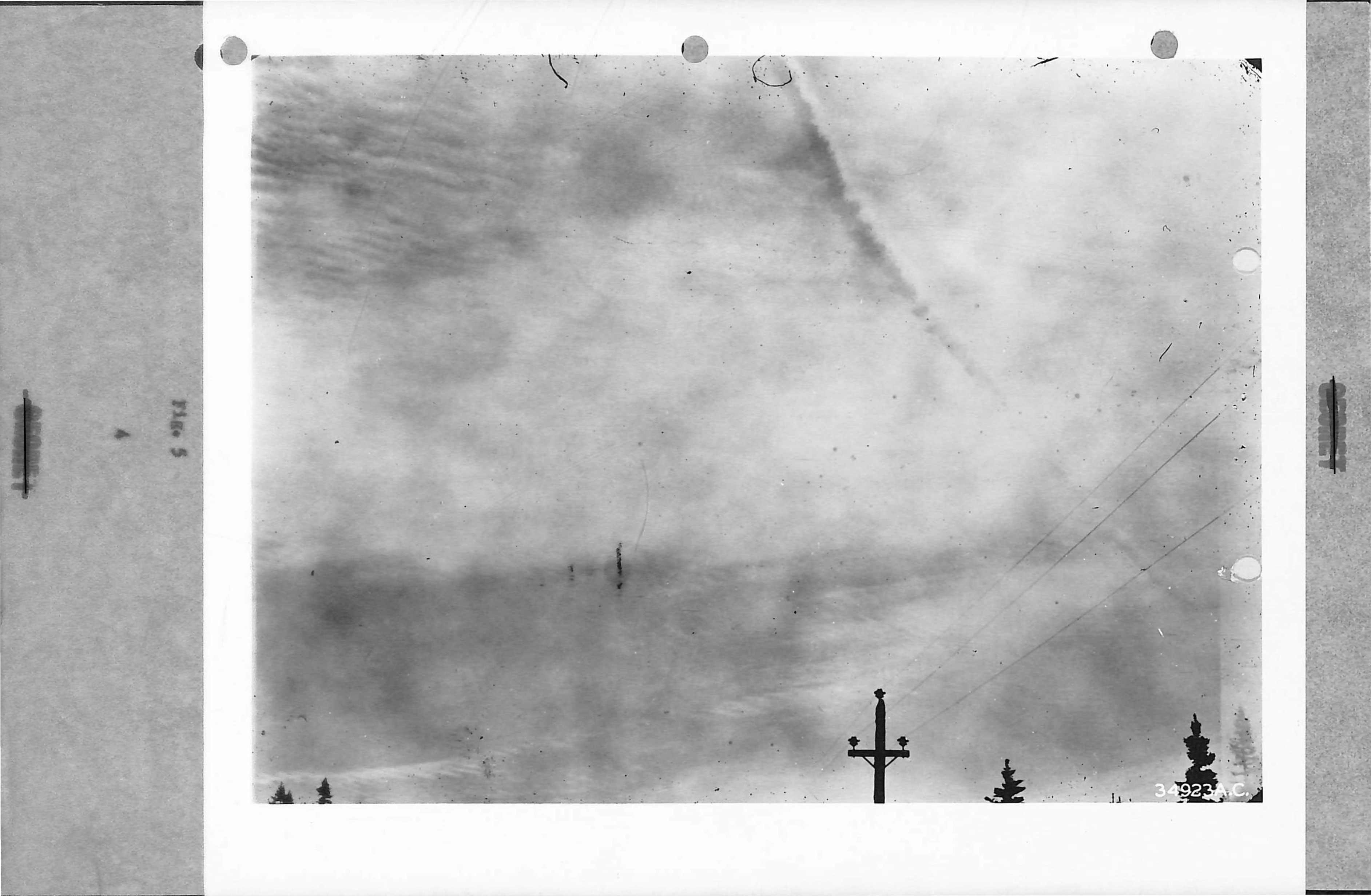
Fig. 5 - Trail in cloudy sky.
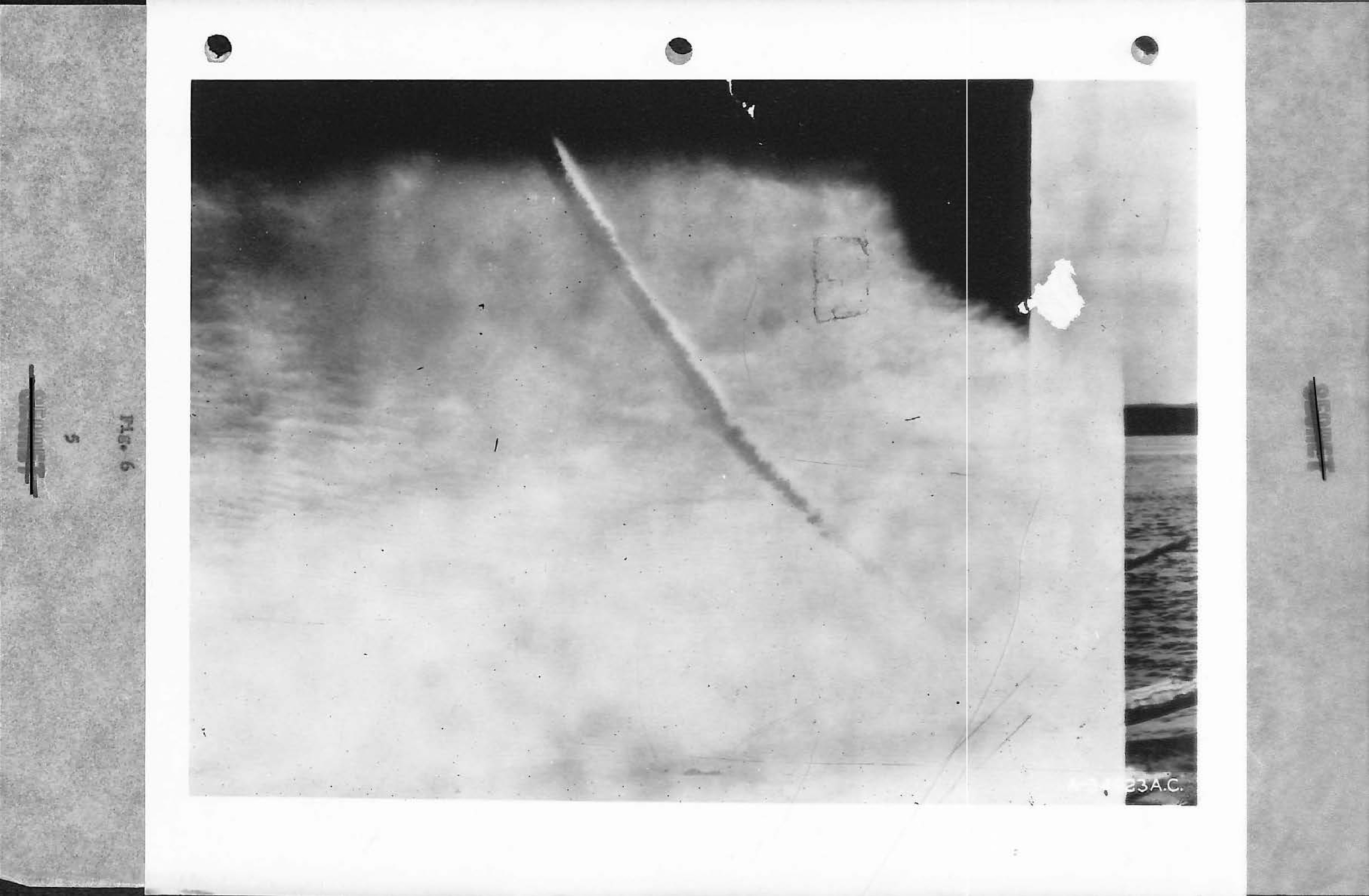
Fig. 6 - Trail in cloudy sky.
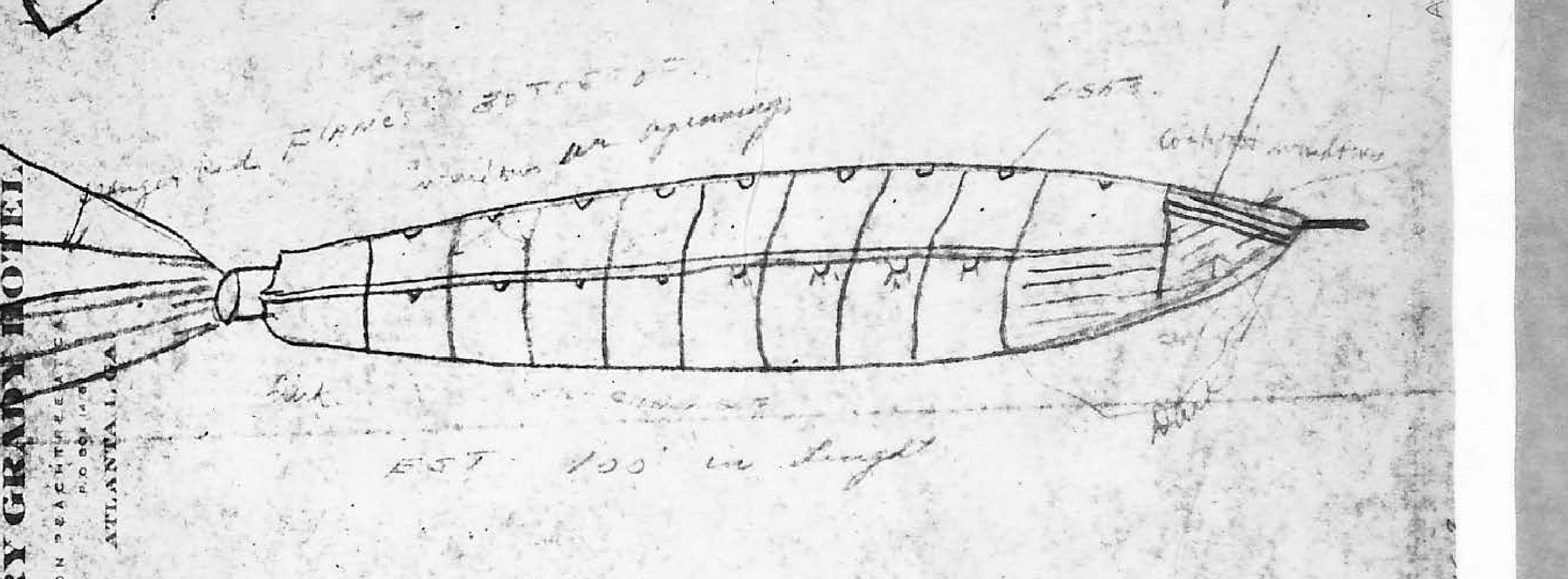
Sketch of a long, cylindrical object with a tail flame and windows, drawn on hotel stationery.
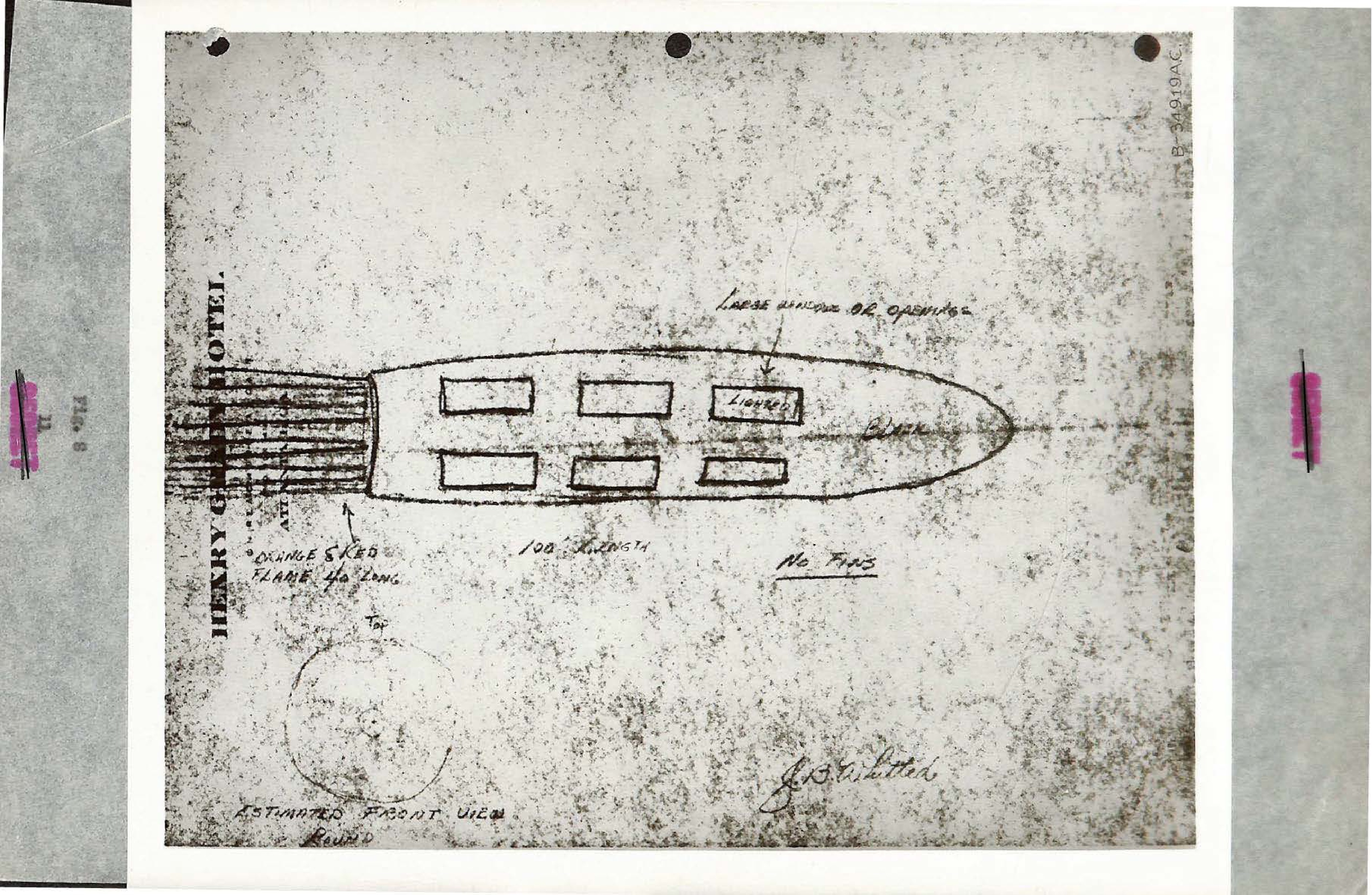
Photograph of a sketch of a cylindrical object with windows and a tail flame.
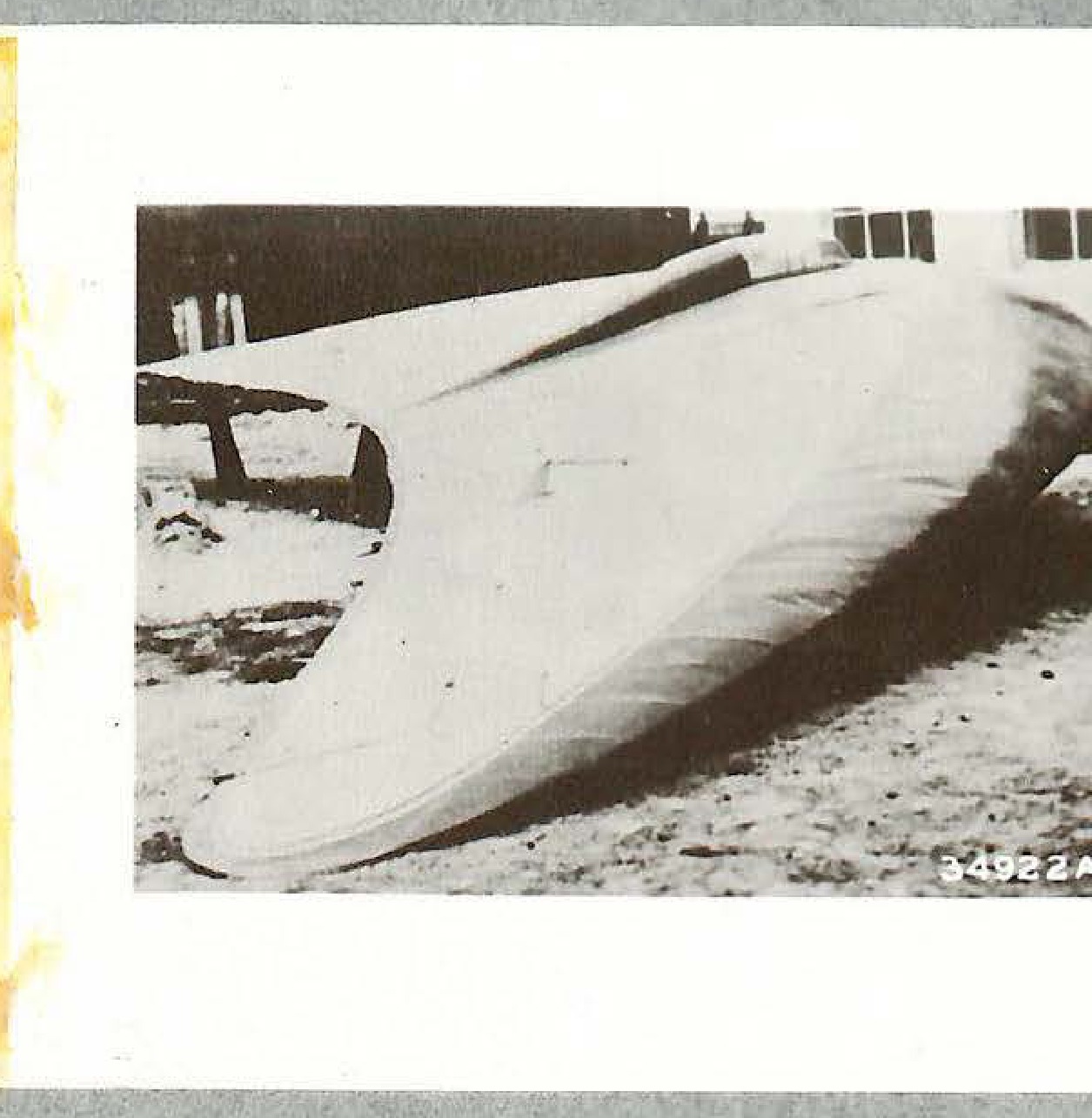
Photograph of a Horten glider on the ground. Number on photo: 34922A.C.
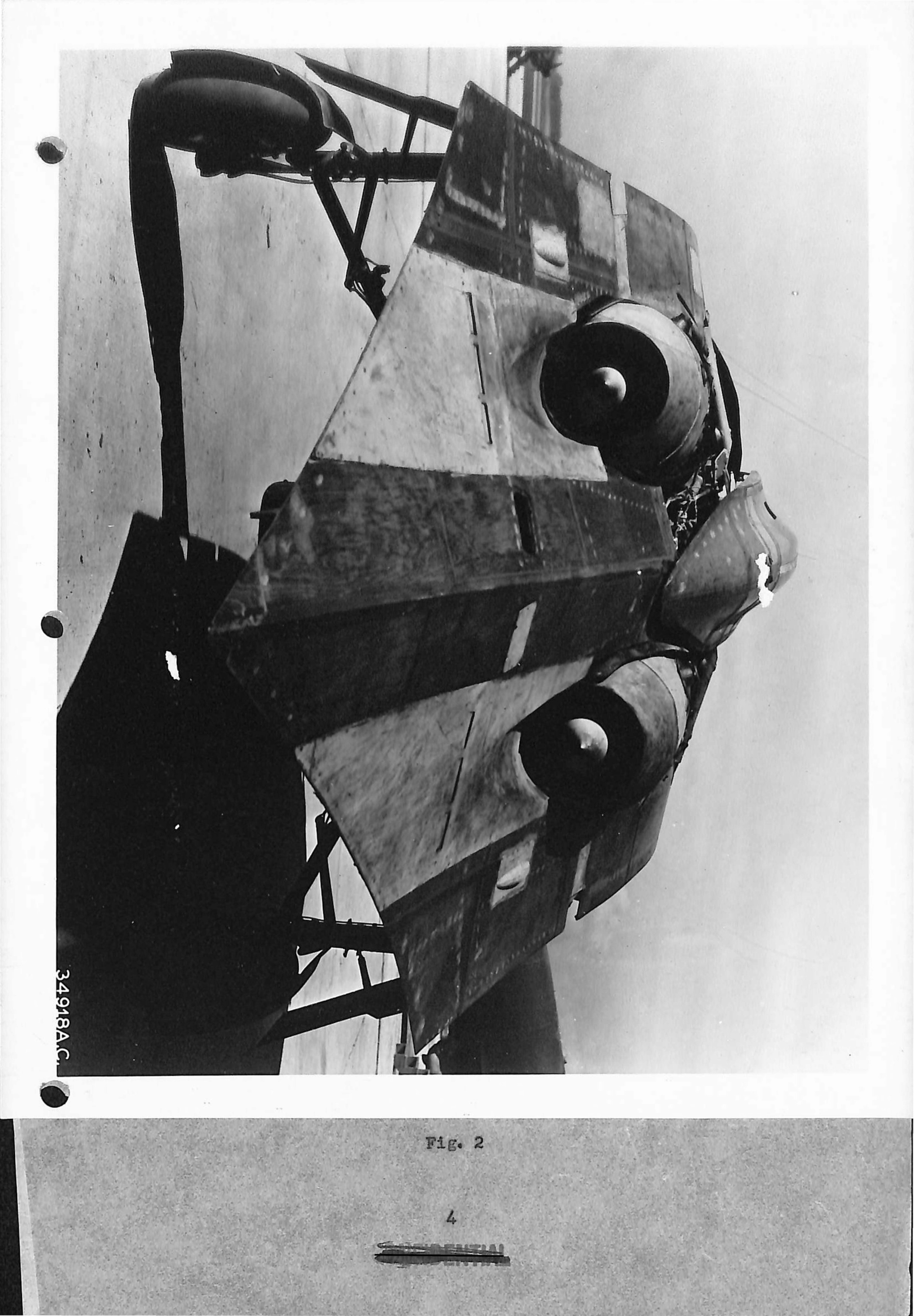
Photograph of the Horten 229 flying wing aircraft, showing the twin jet engines.
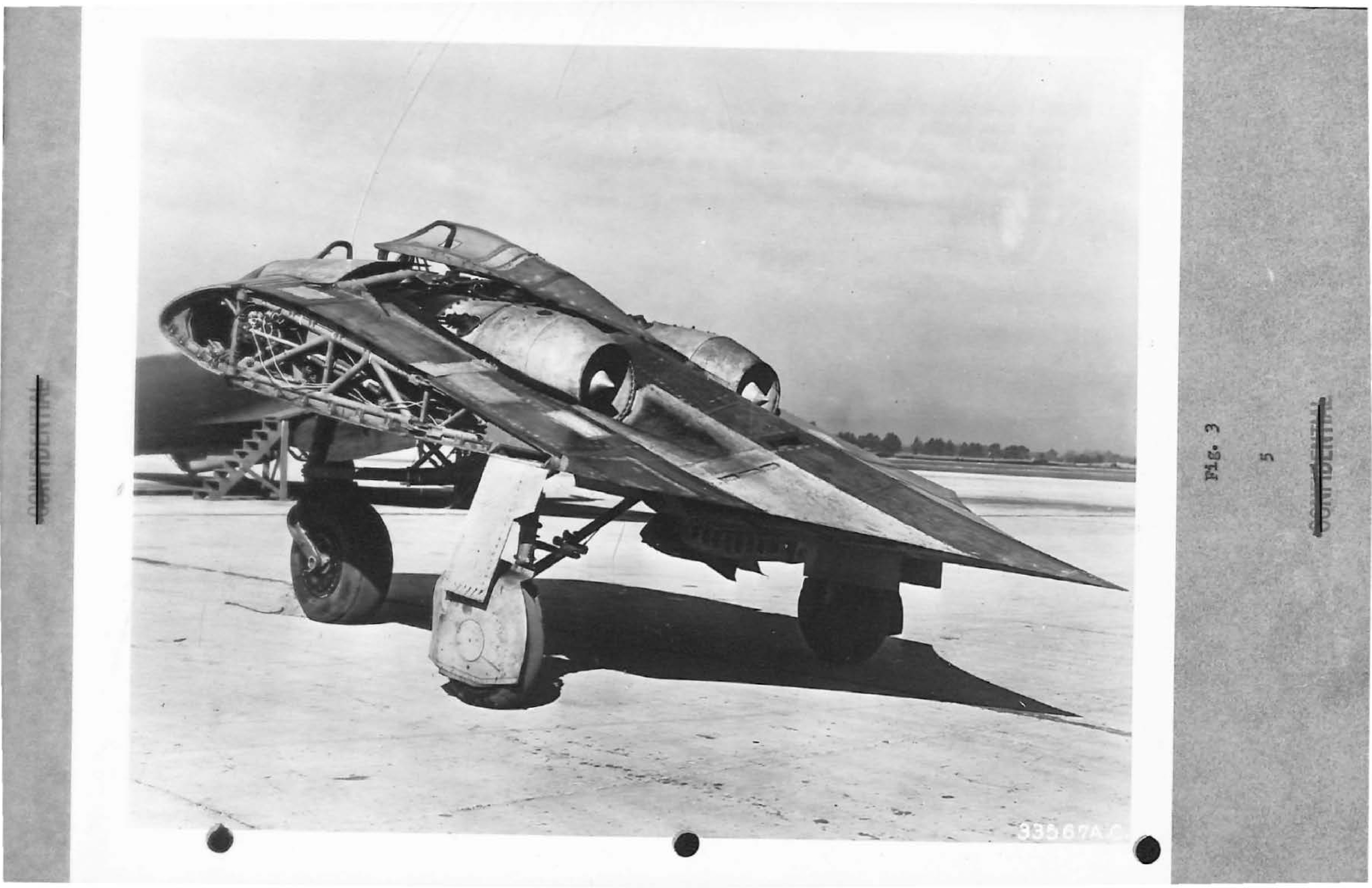
Photograph of the Horten 229 aircraft on the ground.
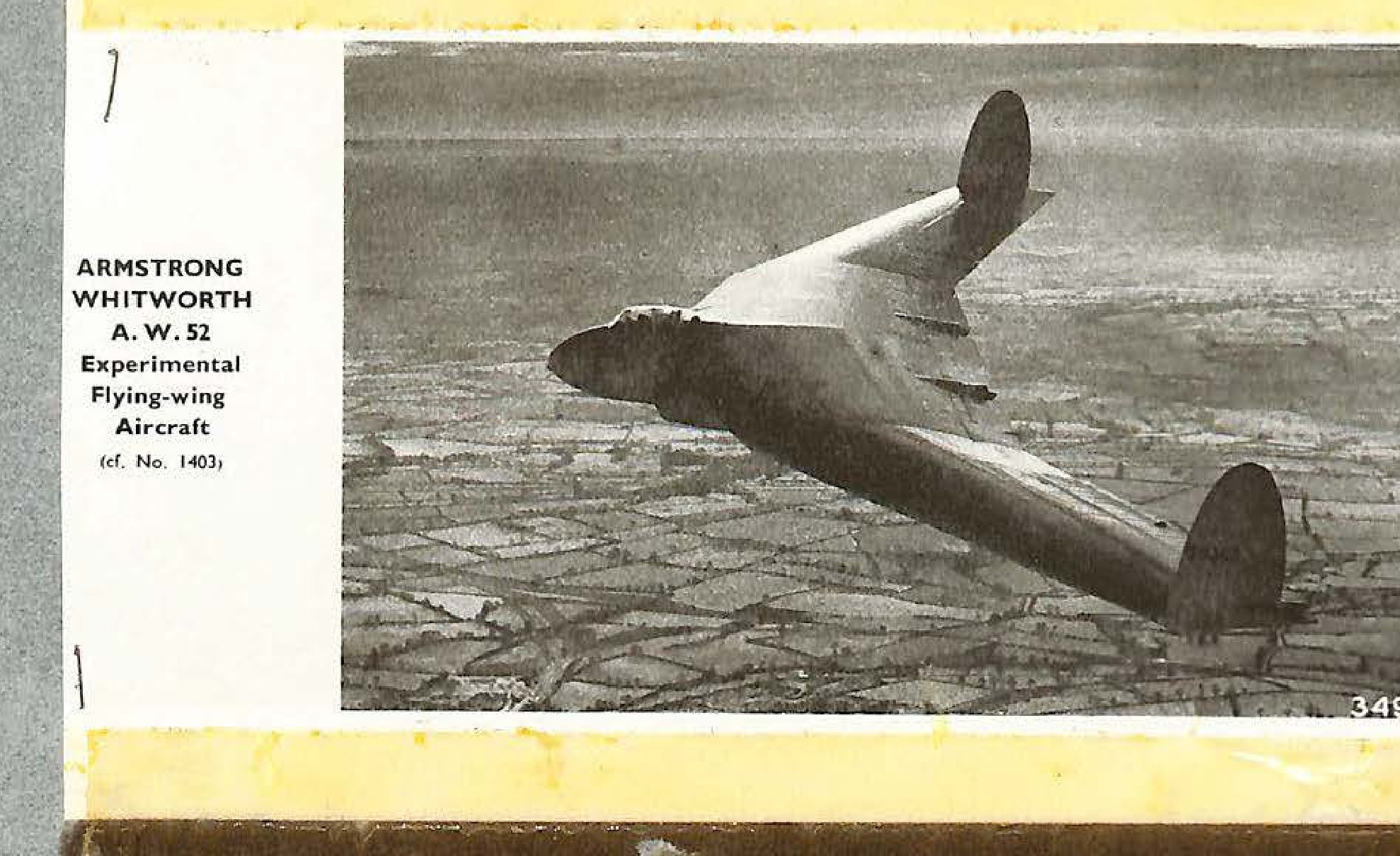
ARMSTRONG WHITWORTH A. W. 52 Experimental Flying-wing Aircraft (cf. No. 1403). Number on photo: 34925A.C.
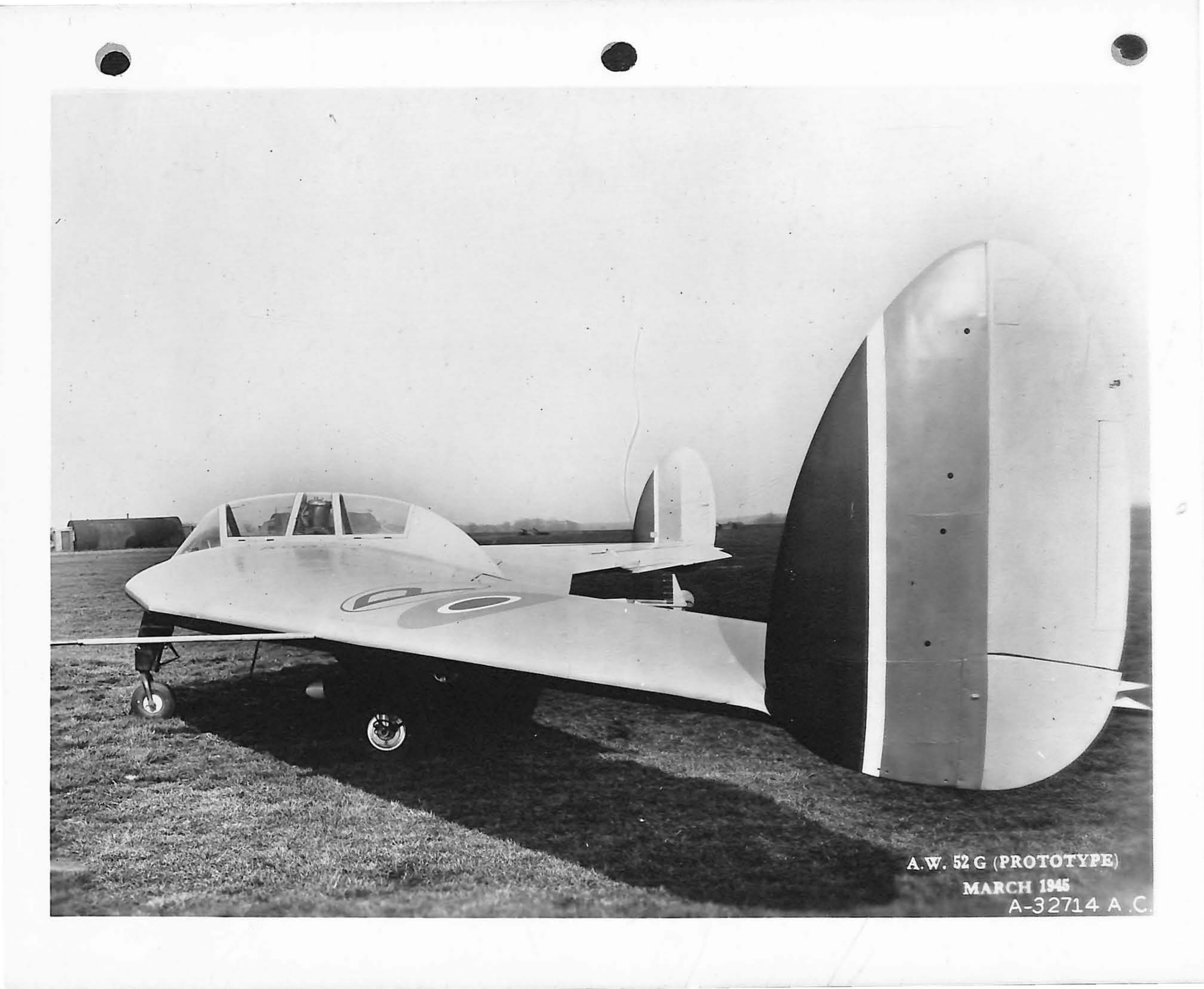
A.W. 52 G (PROTOTYPE) MARCH 1945 A-32714 A.C.
Photograph of the Northrop XB-35 flying wing in flight.
Photograph of the Northrop YB-49 flying wing in flight.
Faint image of an aircraft, likely the Chance-Vaught XF5U-1.
Faint image, possibly a diagram or second view of the aircraft.
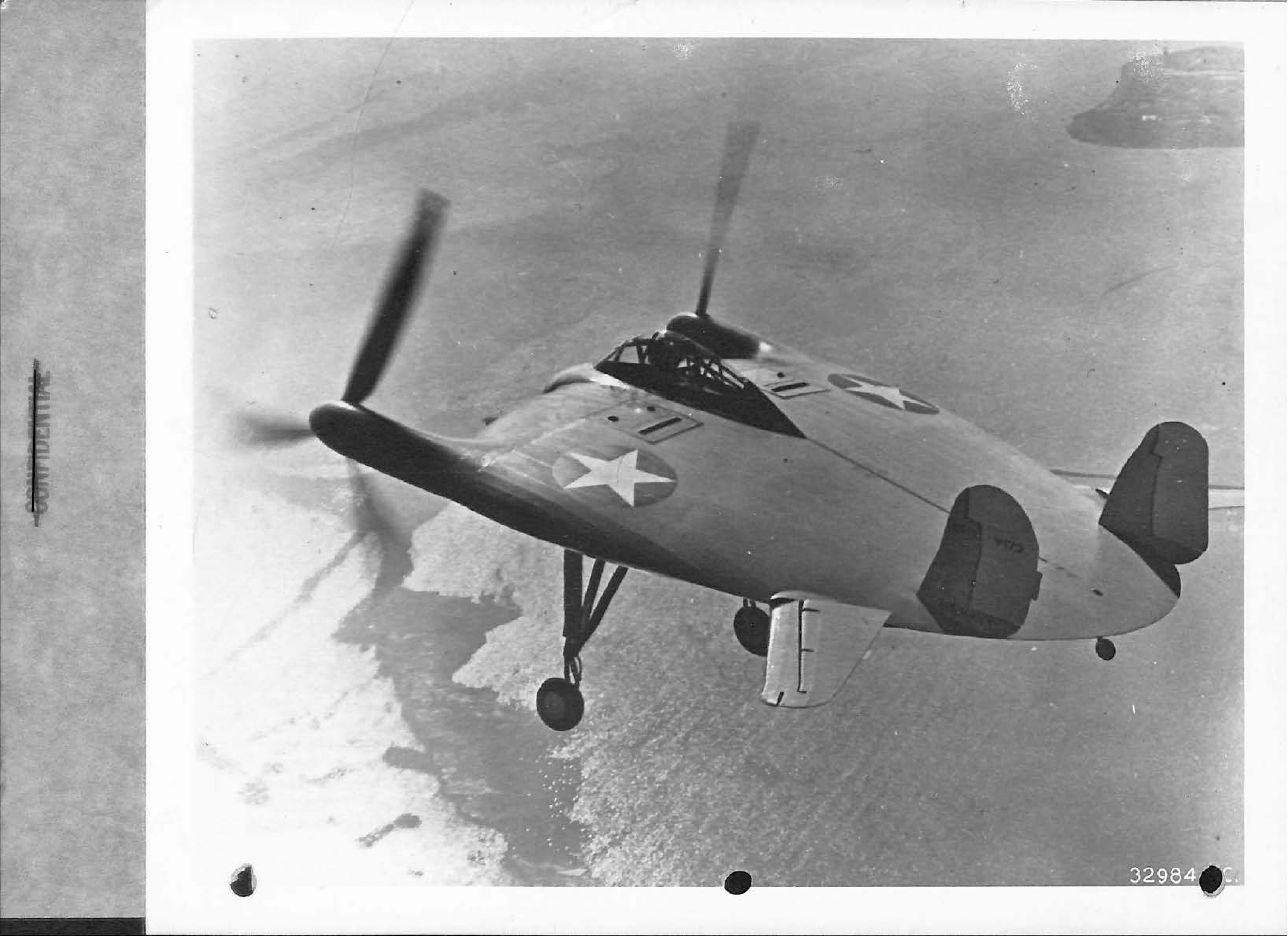
Photograph of the Chance-Vought XF5U-1 experimental aircraft in flight over water.
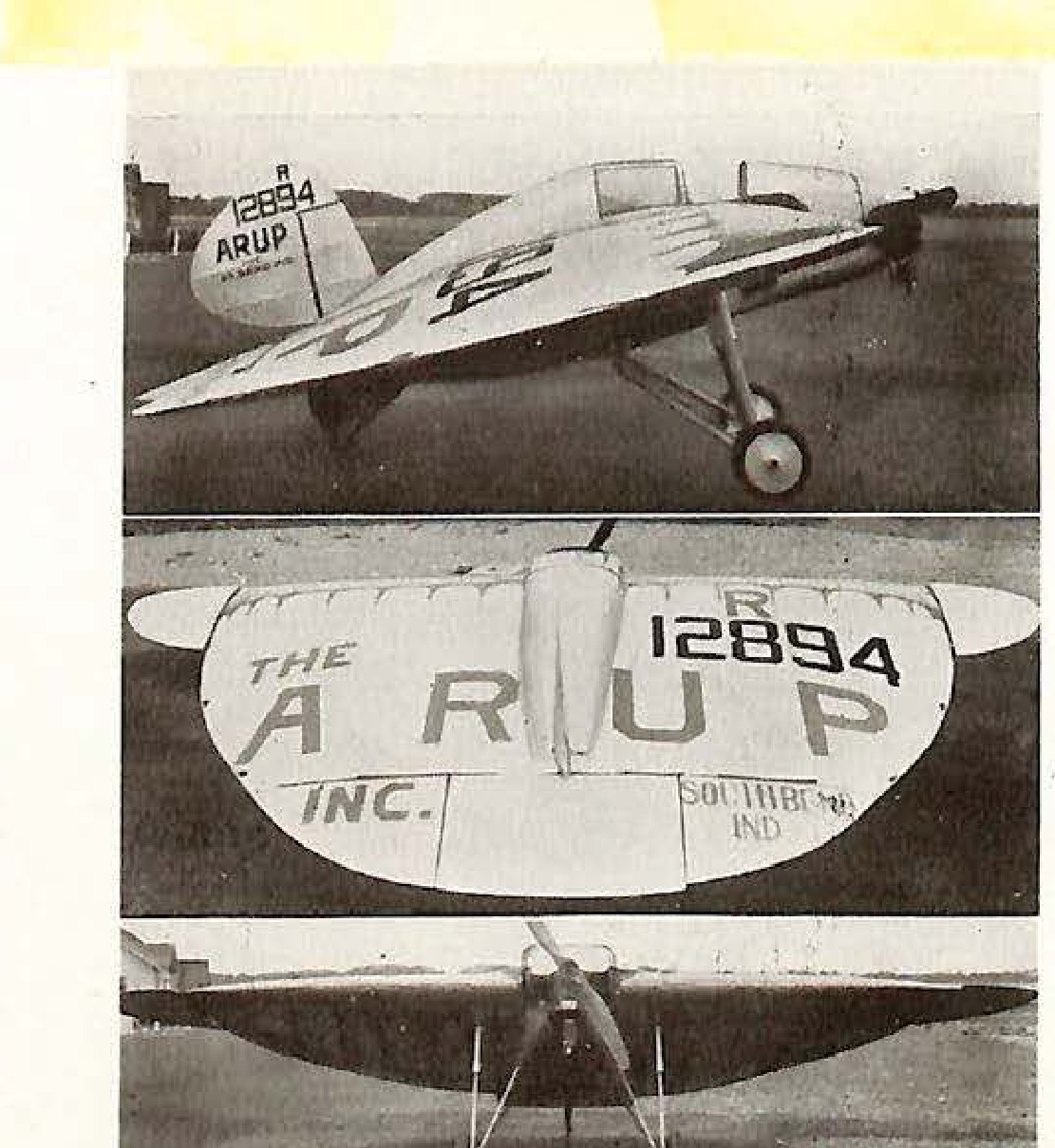
Three views of an Experimental Arup tailless Monoplane. Markings include '12894 ARUP' and 'THE ARUP INC. SOUTHBEND IND.'
This page is the verso of a photograph, containing only stamps.
Pages (67)Machine-extracted text; expand to inspect pages and cite exact anchors. Verify against the PDF.View more ↓
INTELLIGENCE DIVISION STUDY (DI/USAF-ONI) 2 6167 ANALYSIS OF FLYING OBJECT INCIDENTS IN THE UNITED STATES STUDY NO. 203 10 DECEMBER 1948
MEMO ROUTING SLIP
All extra copies of this document were ordered to be destroyed. By being kept for record purposes only. Not to be disseminated without permission of AFOIN-A. See 2-7341 6 Dec H
AIR INTELLIGENCE DIVISION STUDY (DI/USAF-ONI) ANALYSIS OF FLYING OBJECT INCIDENTS IN THE U.S. Study No. 203 10 December 1948 DISTRIBUTION COPY NO. Air Intel Req Div 1 and 3 Air Estimates Branch 4 ONI 2 Air Intel Div 5 COPY NO. 3
ANALYSIS OF FLYING OBJECT INCIDENTS IN THE U.S. INDEX APPENDIX "A" - Analysis of Flying Object Incidents in the U.S. and Hypothetical Tactics Employed APPENDIX "B" - Reported Sightings of Flying Objects as of 1 August 1948 APPENDIX "C" - Selected Reports of Flying Object Inci…
10 December 1948 ANALYSIS OF FLYING OBJECT INCIDENTS IN THE U.S. PROBLEM 1. To examine pattern of tactics of "Flying Saucers" (hereinafter referred to as flying objects) and to develop conclusions as to the possibility of existence. FACTS AND DISCUSSION 2. A detailed discuss…
occasion. The last observation of unidentified objects was in April, 1947. On all four occasions the weather balloon and the unidentified objects were in view through the theodolite. These observations at the Richmond Bureau occurred several months before publicity on the flying…
reported flying objects, particularly those described as disks and rough cigar shapes. (See Appendices "C" and "D".) Among those which have been operational in recent years are the XF5U-1 ("Flying Flapjack") developed by Chance-Vaught, the Northrup B-35, and the turbo-jet powered…Kuzmikha is identified as one of a number of airfields for the protection of an atomic energy plant at Irkutsk. The Horten XIII as developed by Germany was a glider. 10. Assuming that the objects might eventually be identified as foreign or foreign-sponsored devices, the possibl…
APPENDIX "A" ANALYSIS OF FLYING OBJECT INCIDENTS IN THE U.S. AND HYPOTHETICAL TACTICS EMPLOYED 1. Introduction. To formulate the possible tactics of flying objects reported over the U.S. assumes from the outset that firm conclusions have been reached on both the existence and o…
might be further reduced with the following considerations in mind: Silver disks or balls have, for the greater part, been observed in daylight and a number under clear weather conditions with visibility unlimited. In most instances, balls of fire have been observed at night. Cig…
assumes a definable pattern. There is a large concentration of sightings along the Eastern Seaboard; another large concentration throughout the Western Coast states, and a few sightings in the Middle West. Distribution of incidents by configuration of object and description of ma…
First of all, the scientific objectives of the U.S.S.R. have been stated many times and indicated in many forms. The most clear-cut statement of this objective is probably the one contained in the preamble to the Fourth Five-year Plan (1948-1950) which states that the objective o…
the Germans and possibly exploited by the U.S.S.R., are jet-propelled, flying wing type aircraft whose configuration would be similar to descriptions of certain objects reported flying over the U.S. The estimated speeds of such aircraft are within range of the lower limits of spe…
new weapon to counteract the ability of the U.S. to obtain full propaganda effectiveness with the atom bomb. It will be remembered that strange objects first appeared over the Scandinavian countries in 1946. The objects observed there had unusual range and unusual performance cha…
have been made near Oak Ridge, Tenn., Las Cruces, N. M., and in the general area of the Hanford Works in Oregon. Generally, sightings have not been made over what we consider strategic industrial areas. The reason for this might be either that the flying objects have been observe…
5. Conclusion. The conclusion that some type of flying object has been observed over the U.S. seems to be substantiated. It is not known at this time whether these observations are misidentifications of domestically launched devices, natural phenomena, or foreign unconventional a…
APPENDIX "B" REPORTED SIGHTINGS OF FLYING OBJECTS AS OF 1 AUGUST 1948 REPORTED SIGHTINGS OF FLYING OBJECTS As of 1 August 1948 LEGEND Disks Rough Cigar Shape Ball of Fire ▲ Cone of Fire ● Configuration Undetermined
APPENDIX "C" SELECTED REPORTS OF FLYING OBJECT INCIDENTS 1. A number of reports on unidentified flying objects come from observers who, because of their technical background and experience do not appear to be influenced by unfounded sensationalism nor inclined to report explana…
d. The following day a party of three, two of them scientists, were motoring along Highway 17 toward the White Sand, New Mexico, V-2 firing grounds and reported seeing a large disk or sphere moving horizontally at a high speed, and an estimated altitude of 10,000 feet. It was of…
ENLARGEMENTS OF ORIGINAL PHOTOGRAPHS Fig. 3 Fig. 4 g. On 10 July 1947, Mr. Woodruff, a Pan-American Airways mechanic reported a circular object flying at high velocity, paralleling the earth's surface and leaving a trail which appeared as a "burning up" of the cloud formation.…
Fig. 5 34923 A.C.
Fig. 6 23 A.C.
h. On 29 July 1947, Kenneth Arnold, while flying near Tocoma, Washington, reported a formation of flying objects. His sketch of their shape corresponds closely to that shown in the photographs made by Mr. Rhoads. On the same day, two U.S. Air Force pilots at Hamilton Field report…
m. A yellow or light colored sphere, 25 to 40 feet in diameter was reported by Lt. Comdr. Marcus L. Lowe, USN, just south of Anacostia Naval Air Station, D.C., while he was flying on 30 April 1948. It was moving at a speed of approximately 100 miles per hour at an altitude of abo…
City, Montana. This glowing light made no sound, traveled about twice the speed of a conventional aircraft and flew from north to south several times in a wide are, finally disappearing over the horizon. q. During the early morning of 25 July 1948, two Rastern Airlines pilots rep…
revealed that one object was sighted and that it consisted only of a SMALL round ball of clear white light with no apparent shape attached. It was about 6 to 8 inches in diameter. At times it traveled faster than the F-51 and performed maneuvers in an evasive manner. When first s…
HENRY GRADY HOTEL ON PEACHTREE P.O. BOX 14 ATLANTA 1, GA.
HENRY GRADY HOTEL
a. On 1 July 1947, a GOA radar at Hokkaido, Japan picked up an unidentified target at 16 miles, with a speed in excess of 500 mph. This target split into two targets, each estimated to be larger than a P-51. b. On 16 September 1947, an MEW radar at Fukuoka, Japan, picked up a tar…
almost instantaneously. The outline was clear and the air was clear with visibility unlimited. The object traveled from the east to the west. This object was determined by investigation to have been a balloon carrying cosmic ray equipment. b. On 19 August 1948, at approximately 1…
b. A high rate of climb as well as the apparent ability to remain motionless or hover for a considerable length of time is indicated. c. Reported sizes have varied from that of a 25-cent piece to 250 feet in diameter, and from the size of a pursuit plane to the bulk of six B-29 a…
CONFIDENTIAL
CONFIDENTIAL APPENDIX D FLYING WING TYPE AIRCRAFT 1. Aeronautical engineers in several countries have been engaged for some time in the design, construction, and flight of flying wing type aircraft. The study of flying objects requires, at least, a brief examination of proposed a…
CONFIDENTIAL
CONFIDENTIAL c. Gotha P 60 A This was the first of the P 60 series of jet fighters. It is a flying wing type and, since the pilot and observer lie prone, there is no projecting canopy, thus permitting a particularly clean design. The jet units are mounted at the rear of the cente…
the Horten 229, a twin jet fighter, had progressed to the final stages at the end of World War II. Its prototype, a Horten glider, successfully soared to an altitude of 14,200 feet as early as 1938, proving the soundness of this design. (Figs. 1, 2, and 3) Fig. 1 3 CONFIDENTIAL
34918A.C. Fig. 2 4
WRIGHT FIELD, OHIO -- The Horten 229, flying wing twin-engine jet fighter, was in its finishing stages at the end of the war. The pilot of this airplane sat in the nose, between the two jet units. The soundness of this design was proved as early as 1938 when a Horten glider, prot…
33567A.C Fig. 3 5
33567 A.C.-WRIGHT FIELD, OHIO -- The Horten 229, flying wing twin-engine jet fighter, was in its finishing stages at the end of the war. The pilot of this airplane sat in the nose, between the two jet units. The soundness of this design was proved as early as 1938 when a Horten g…
3. Great Britain a. The Armstrong Whitworth The AW 52 G, a glider, and the AW 52, a twin-jet airplane, are British designs of tailless aircraft. The vertical stabilizers are located at the tips of the swept-back wing. (Figs. 4 and 5) Data on the AW 52 appear below. Span 90 feet L…
A-32714 A.C. Armstrong Whitworth A.W. 52 G. Prototype March 1945. - CREDIT: "U.S. AIR FORCE PHOTO., WASH, D.C."
+3162.C Fig. 6 8
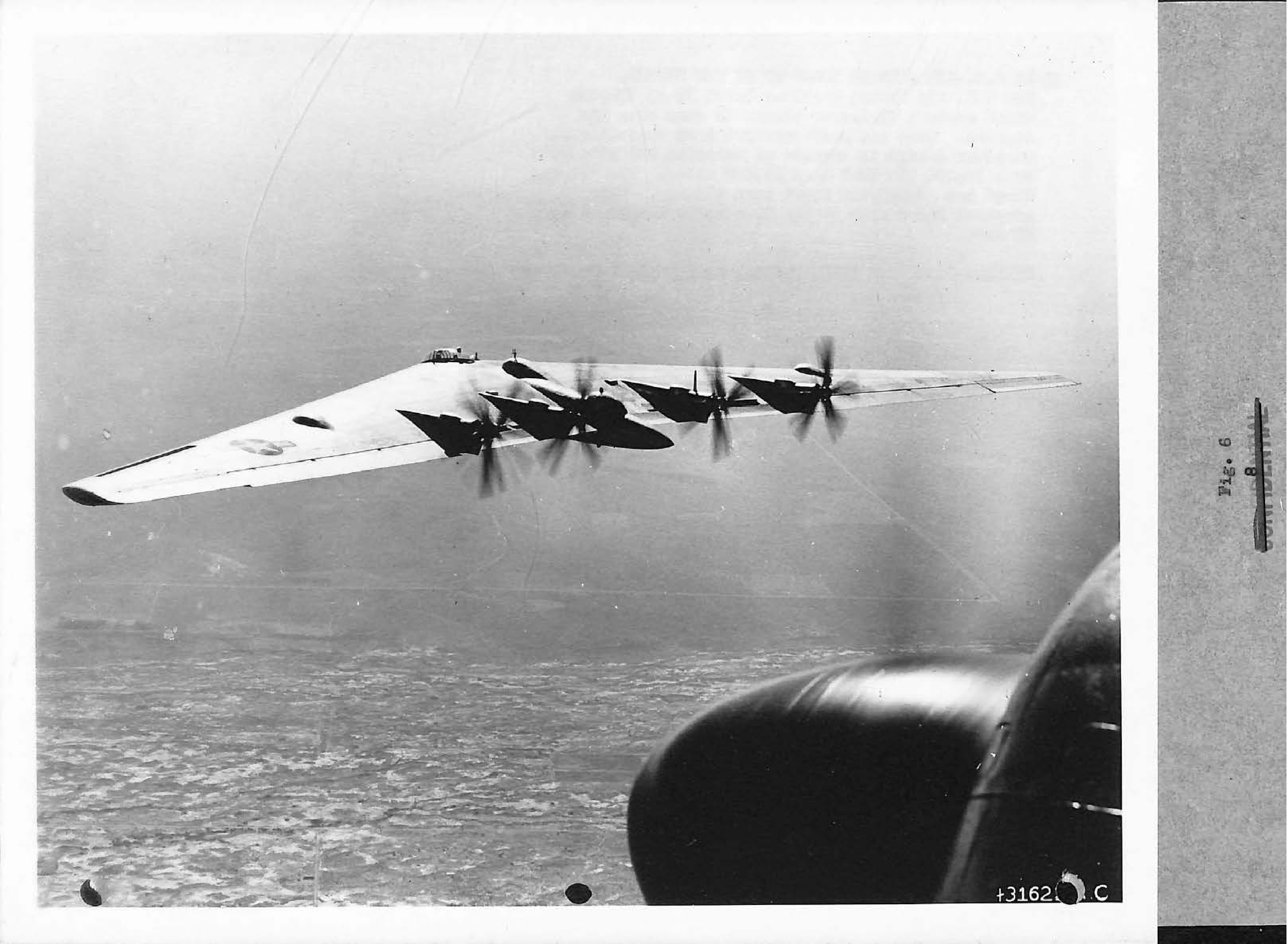
31622 A.C.-LOS ANGELES LOOKS UP AT THE FUTURE. The U.S. Air Forces Northrop built XB-35 "Flying Wing" casts a shadow of things to come over Los Angeles. This radical departure from conventional airplane design is capable of carrying the atom bomb or a 10,000 lb. bomb load 10,000…
4. United States a. Northrop B-35 This is a flying wing type aircraft, powered by four reciprocating engines and has a wing span of 172 feet and a length of only 53 feet. (See Fig.6) Fig. 6 8
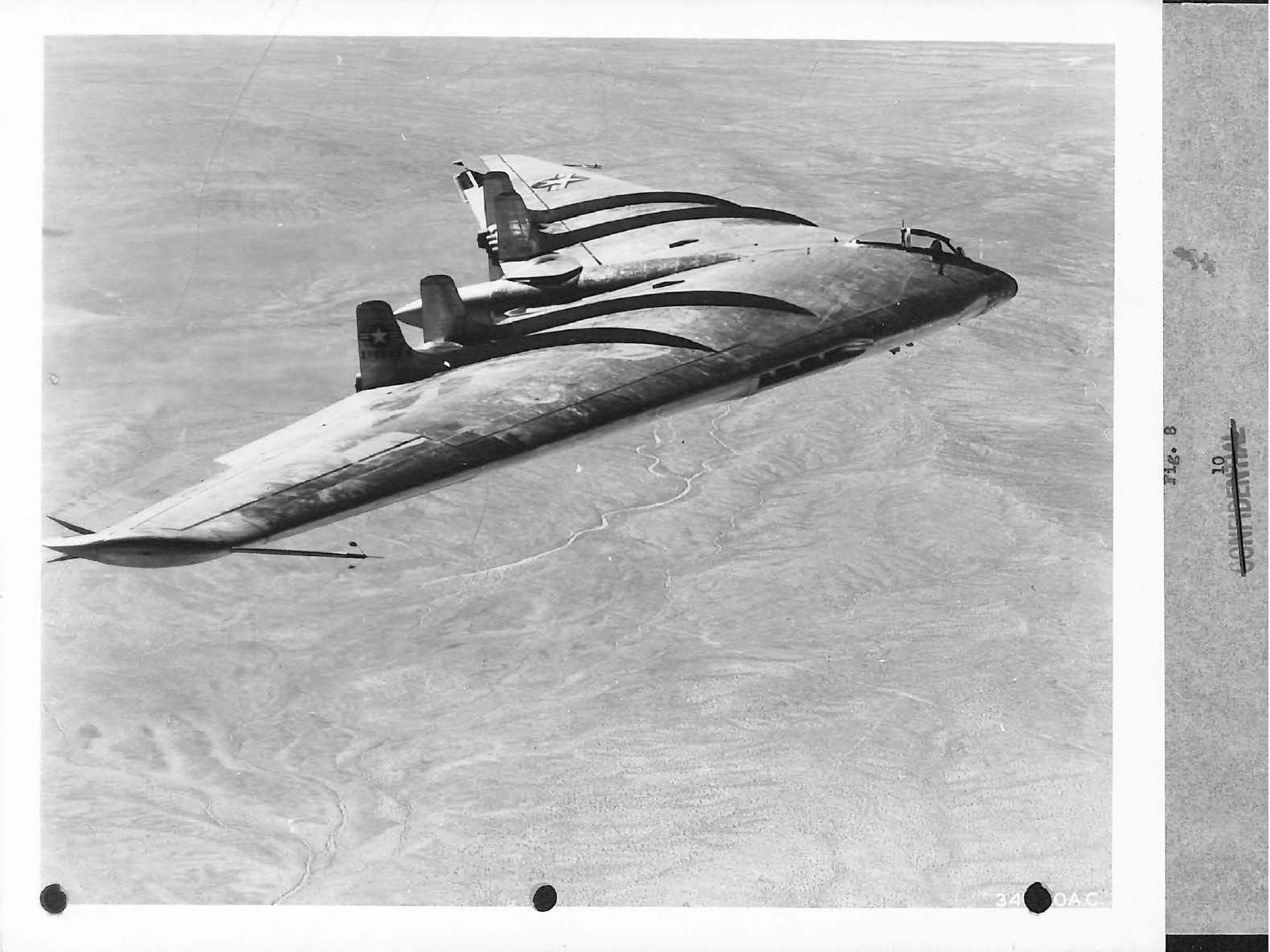
34420A.C. Fig. 8 10
34420 A.C.-Aerial view of the YB-49, jet-propelled version of the Northrop Flying Wing. Fastest large bomber yet built for the U.S. Air Force, the YB-49 is powered by eight jet engines. It is undergoing extensive tests at Muroc Air Force Base, California, where this photograph wa…
c. Chance-Vaught XF5U-1 Developed by Chance-Vaught Aircraft, this radical design promises the reality of high and low speed performance. Powered by two R-2000-2 engines, the airplane will have a speed range of from 40 to 425 miles per hour. (See Fig. 8) Fig. 8 10
32984
32984 A.C.-NAVY EXPERIMENTS WITH NEW HIGH-LOW SPEED FIGHTER. Developed by Chance-Vought Aircraft in a revolutionary new Navy fighter, designated XF5U-1, which promises the reality of extremely high and low speeds in the same plane, and has the added feature of one engine being ab…
b. Northrop YB 49 Powered by eight turbo-jet engines, this airplane is the jet-propelled version of the Northrop Flying Wing (B 35). (See Fig. 7) Fig. 7 9
d. ARUP Tailless Monoplane Jane's "All the World's Aircraft" (1935 edition) describes this airplane as "a two-seat machine with a 70 h.p. LeBlond engine.... This has a high aspect ratio wing with straight leading-edge and built in nacelle...." In plan form, the wing is almost se…
b. Northrop YB 49 Powered by eight turbo-jet engines, this airplane is the jet-propelled version of the Northrop Flying Wing (B 35). (See Fig. 7) Fig. 7 9 NW 91410 DocId:34750978 Page 46