
NASA-UAP-D018, Gemini 4 Experiment Debriefing, 1967
Gemini IV was the second crewed mission of the Gemini series. Astronauts James McDivitt and Edward White successfully completed the four-day flight between June 3 and June 7, 1965. The mission included the first American spacewalk. This collection of documents contains a transcription of the astronauts recounting their observations of bright particles outside the spacecraft, dated circa June 25, 1967, on pages 78-81, and page 101.
Generated from extracted text. Verify important claims against the original document.
▶ UAP Archives explainer
This video is UAP Archives editorial content based on the linked official records; it is not government footage.
Subscribe to UAP Archives on YouTube →

Related documents
Files connected by shared people, places, and events — and by appearing together in our cross-document analysis.
- pdfNASA Gemini Program Filesjim mcdivitt · white · john glenn
- pdfNASA Mercury Program file, likely a transcript of John Glenn's debriefing after the Friendship 7 (MA-6) mission.mesma análise · glenn · carpenter
- pdfNASA-UAP-D019, Gemini 5 Technical Debriefing, Part I, 1965cooper · mcdivitt · ed
- pdfNASA Gemini Program Filesjim mcdivitt · lovell · ed
- pdfNASA Gemini V Mission Debriefing Transcriptcooper · mcdivitt · ed
- pdfNASA Gemini Program Fileswhite · mcdivitt · ed
Extracted images
Images flagged by the classifier as photographs, maps or sketches.
SPACE SUITS showing G-3C and G-4C suits side by side
G-4C OVERVISOR SPACE HELMET showing astronaut wearing helmet
G-4C OVERVISOR SPACE HELMET
Zero g Integral Propulsion (ZIP) Unit with forward and aft firing nozzles
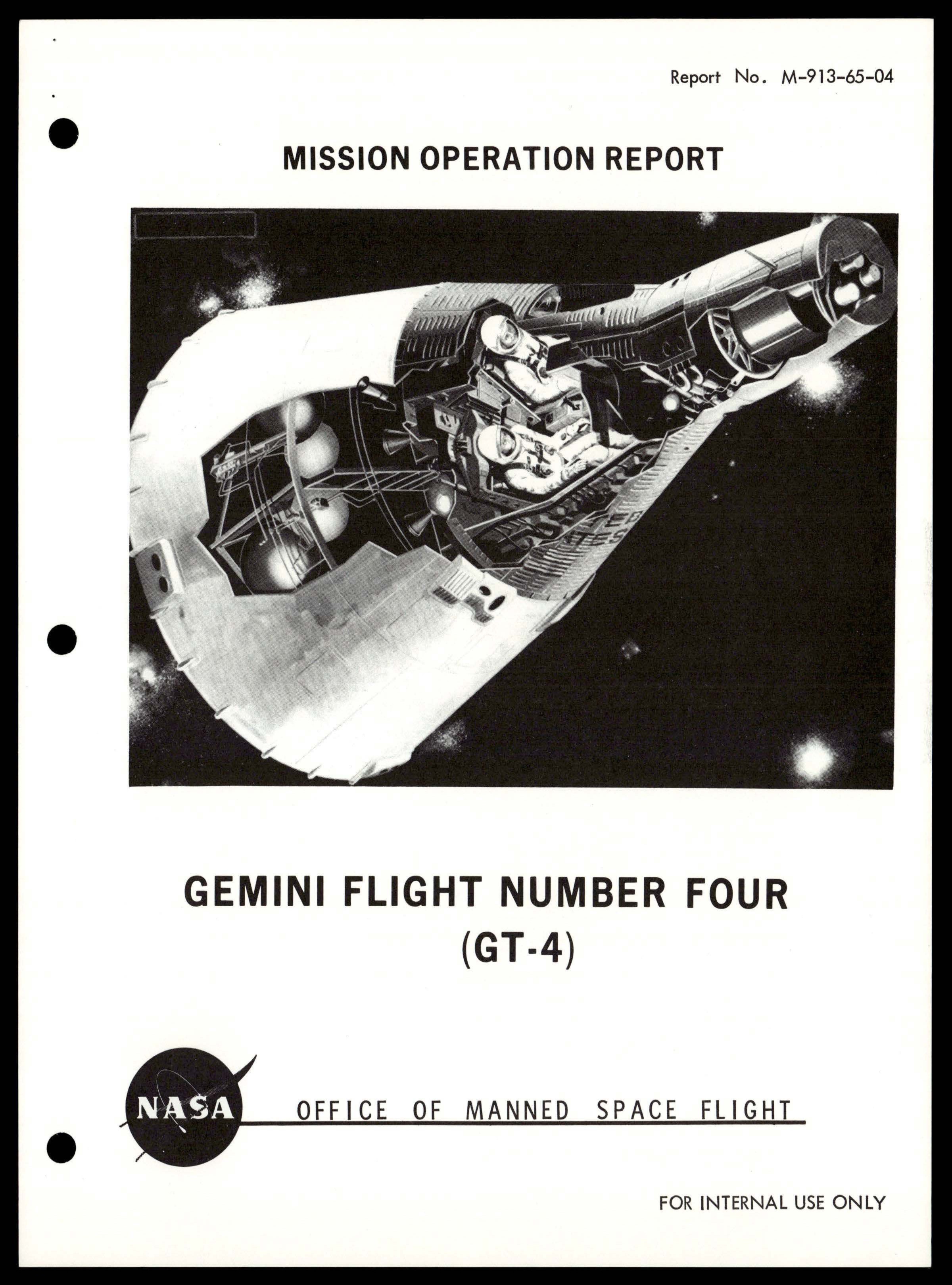
Cutaway illustration of Gemini spacecraft showing interior crew compartment and equipment
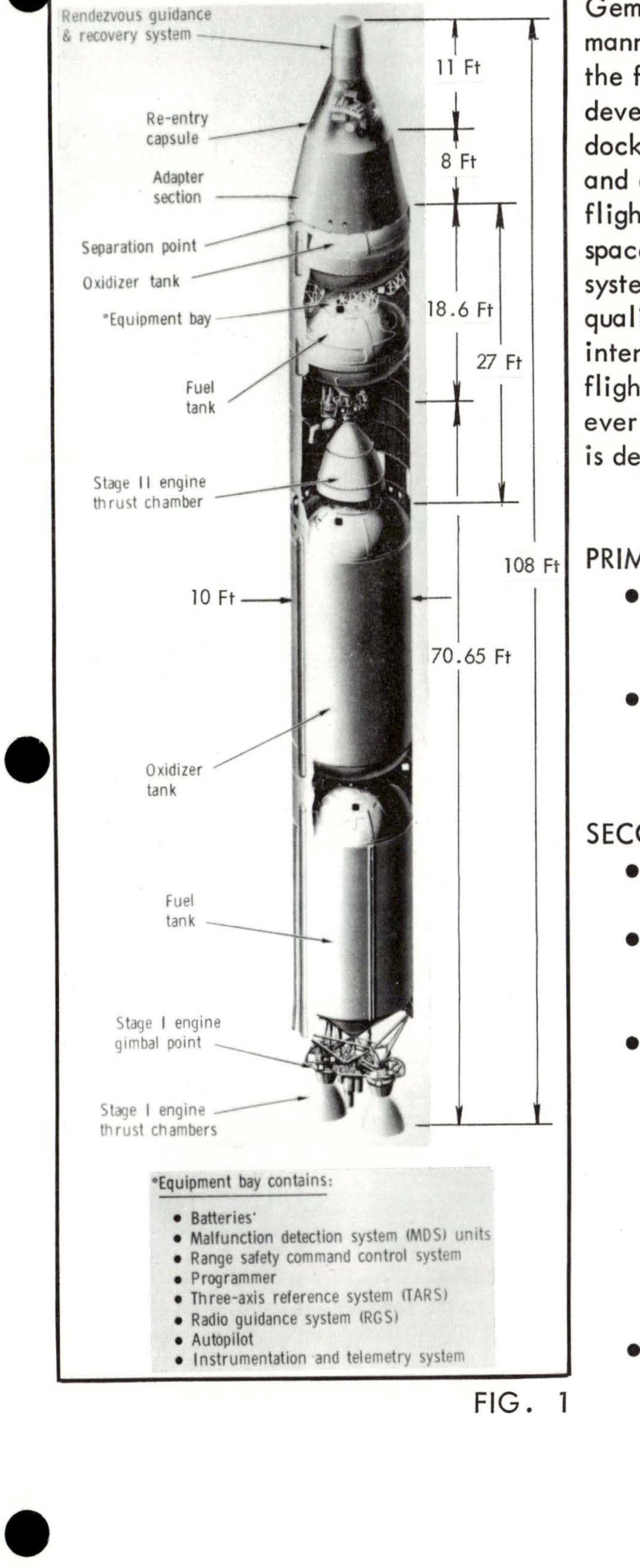
FIG. 1 - Labeled diagram of Gemini spacecraft showing components including rendezvous guidance & recovery system, re-entry capsule, adapter section, separation point, oxidizer tank, equipment bay, fuel tank, Stage II engine thrust chamber, Stage I engine gimbal point, and Stage I engine thrust chambers. Equipment bay contains: Batteries, Malfunction detection system (MDS) units, Range safety command control set, Programmer, Three-axis reference system (TARS), Reaction control system (RCS), Autopilot, Instrumentation and telemetry system.
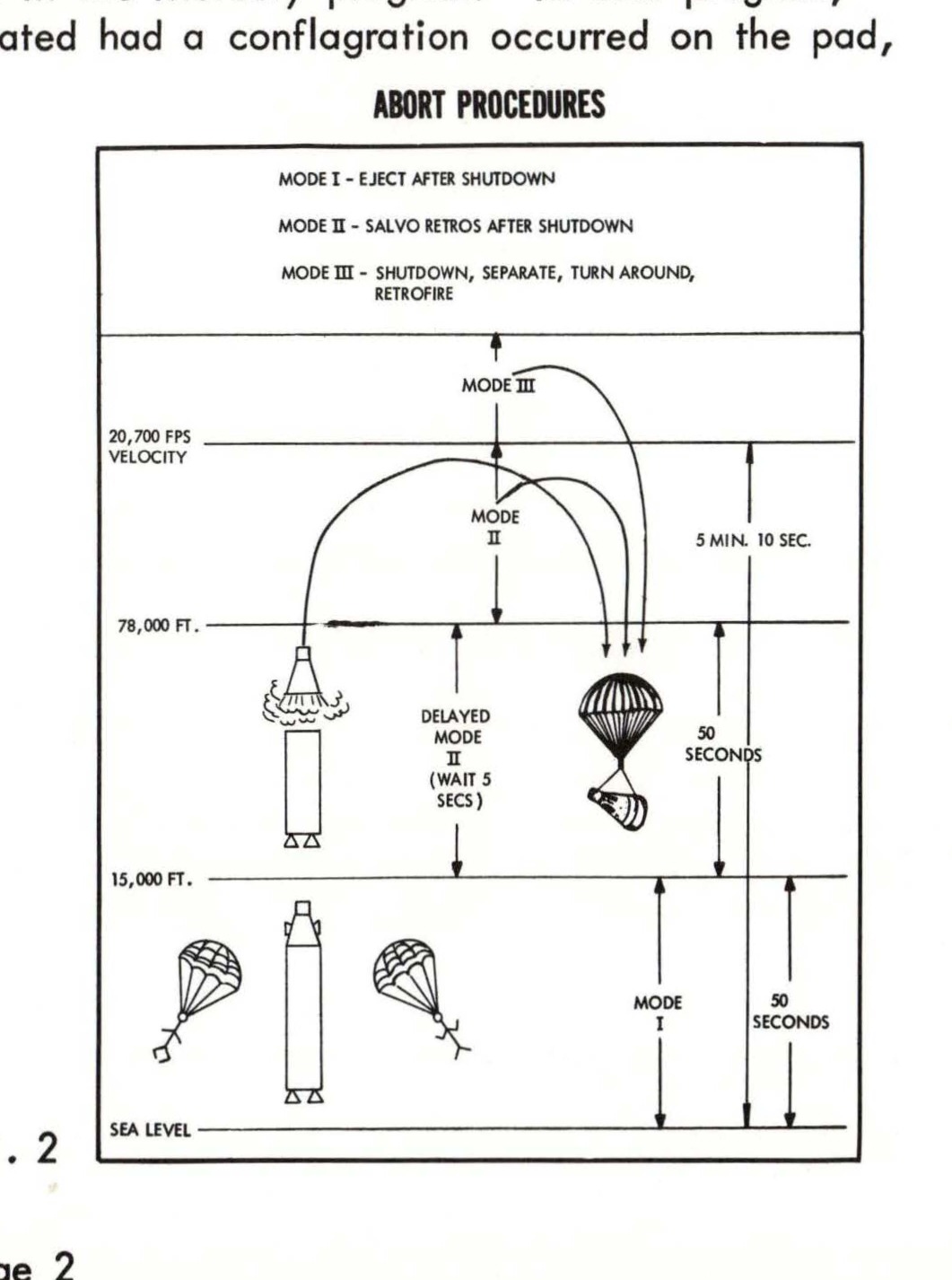
Abort procedures diagram showing three modes with altitude and time parameters, including velocity markers at 29,700 FPS and 78,000 FT, with delayed mode and retrofire sequences
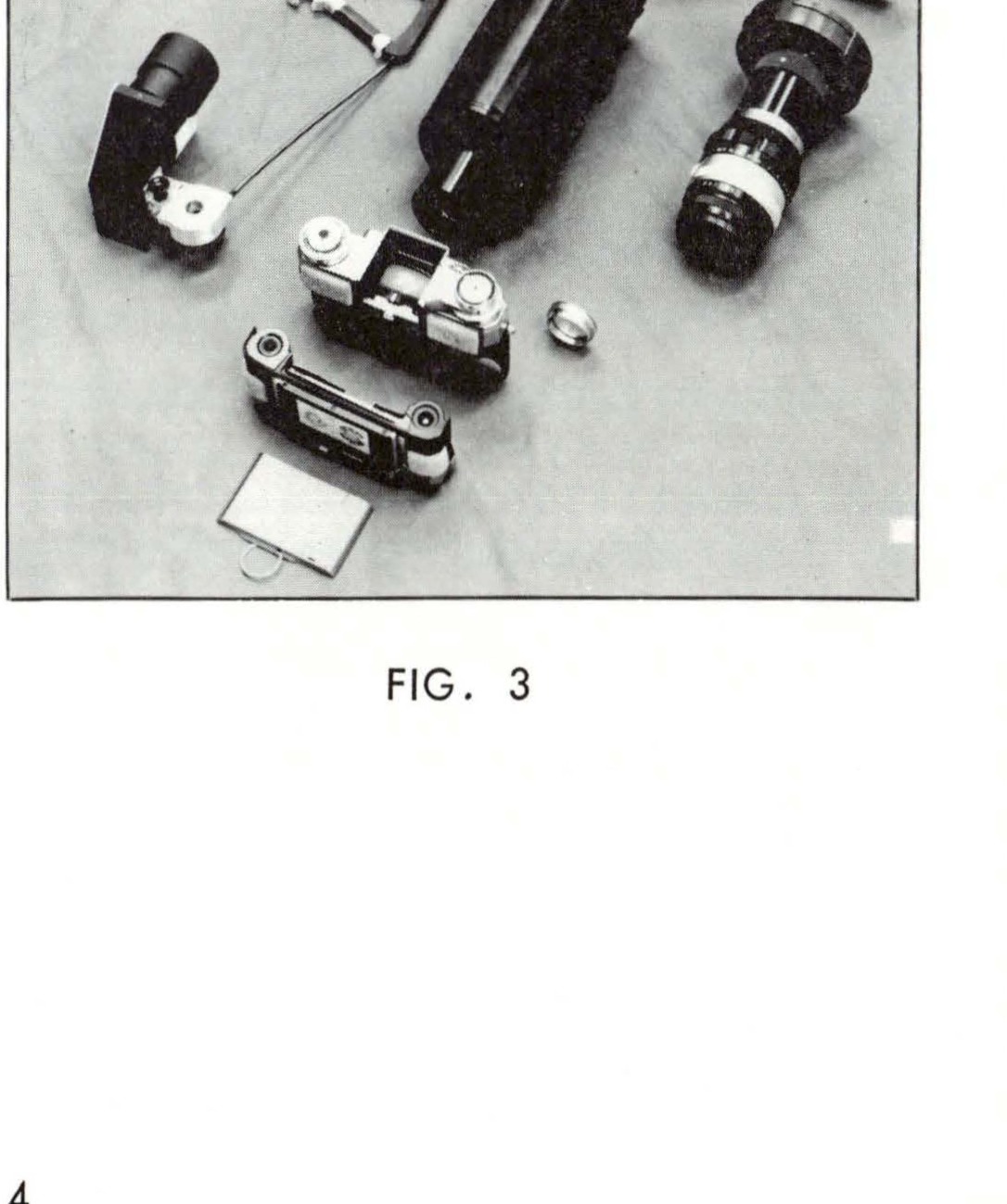
D-1 BASIC OBJECT PHOTOGRAPHY - photographic equipment including cameras and lenses
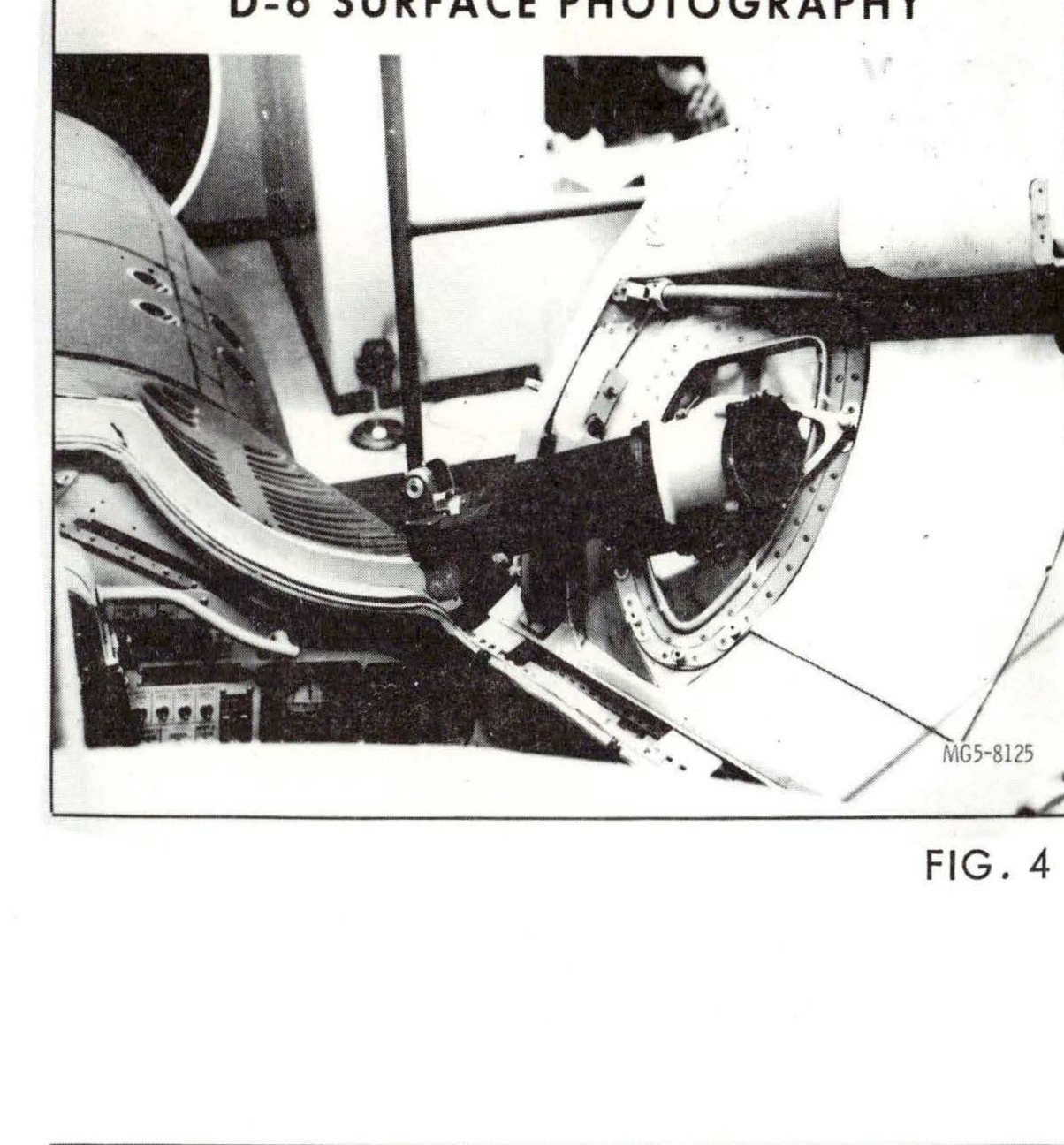
D-6 SURFACE PHOTOGRAPHY - camera mount installed on spacecraft window, labeled FIG. 4, MGS-8125
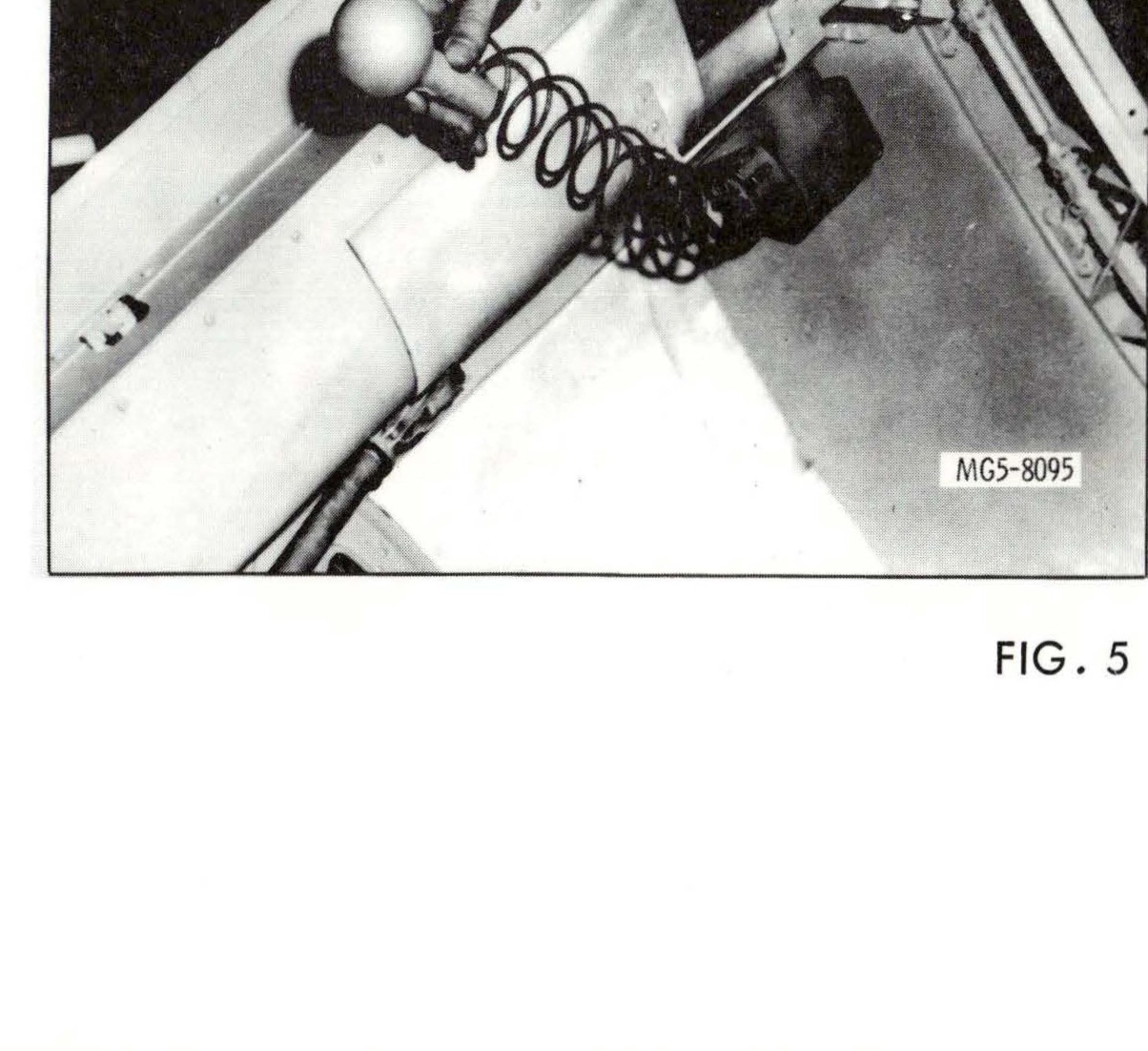
D-8 RADIATION IN SPACECRAFT (PORTABLE UNIT) - radiation detection equipment, labeled FIG. 5, MGS-8095
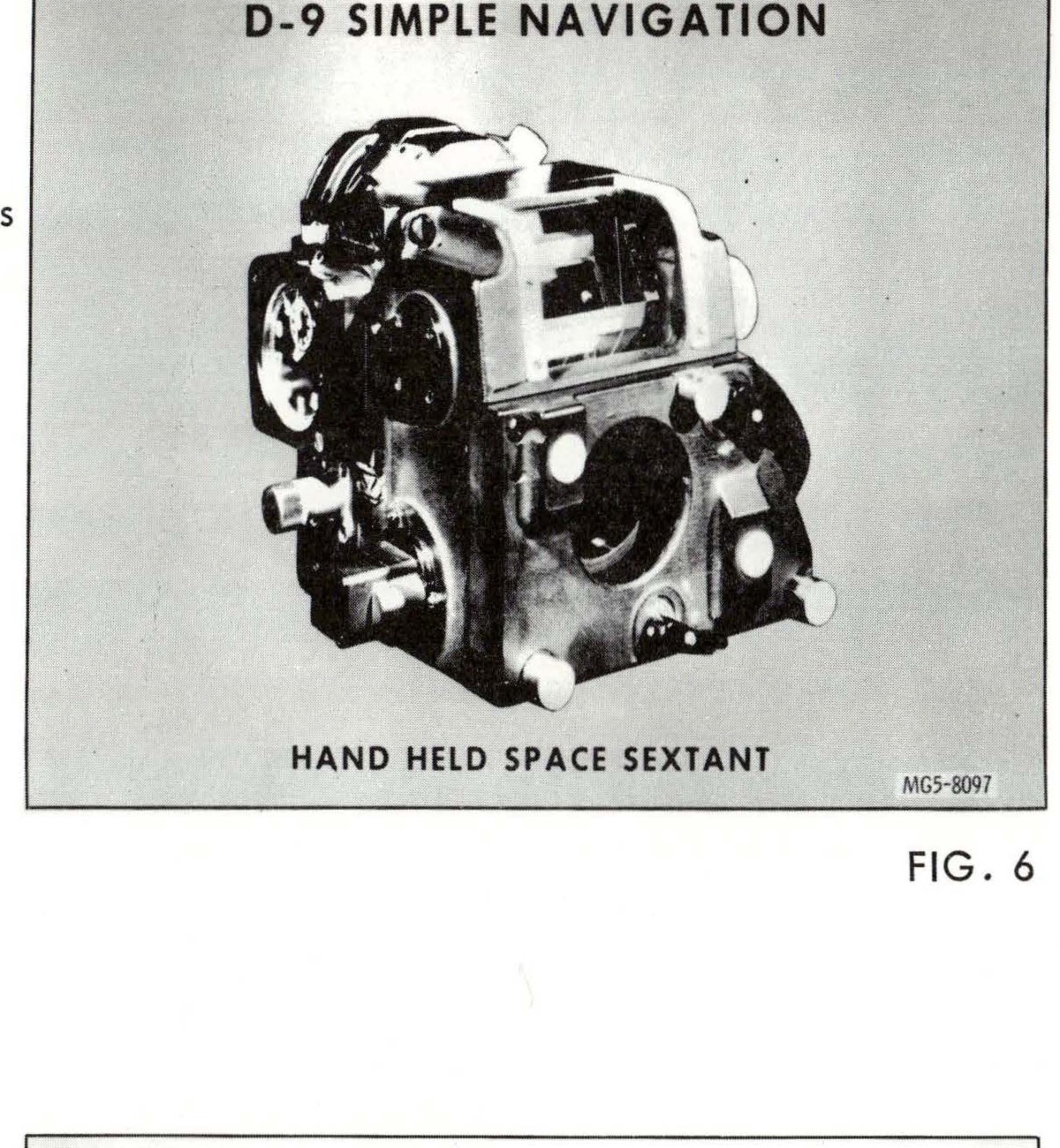
D-9 SIMPLE NAVIGATION - HAND HELD SPACE SEXTANT (FIG. 6)
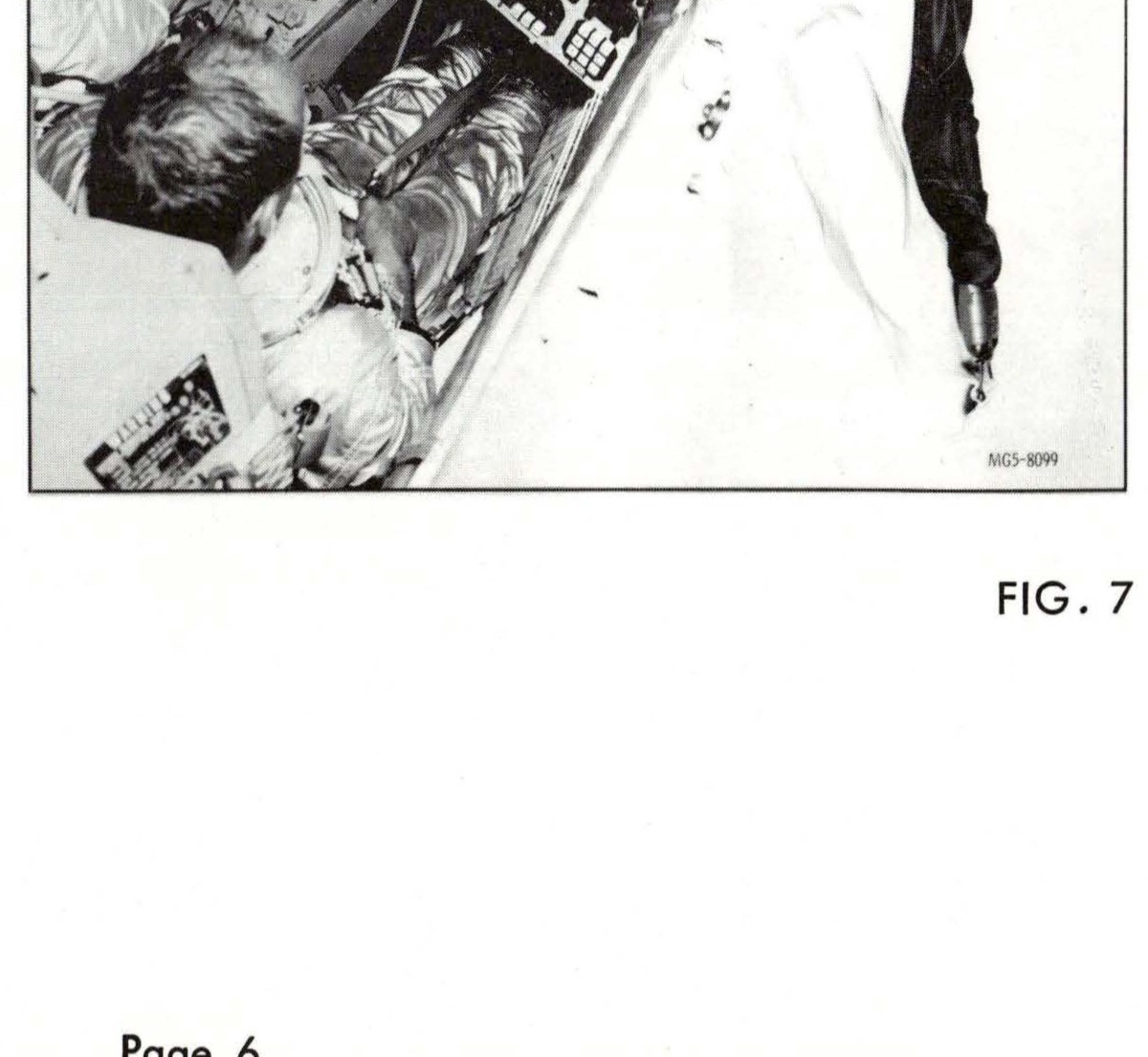
M-3 IN-FLIGHT EXERCISER (FIG. 7)
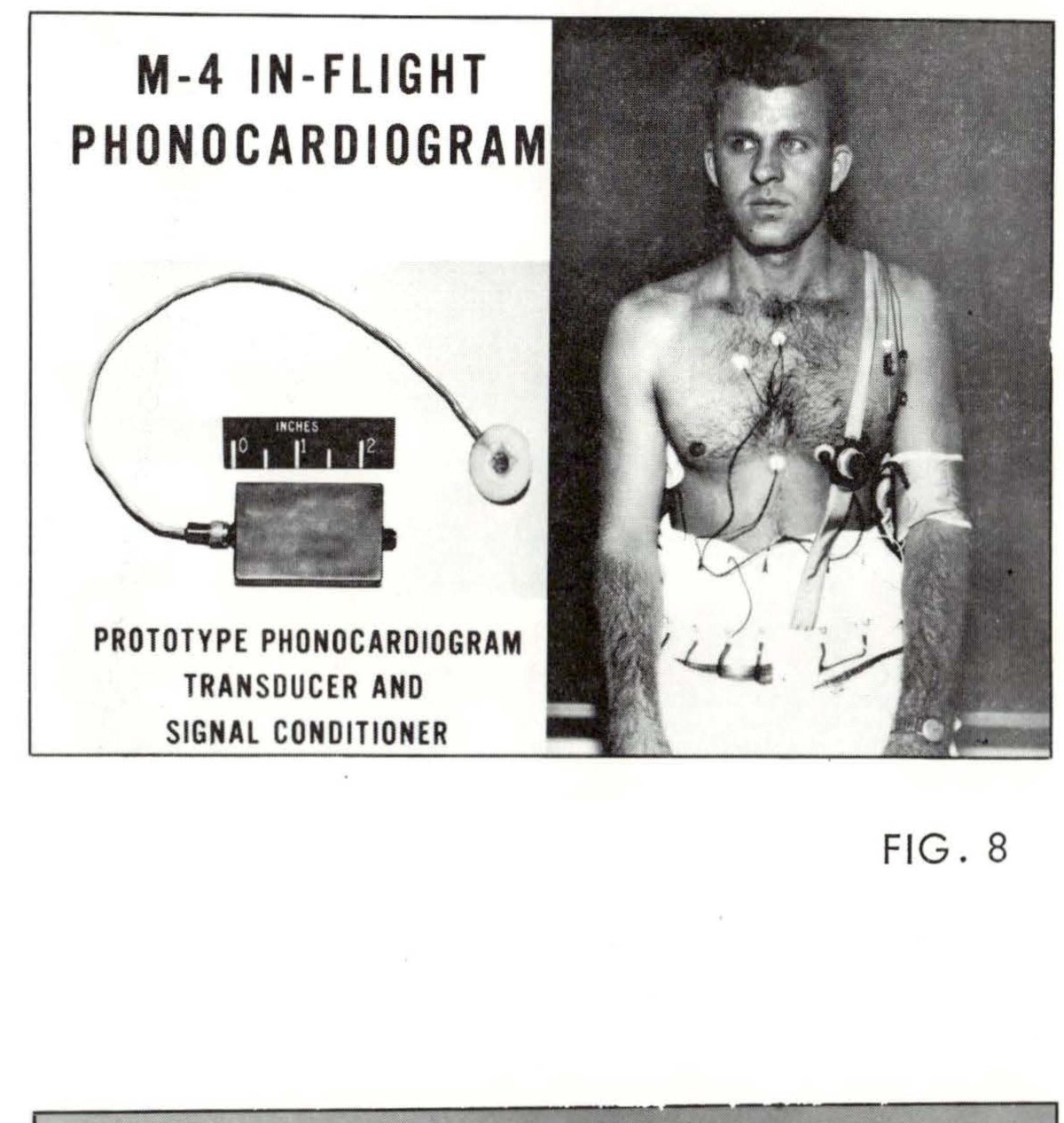
M-4 IN-FLIGHT PHONOCARDIOGRAM - PROTOTYPE PHONOCARDIOGRAM TRANSDUCER AND SIGNAL CONDITIONER with photograph of astronaut wearing device
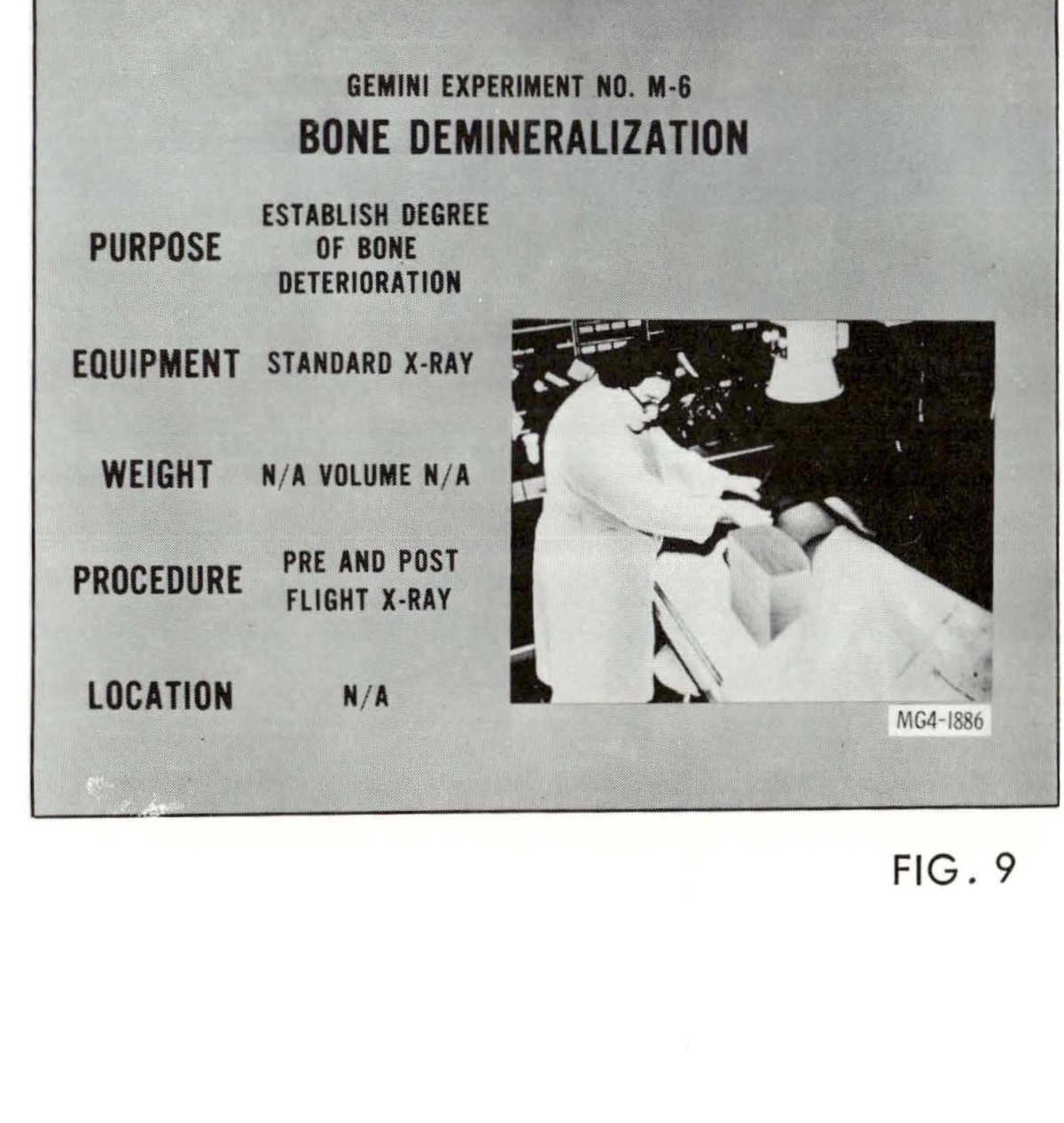
GEMINI EXPERIMENT NO. M-6 BONE DEMINERALIZATION showing purpose, equipment, weight, procedure, and location details with photograph of X-ray procedure
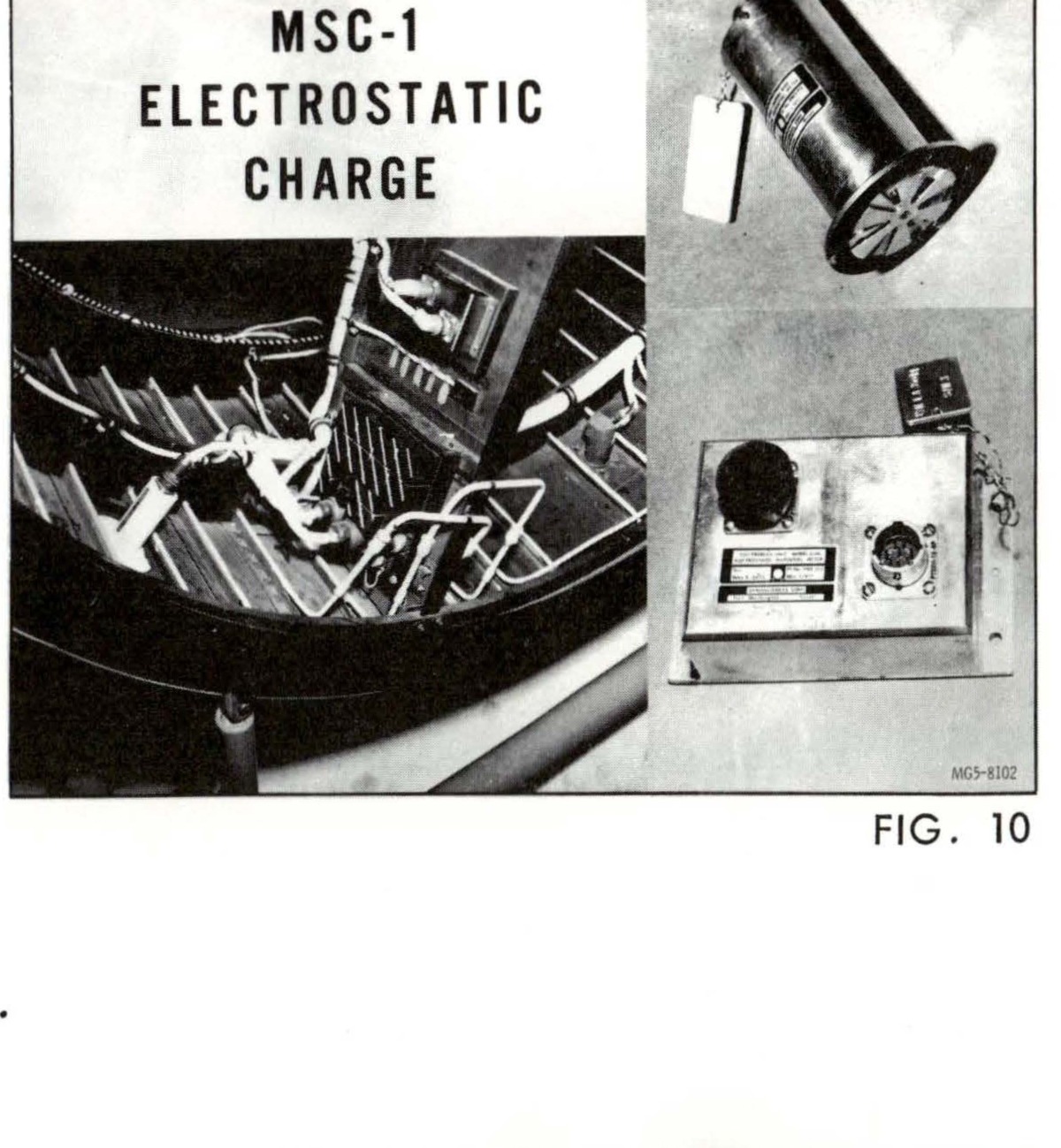
MSC-1 ELECTROSTATIC CHARGE detector installation, FIG. 10
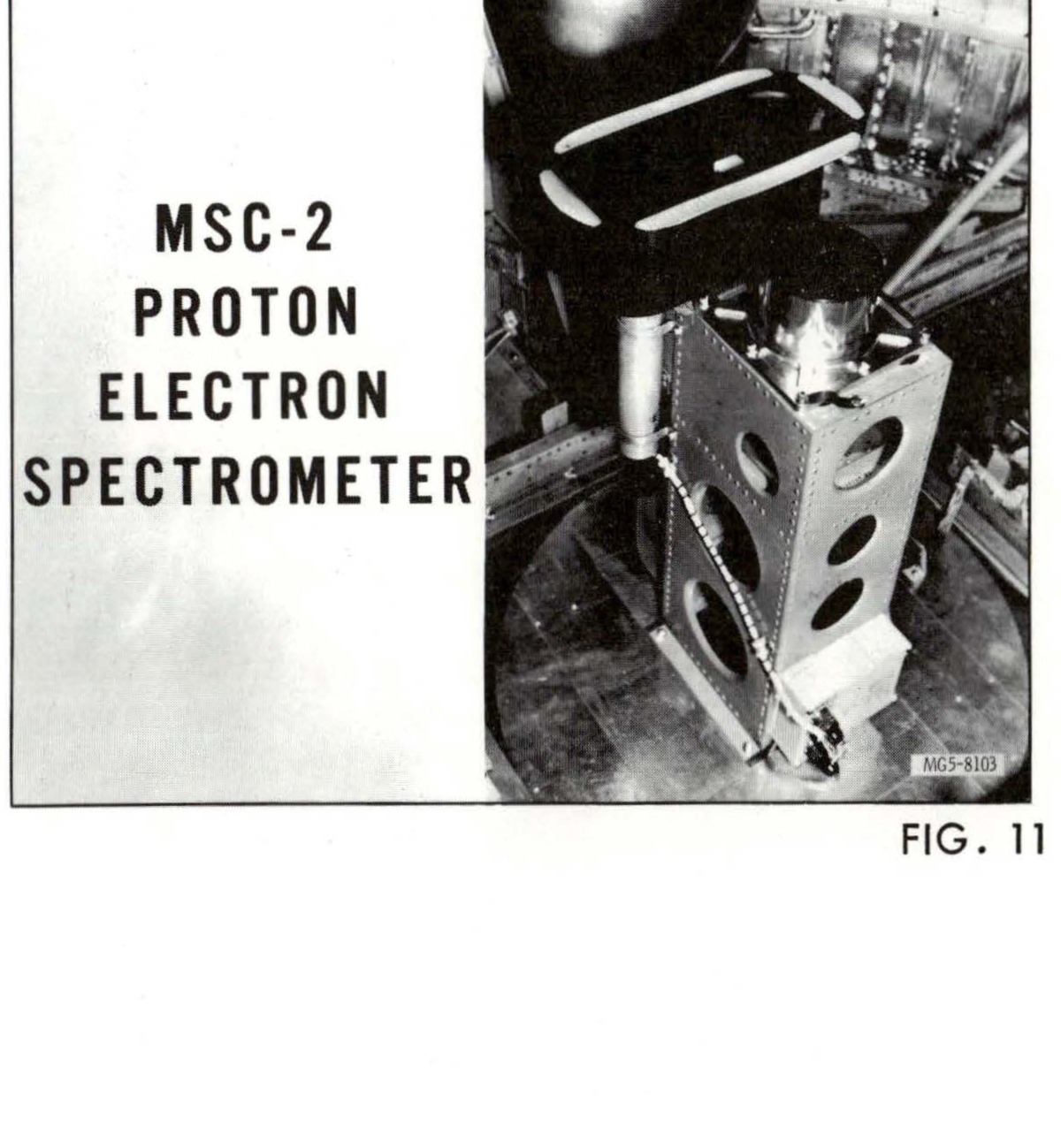
MSC-2 PROTON ELECTRON SPECTROMETER installation, FIG. 11
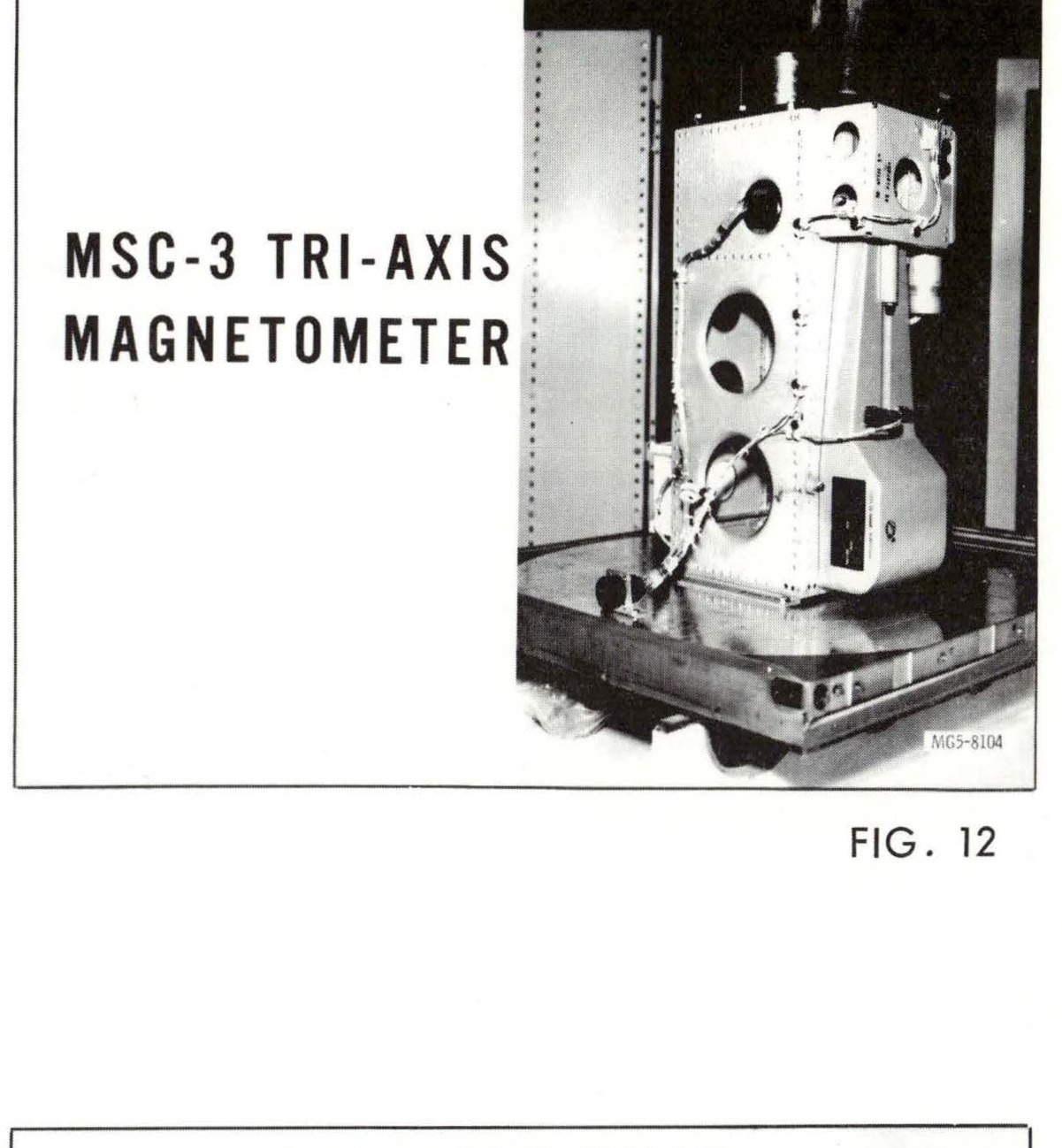
MSC-3 TRI-AXIS MAGNETOMETER - FIG. 12
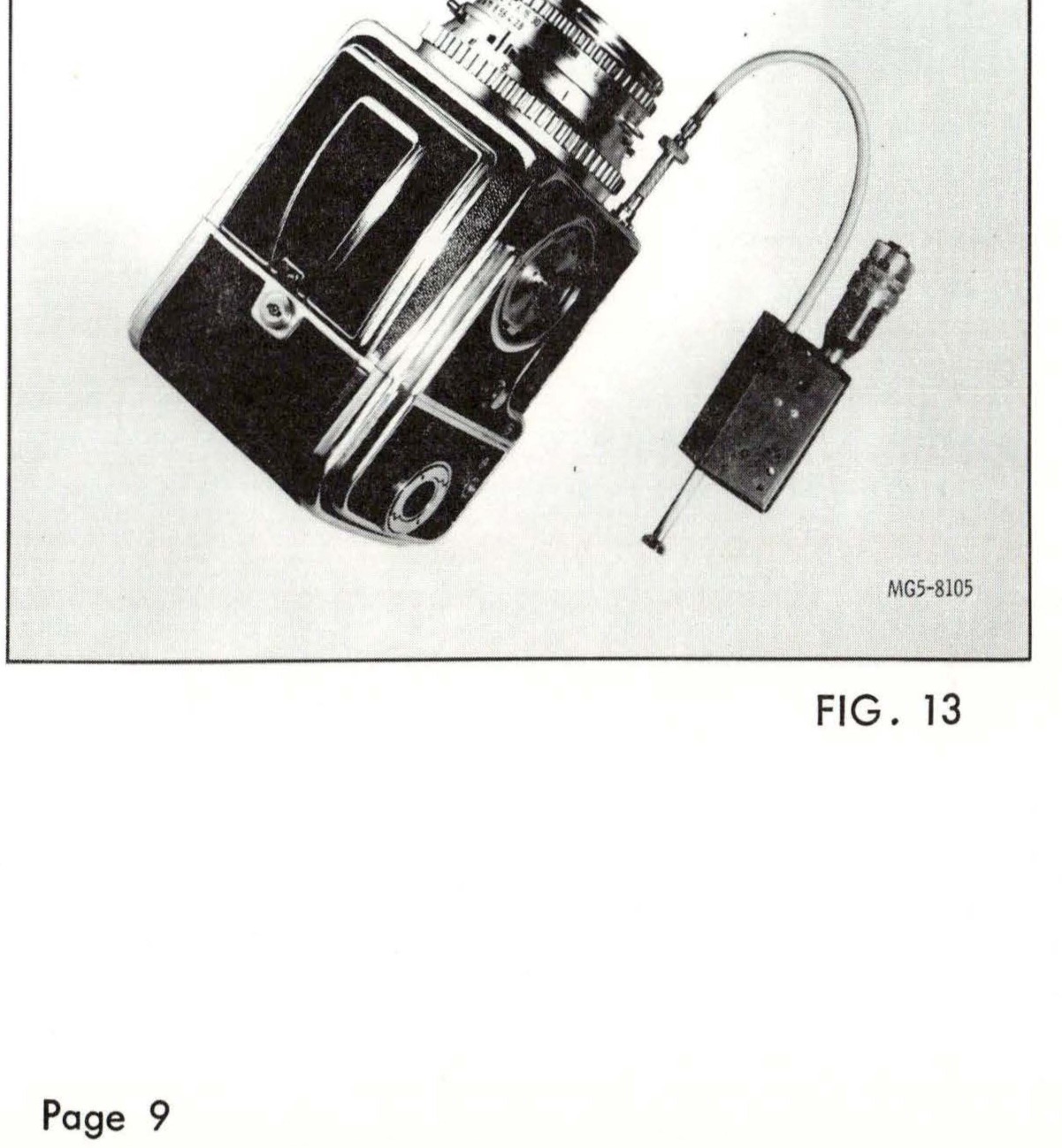
MSC-10 TWO-COLOR EARTH'S LIMB PHOTOS - FIG. 13
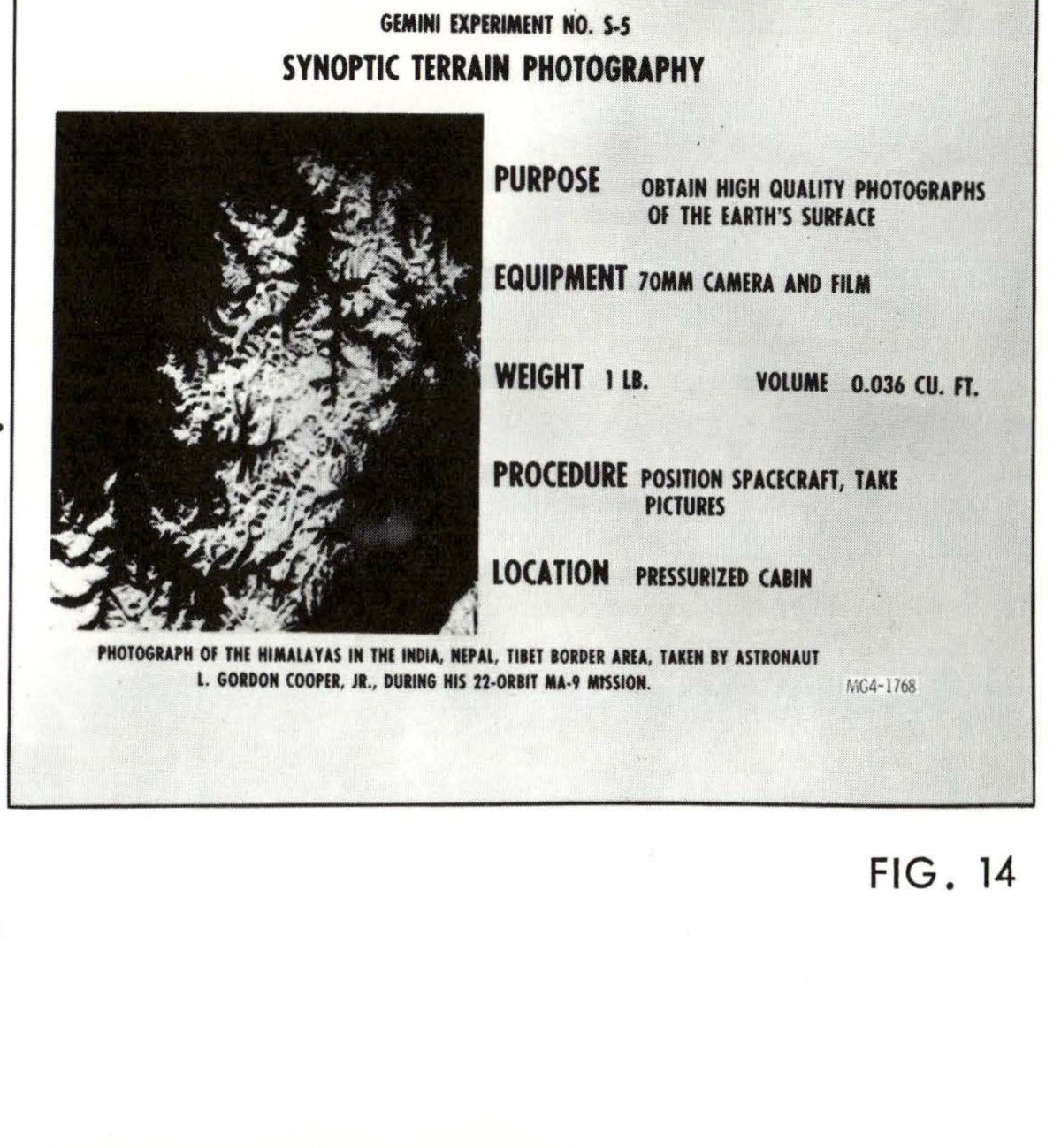
GEMINI EXPERIMENT NO. S-5 SYNOPTIC TERRAIN PHOTOGRAPHY - Photograph of the Himalayas in the India, Nepal, Tibet border area, taken by astronaut L. Gordon Cooper, Jr., during his 22-orbit MA-9 mission. PURPOSE: Obtain high quality photographs of the earth's surface. EQUIPMENT: 70MM camera and film. WEIGHT: 1 lb. VOLUME: 0.036 cu. ft. PROCEDURE: Position spacecraft, take pictures. LOCATION: Pressurized cabin. MSC-1768. FIG. 14
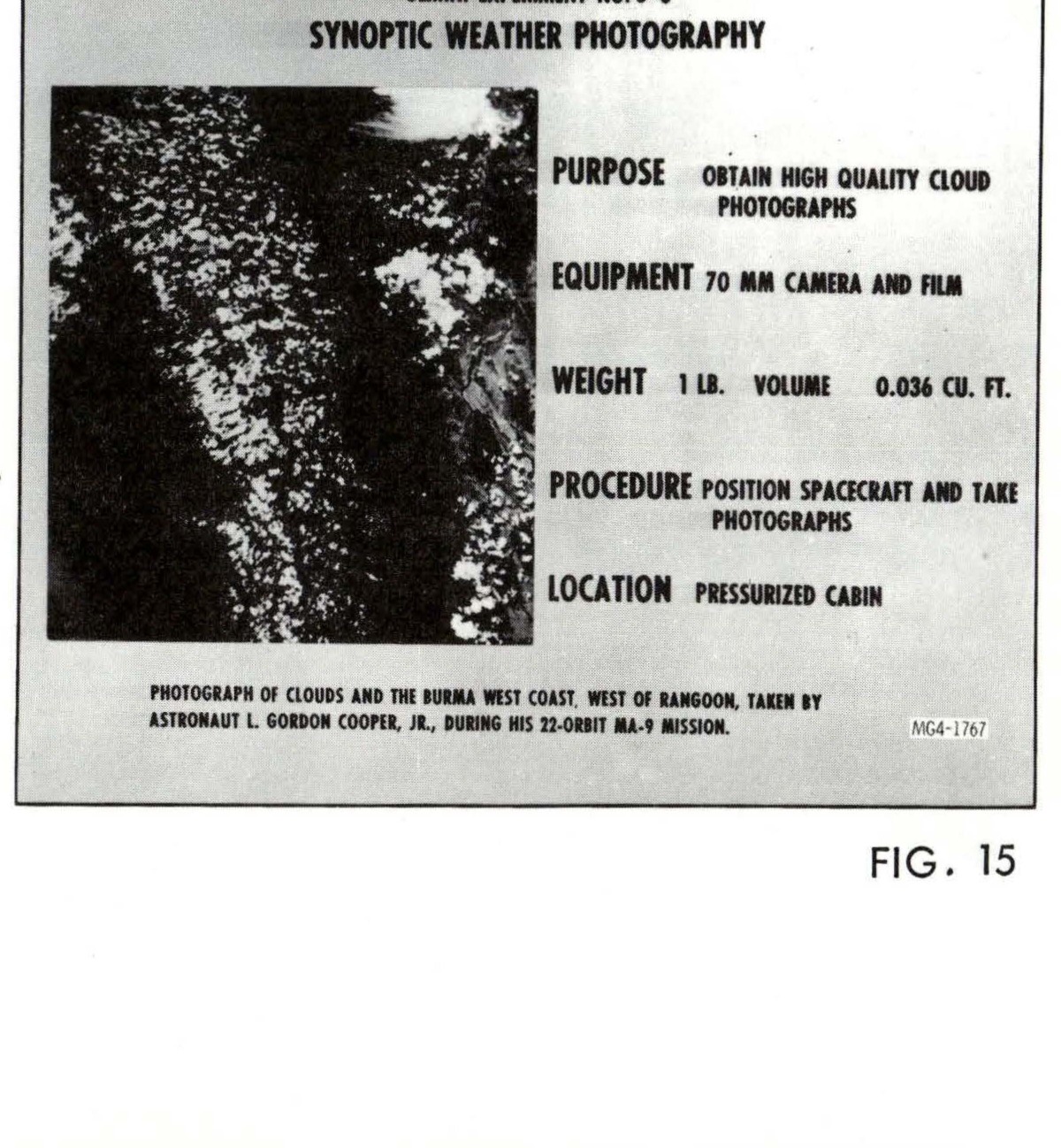
GEMINI EXPERIMENT NO. S-6 SYNOPTIC WEATHER PHOTOGRAPHY - Photograph of clouds and the Bimini West Coast, west of Bangkok, taken by astronaut L. Gordon Cooper, Jr., during his 22-orbit MA-9 mission. PURPOSE: Obtain high quality cloud photographs. EQUIPMENT: 70 MM camera and film. WEIGHT: 1 lb. VOLUME: 0.036 cu. ft. PROCEDURE: Position spacecraft and take photographs. LOCATION: Pressurized cabin. MSC-1767. FIG. 15
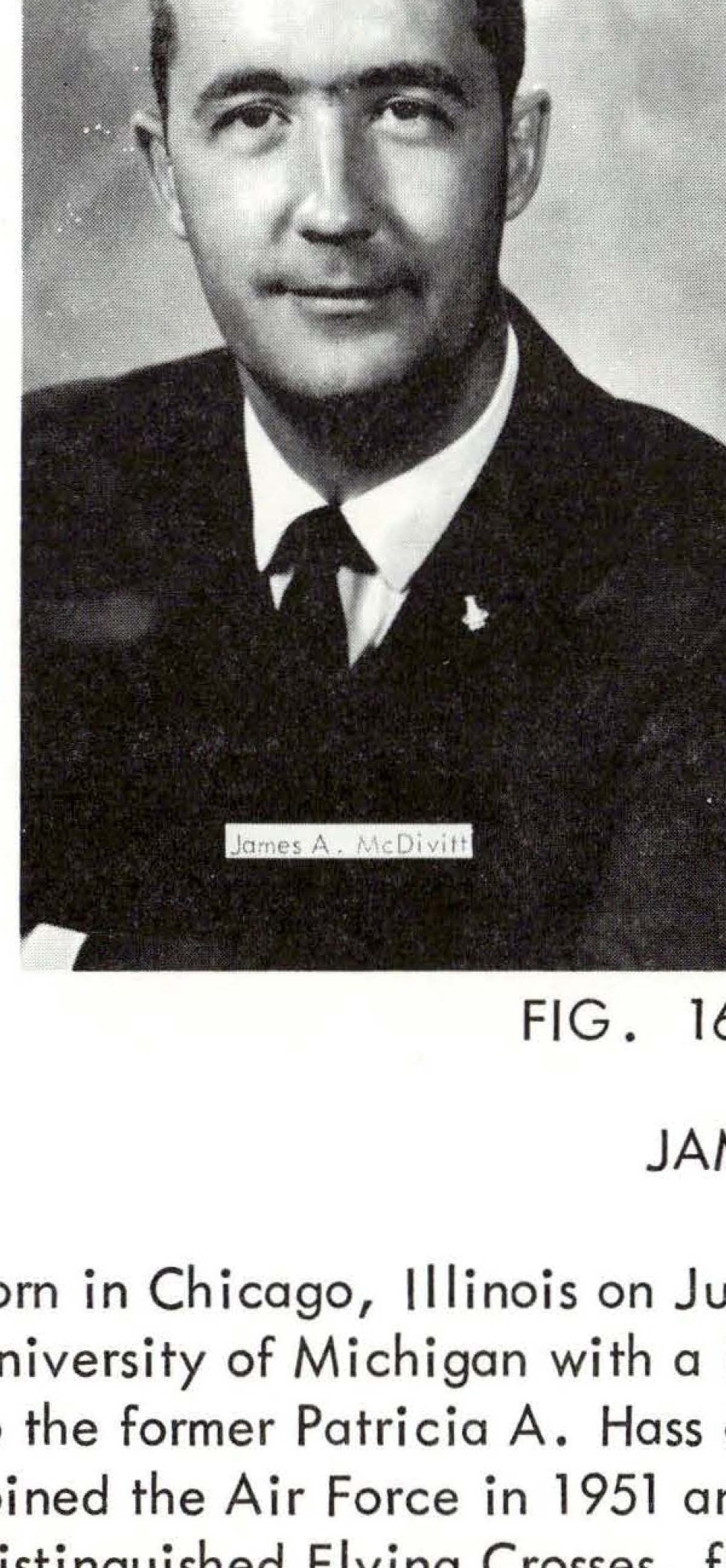
James A. McDivitt
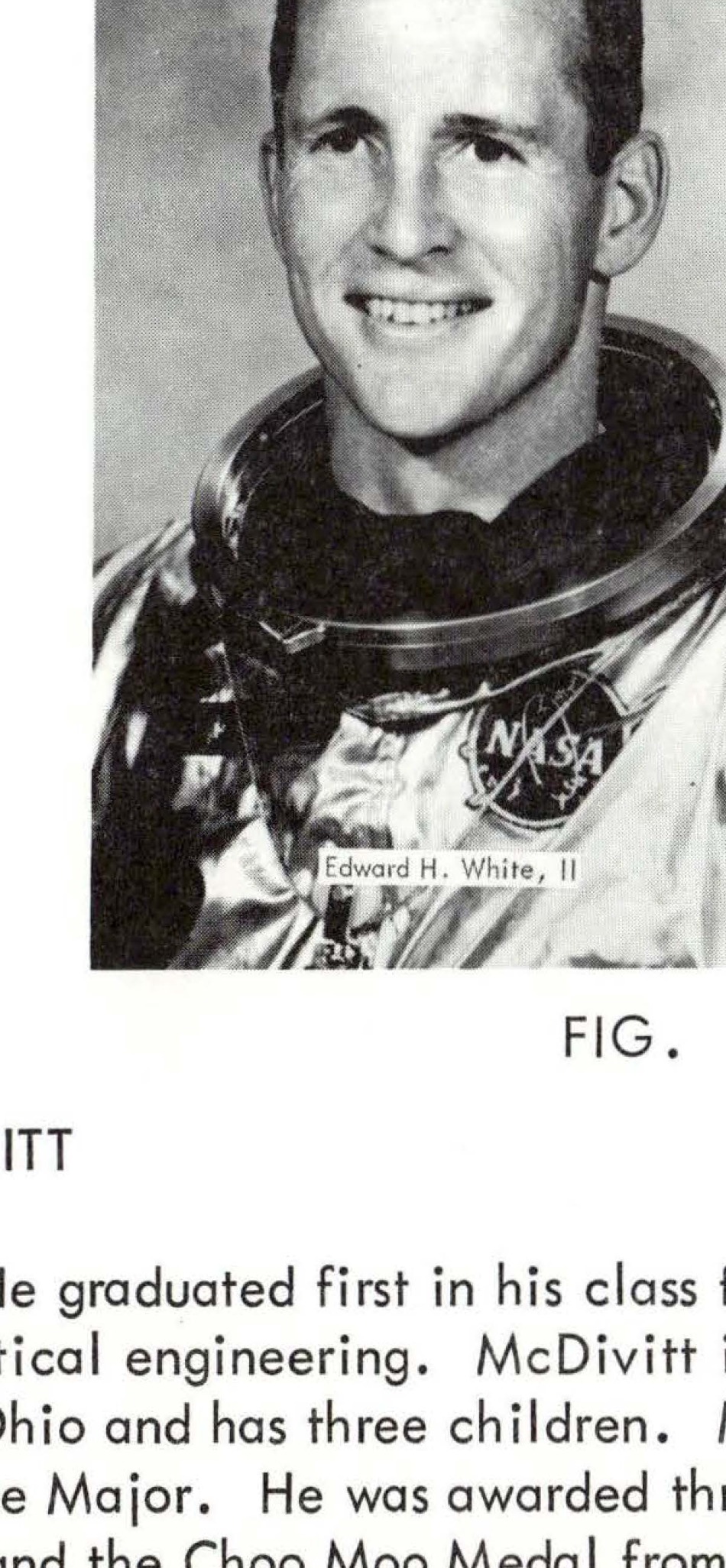
Edward H. White, II
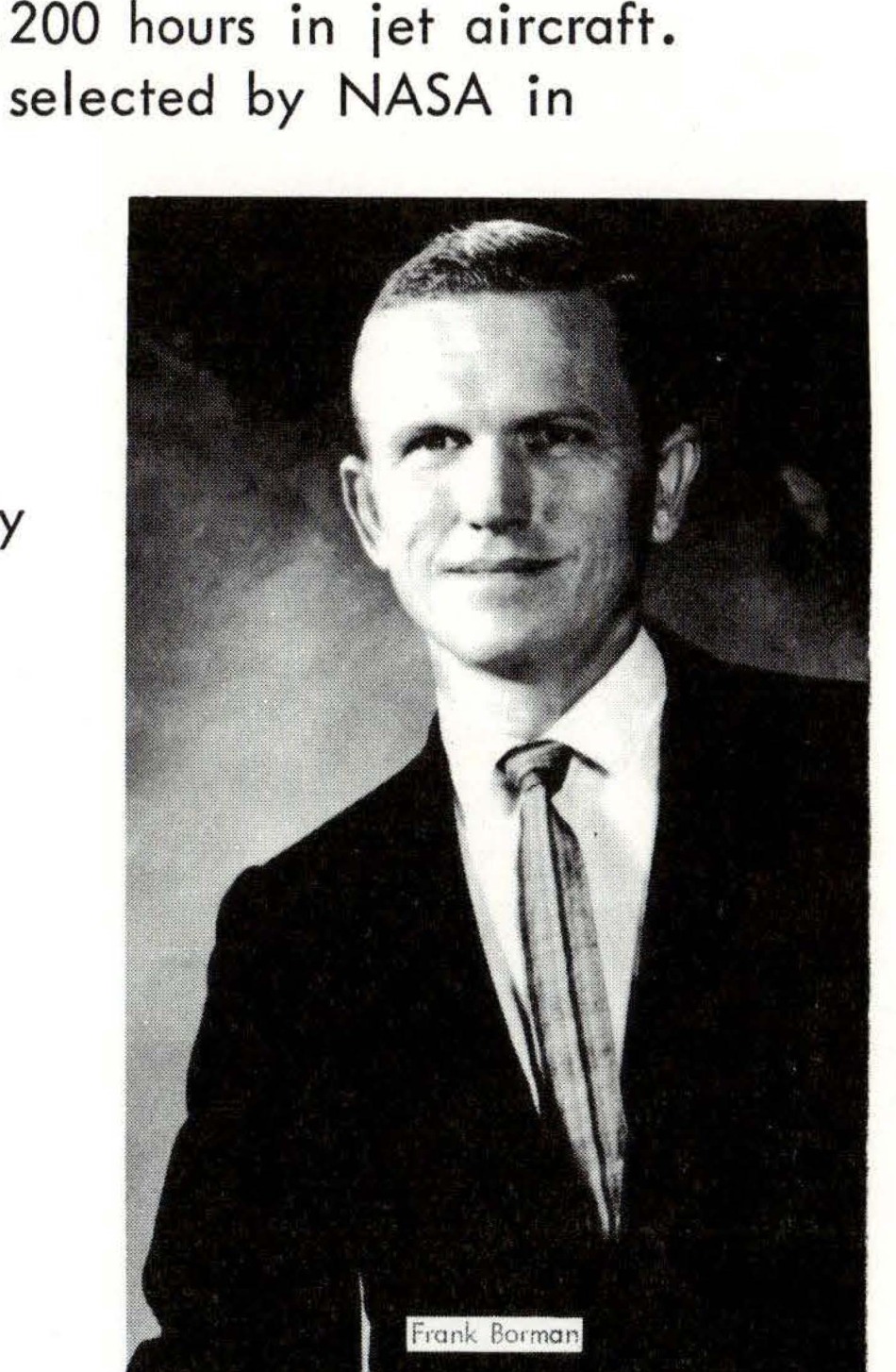
FIG. 18 - Portrait photograph of Frank Borman
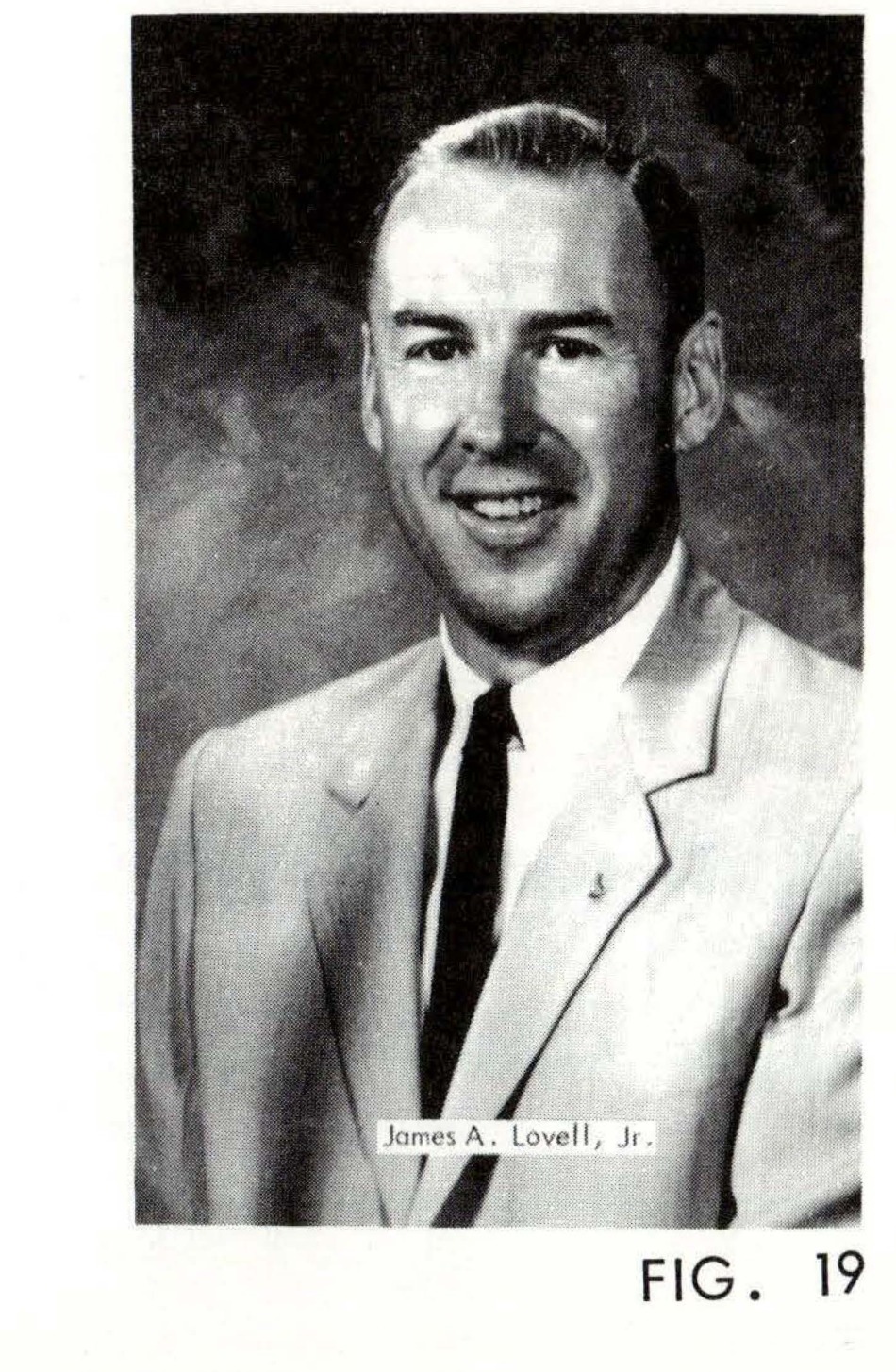
FIG. 19 - Portrait photograph of James A. Lovell, Jr.
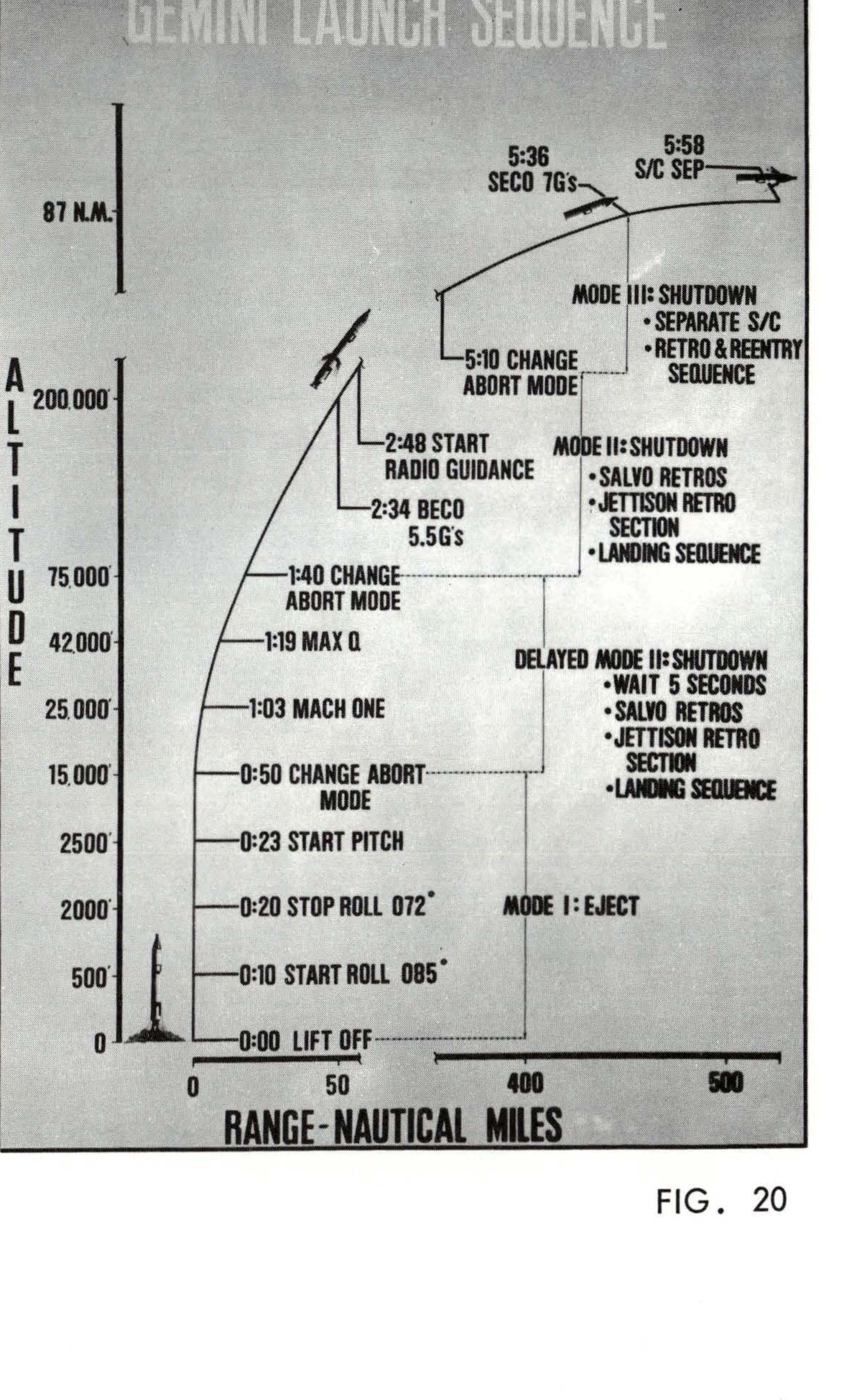
GEMINI LAUNCH SEQUENCE - Figure 20 showing altitude vs range trajectory with mission events
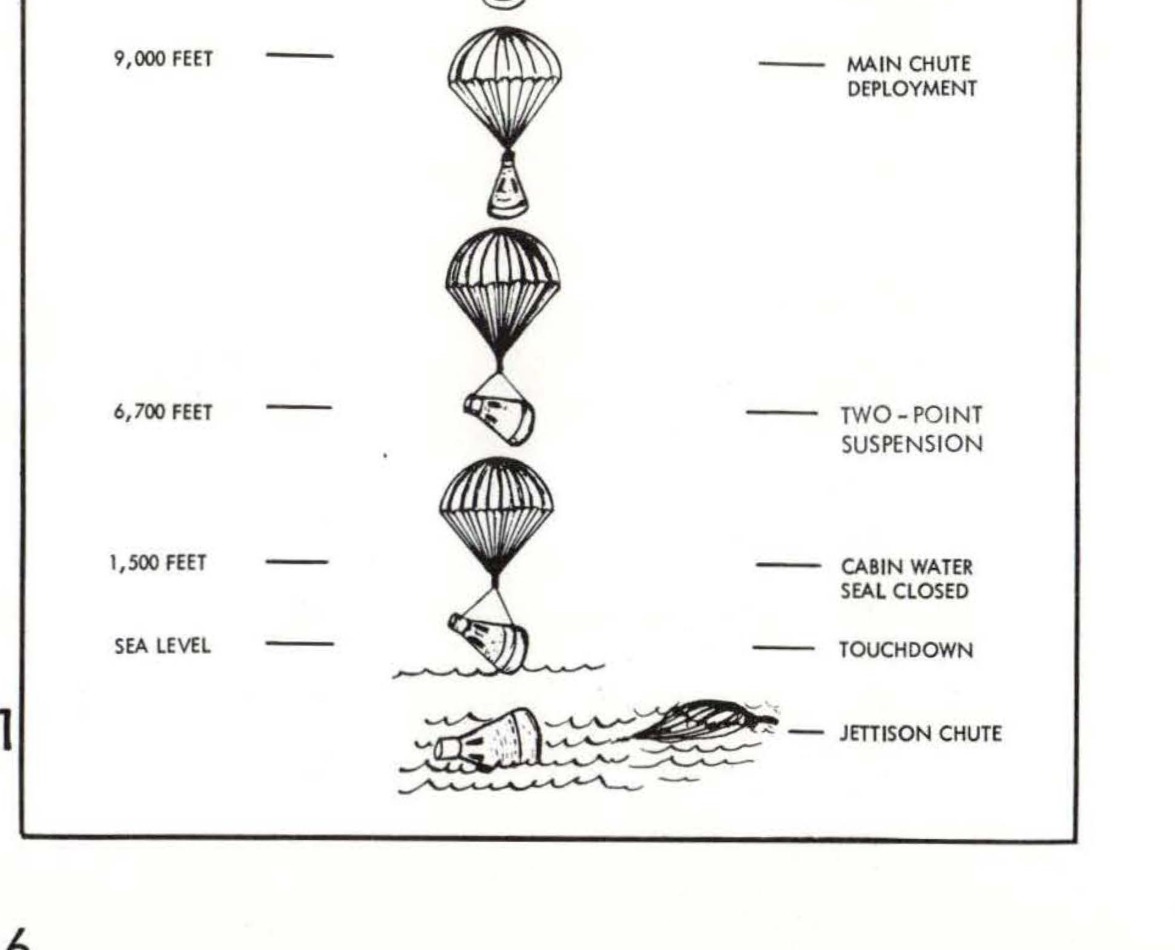
GEMINI PARACHUTE LANDING SEQUENCE showing descent stages from 30,000 feet to touchdown with labeled parachute deployments
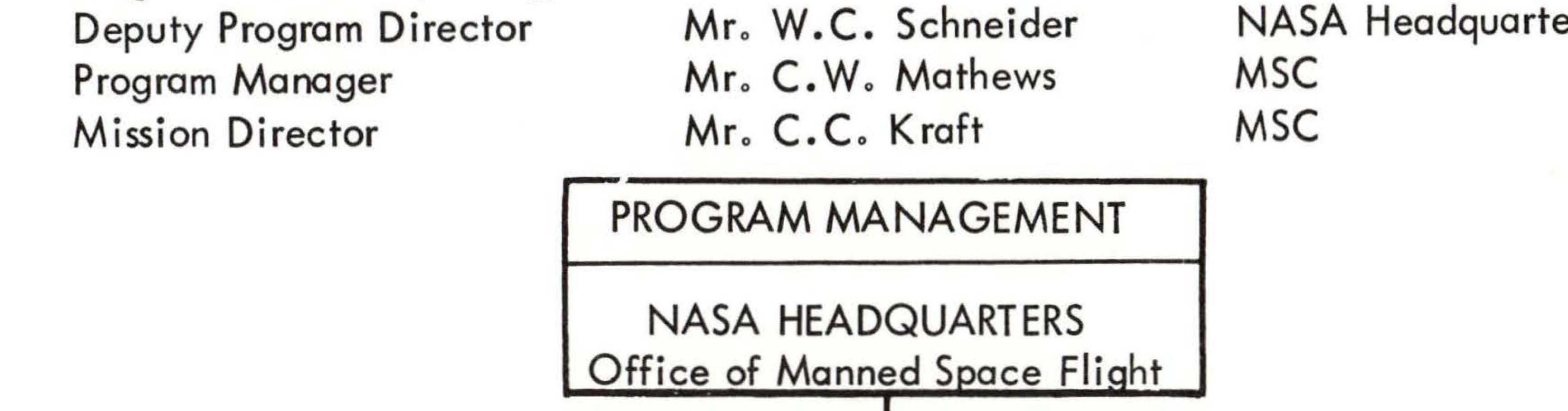
Program and Project Management organizational structure showing NASA Headquarters and Manned Spacecraft Center
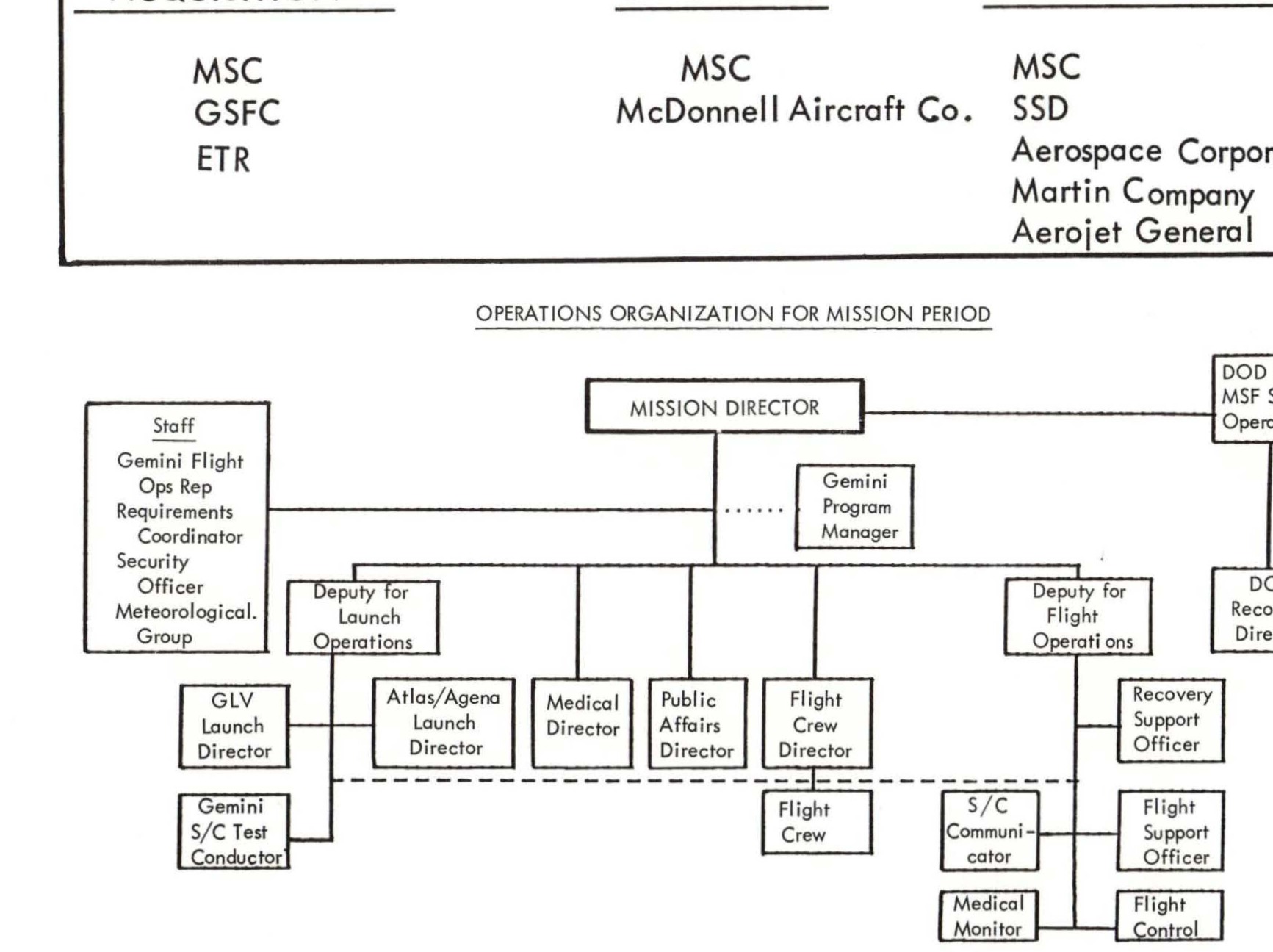
Operations organization chart for mission period showing Mission Director and supporting staff hierarchy
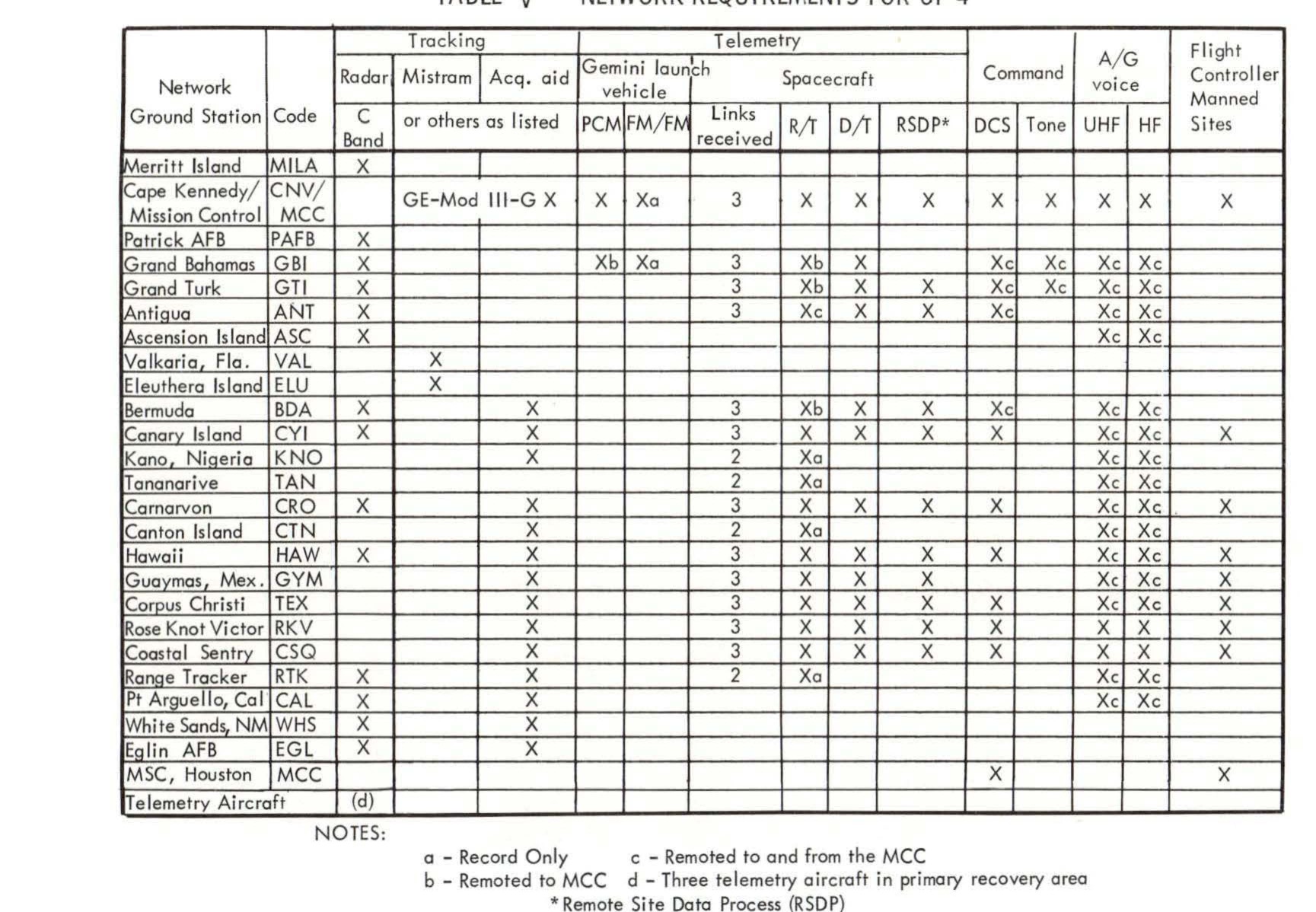
TABLE V - NETWORK REQUIREMENTS FOR GT-4 showing tracking network ground stations with radar, telemetry, and command capabilities
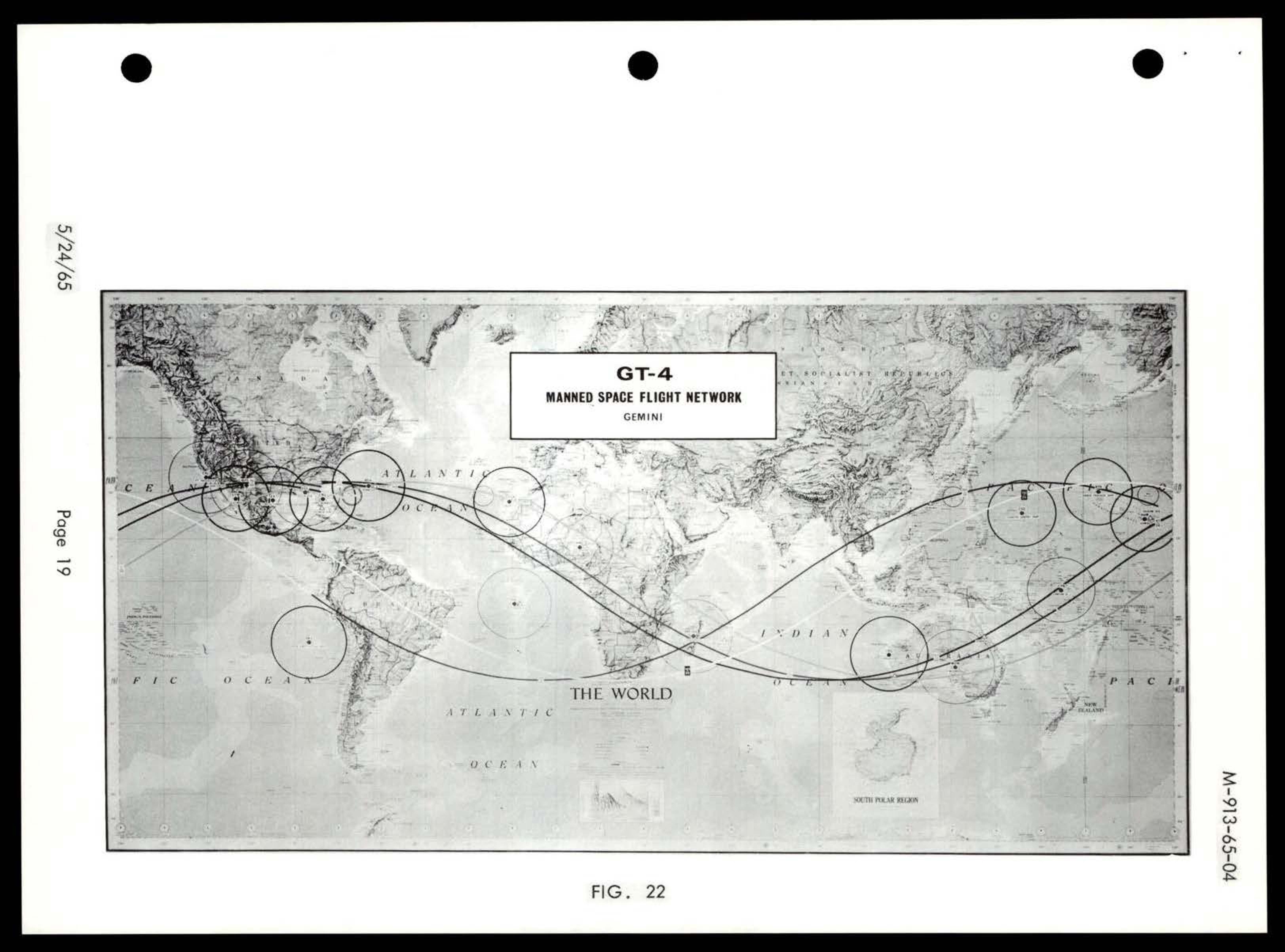
World map showing GT-4 Manned Space Flight Network (Gemini) with tracking stations and orbital paths marked by circles and lines across continents and oceans
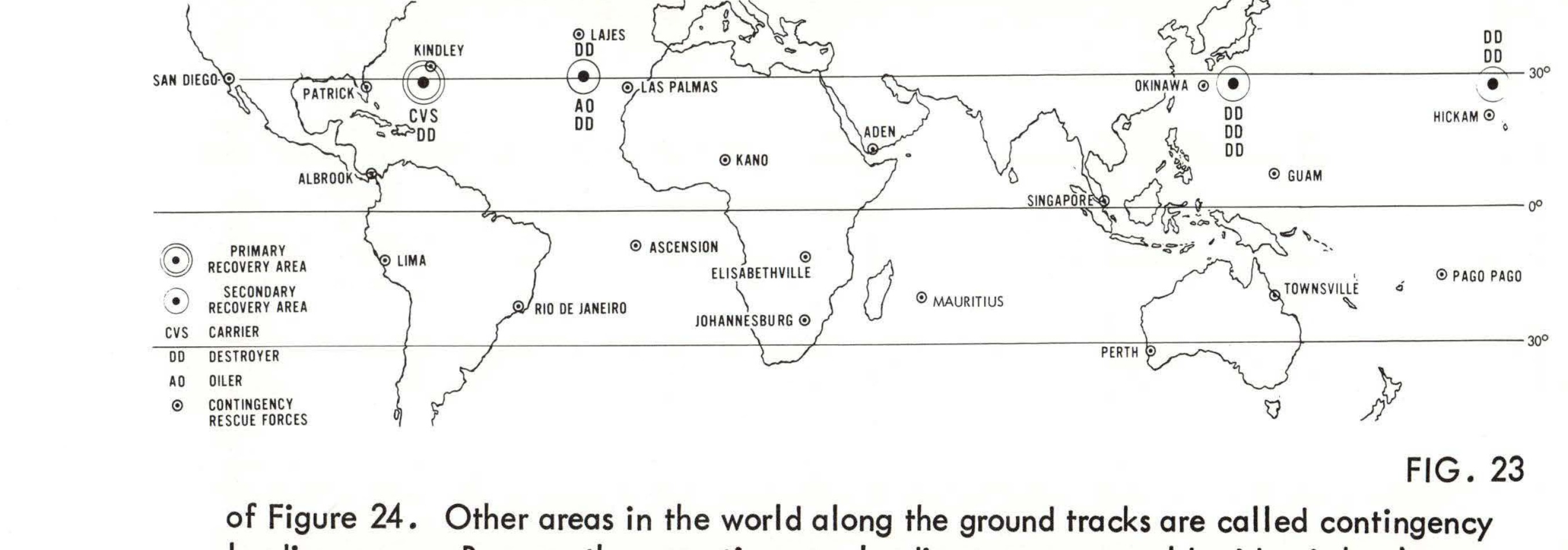
World map showing GT-4 primary and secondary landing zones with recovery ship support and contingency rescue forces locations
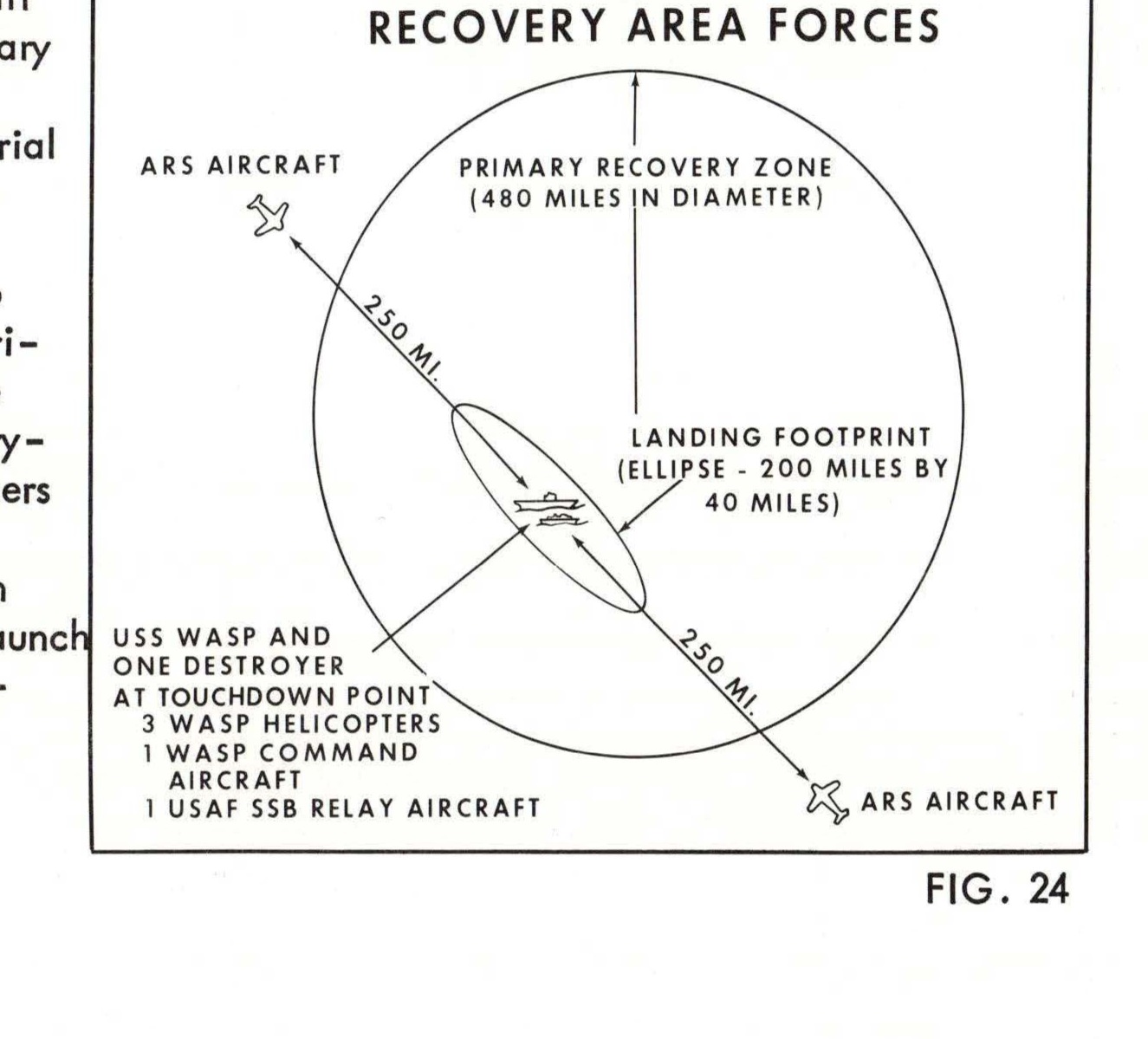
Recovery Area Forces diagram showing primary recovery zone, landing footprint, and deployment of USS WASP, destroyer, helicopters, and aircraft
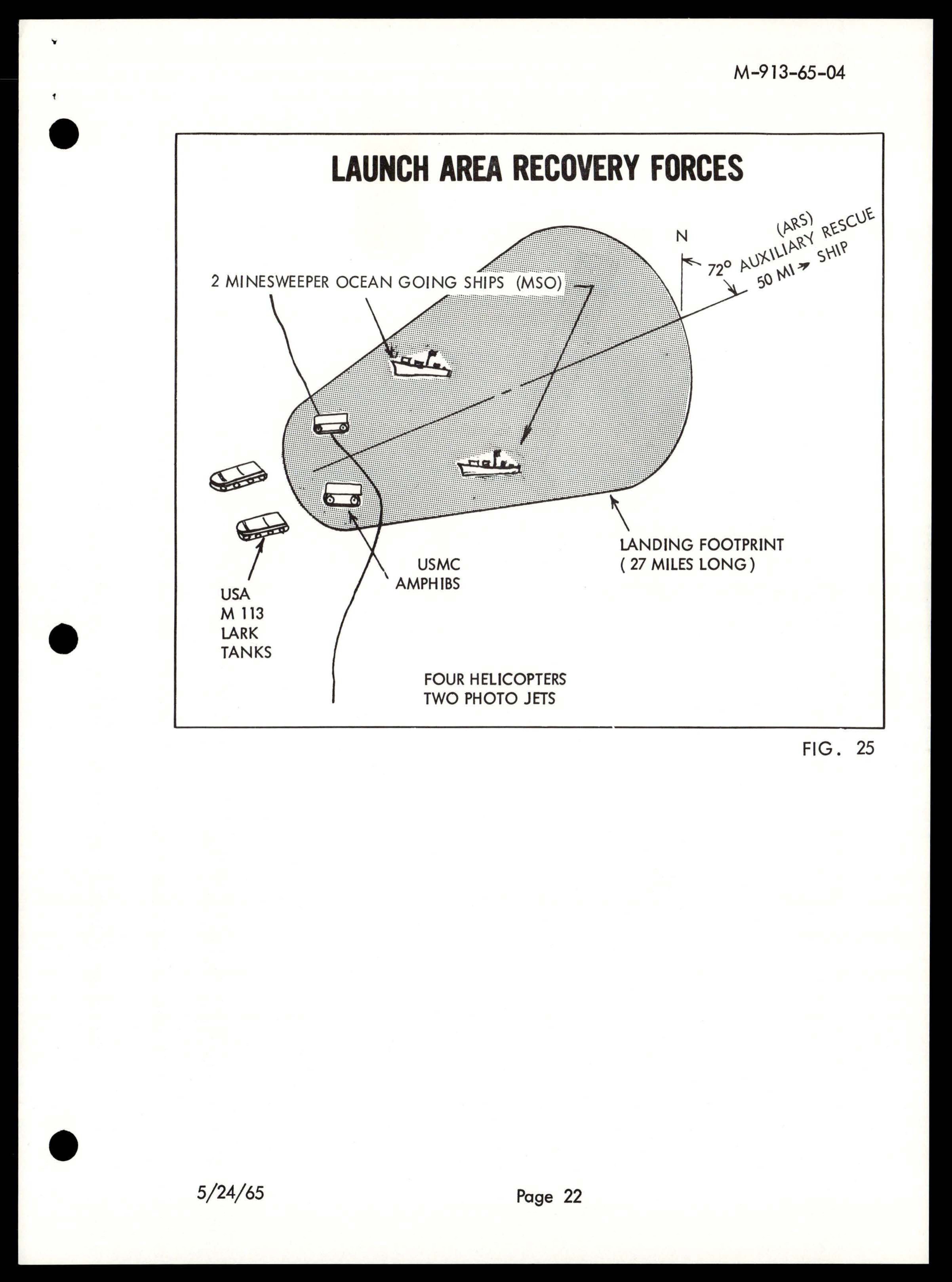
Diagram showing launch area recovery forces deployment including minesweeper ships, USMC amphibs, USA M 113 LARK tanks, helicopters, photo jets, and auxiliary rescue ship positioned around a 27-mile landing footprint

Timeline diagram showing boxes labeled GYMEX, CNT, ANT, ASC, PRE, TAN, N/GHT, CDO, HAW
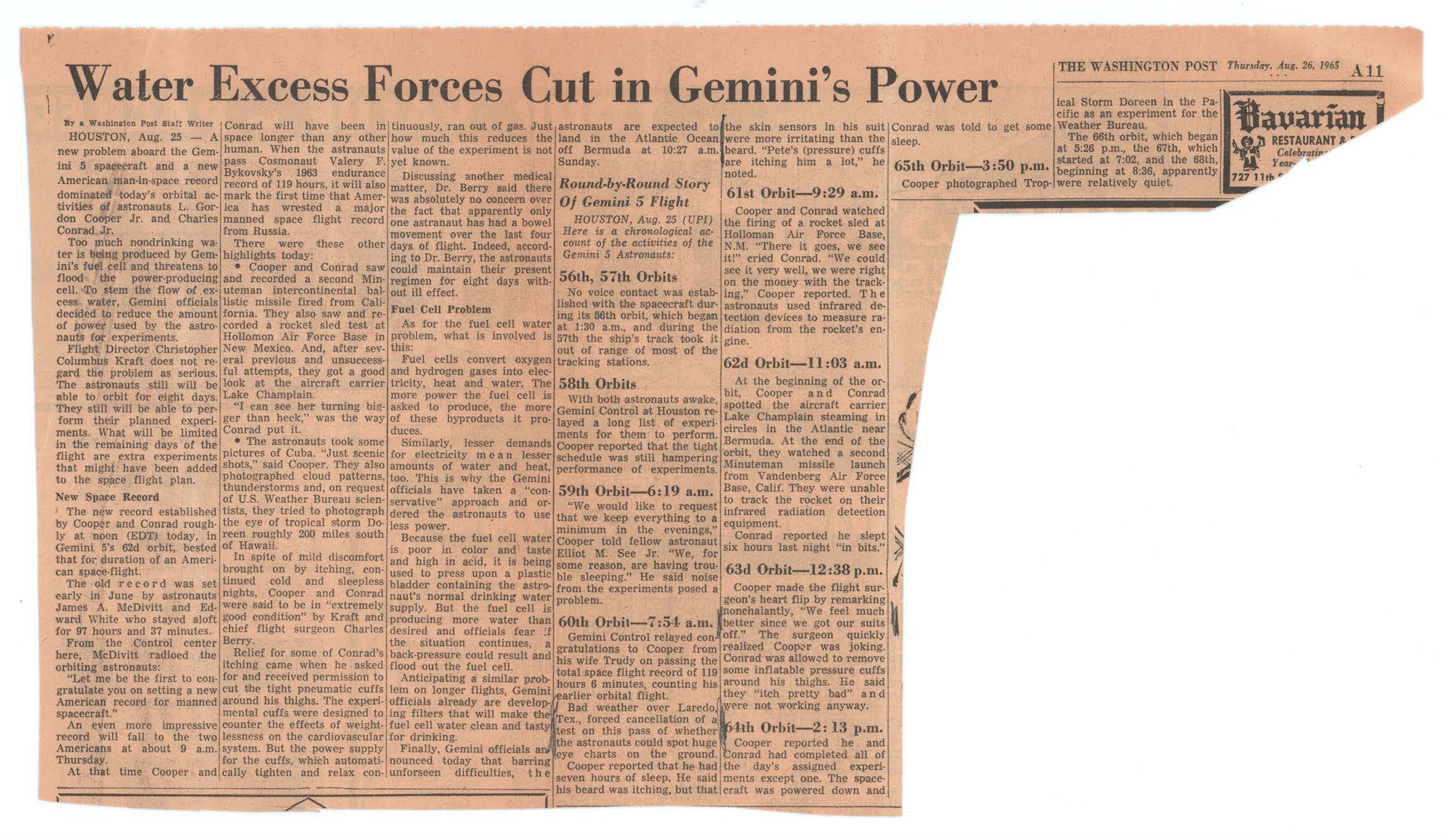
Newspaper clipping from The Washington Post, August 26, 1965, reporting on Gemini 5 spacecraft power issues and mission progress
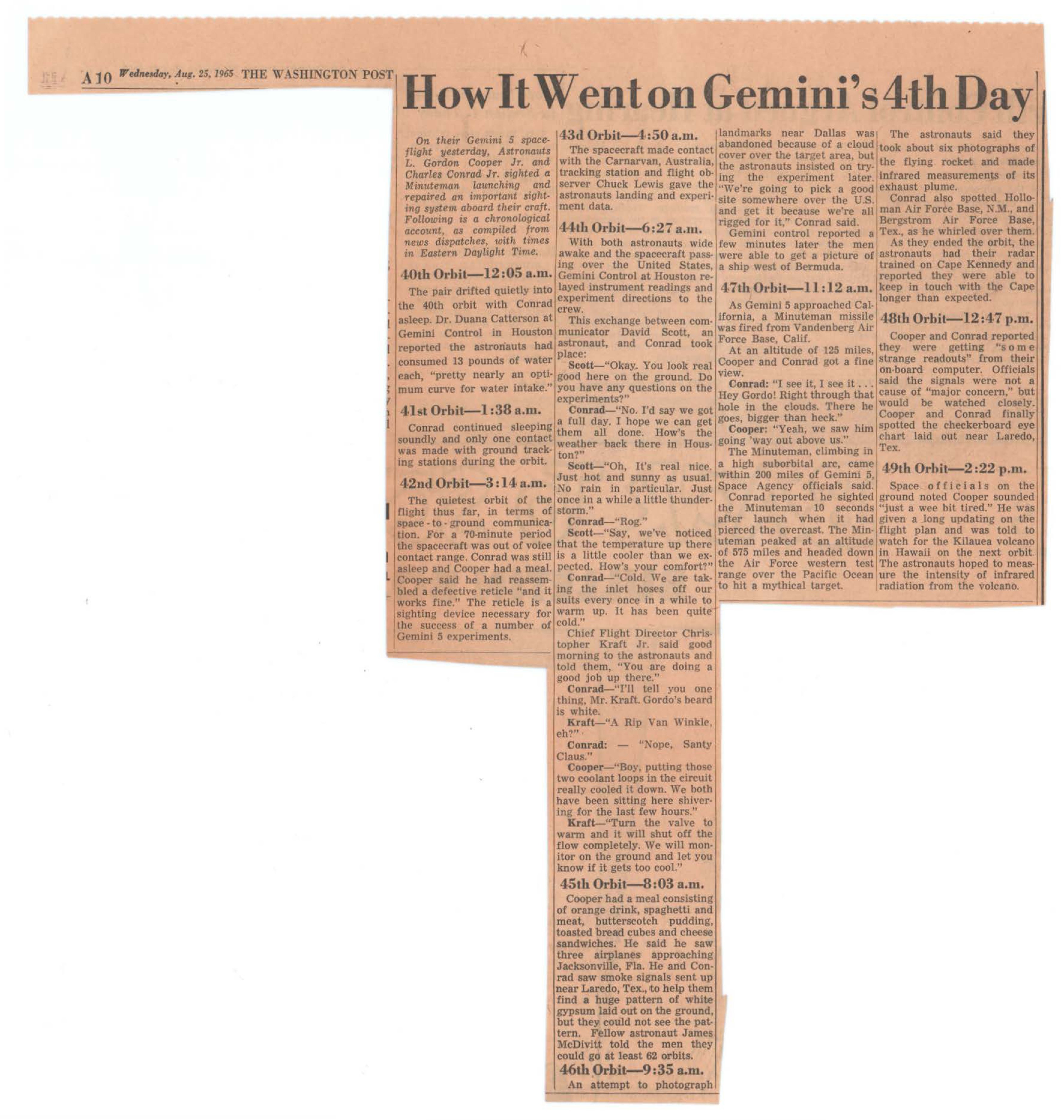
Newspaper clipping from The Washington Post, August 25, 1965, describing chronological events of Gemini 5's fourth day in orbit

NASA Photo from UPI - Mrs. Charles Conrad Jr. accompanied by her father, Hans Bohlen, sits in the tracking station at Cape Kennedy and gets a firsthand view of the progress of her husband's flight aboard the Gemini spacecraft.

Hand-drawn rectangular box with circular shape inside
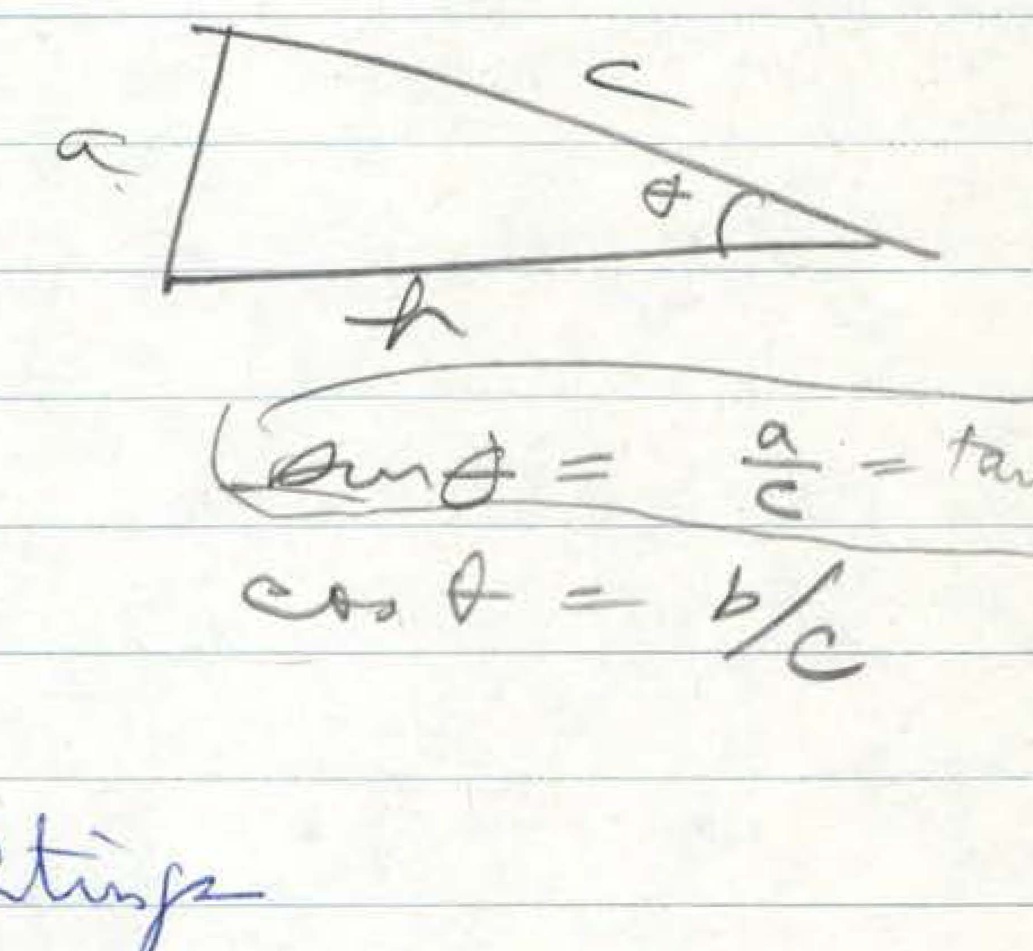
Triangle diagram with mathematical notations including sin d = tan t, sin g + cos g = 1, and cos b = b/c
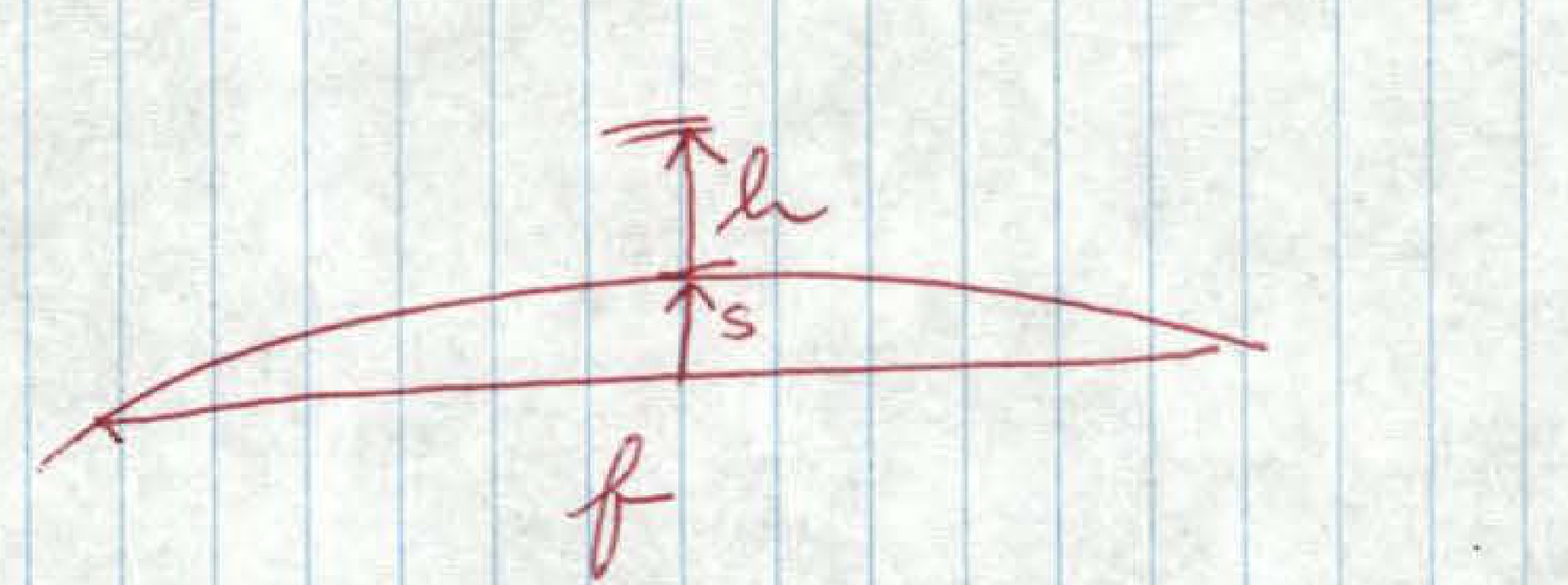
Hand-drawn sketch showing curved object with annotations 'Ta', 's', and 'f'

NASA seal/logo in upper left corner
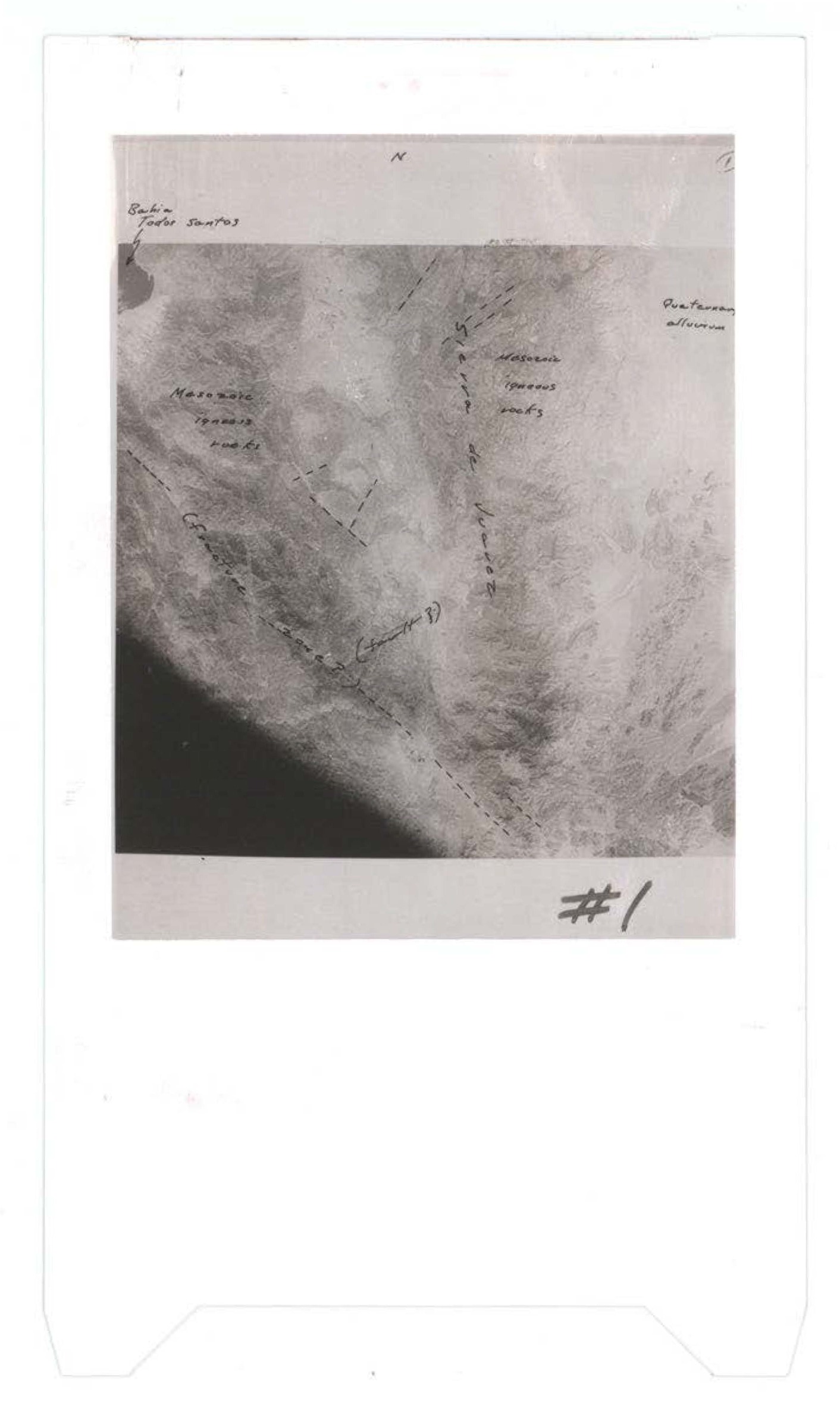
Aerial or satellite photograph showing cloud formations with handwritten annotations indicating broken field sources, prestorm altocumulus, and mesoscale updraft/downdraft complexes, marked as #1
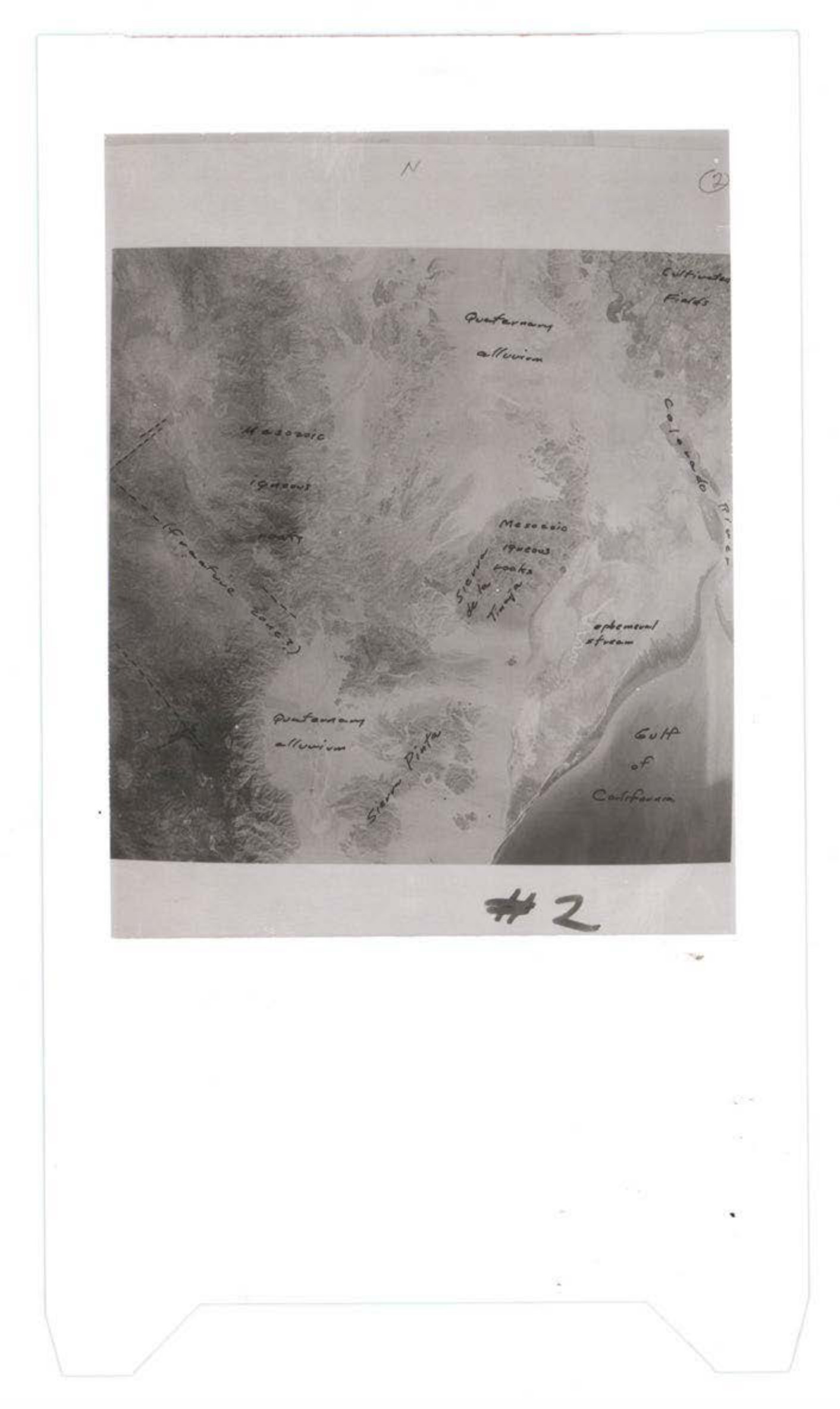
Geological map showing Quaternary alluvium, Mesozoic Tertiary formations, and Gulf of California region with north arrow indicator
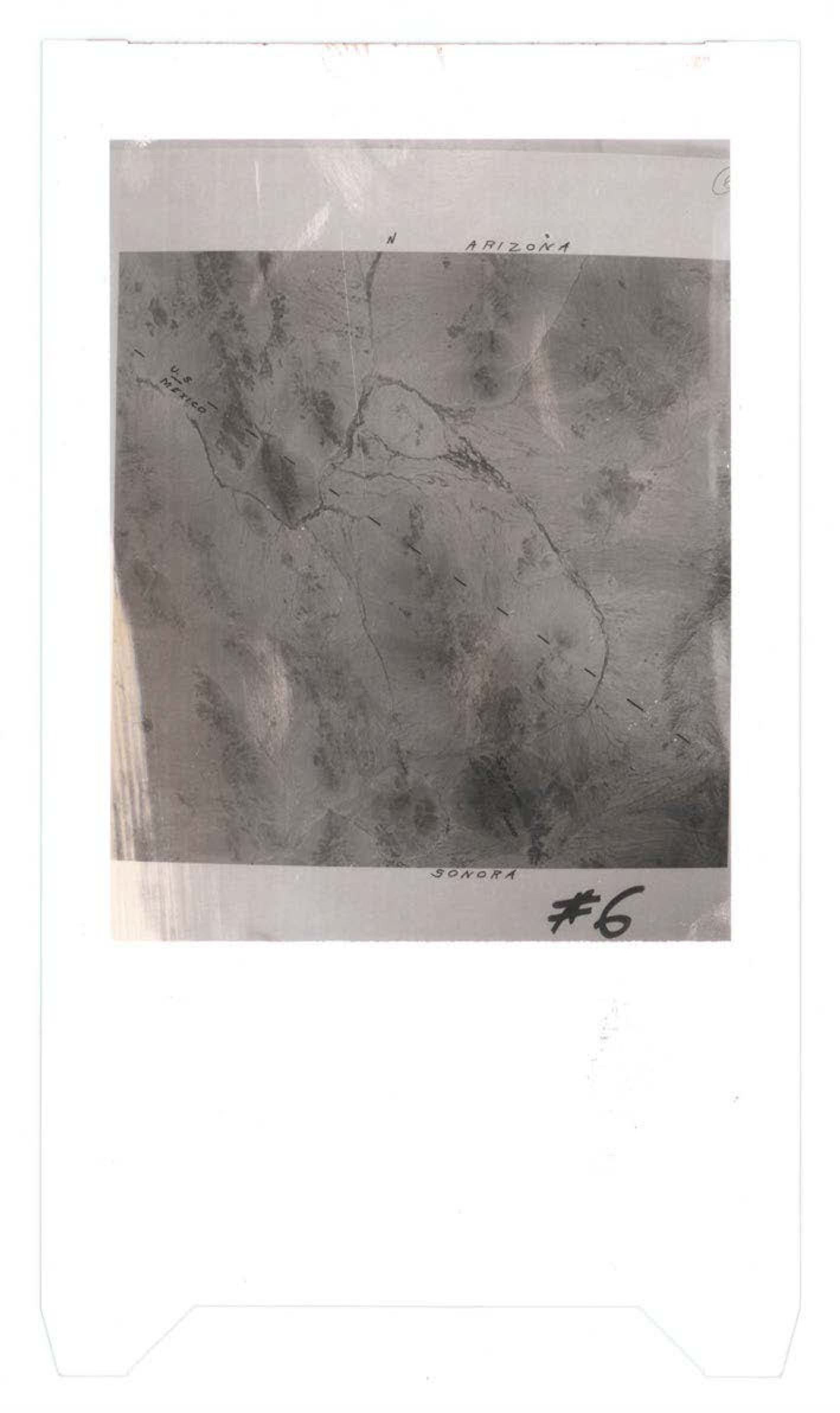
Aerial or topographic map showing border region between Arizona and Sonora, Mexico, with dashed boundary line marked
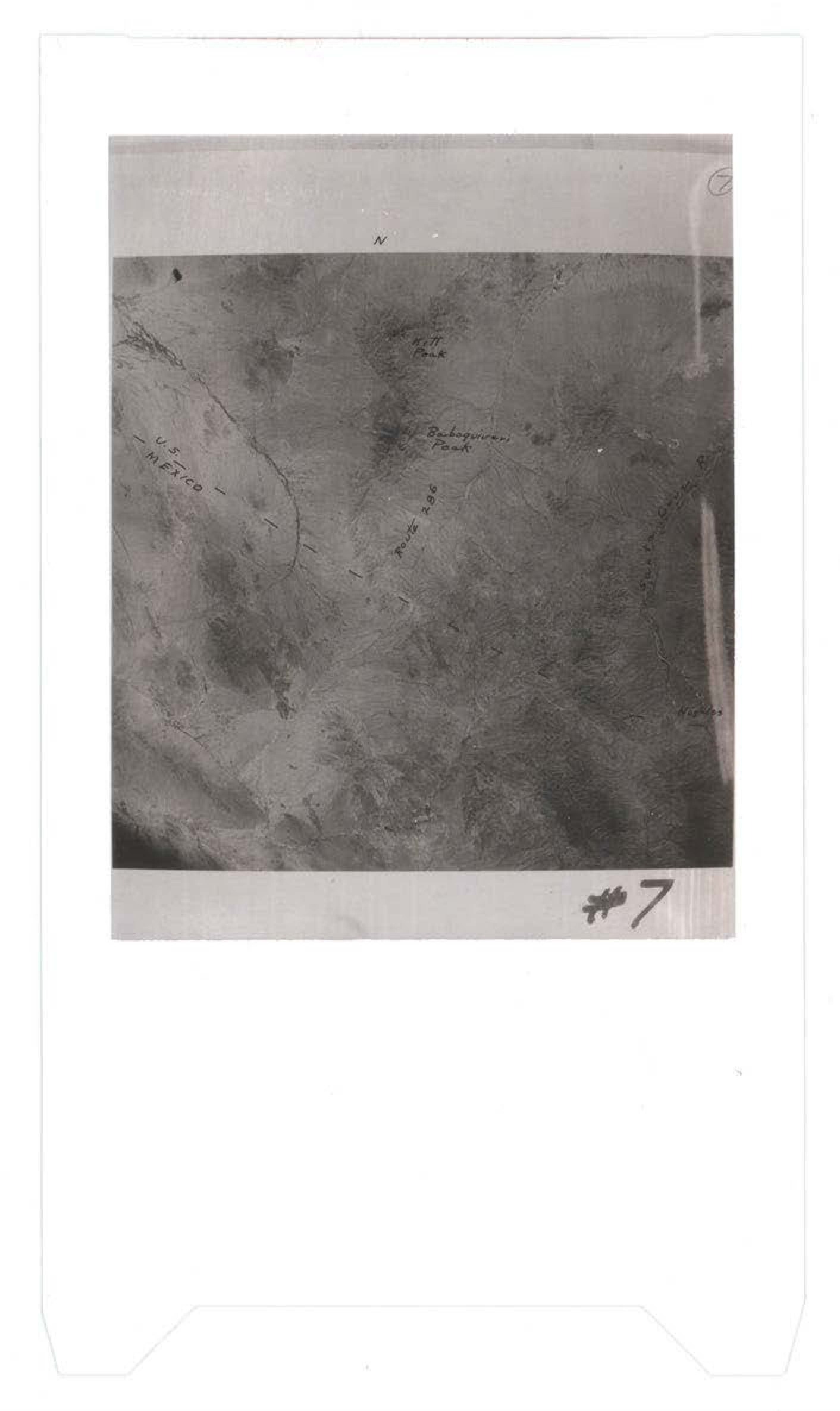
Aerial photograph showing terrain with handwritten annotations indicating Mexico border and Boquequas Peak, marked as #7
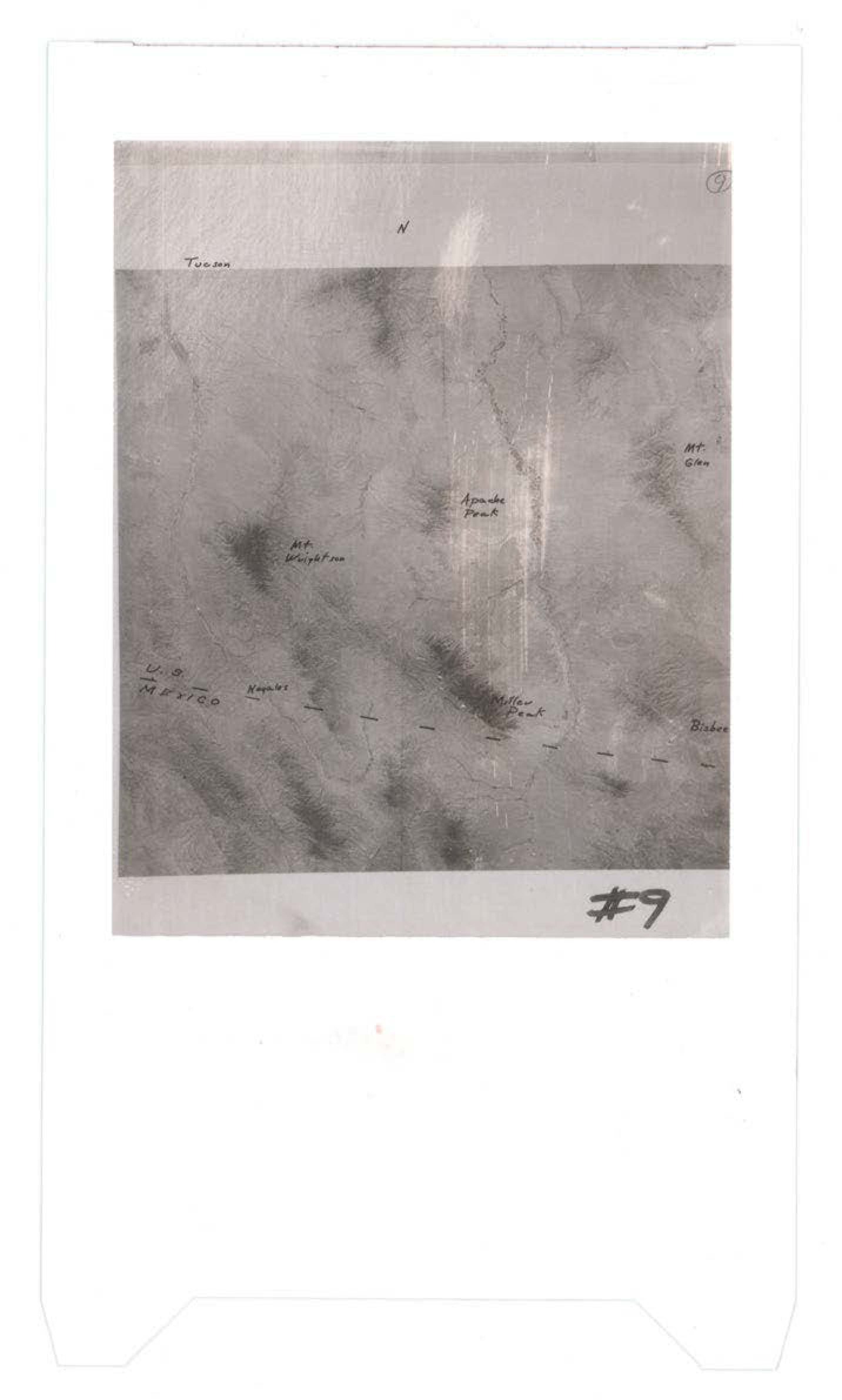
Aerial or topographic map showing terrain features with handwritten labels including Tucson, Apache Peak, Mt. Lemmon, Mt. Gibbs, Lembert, and Highway 89 near Bridgeport, marked as #9
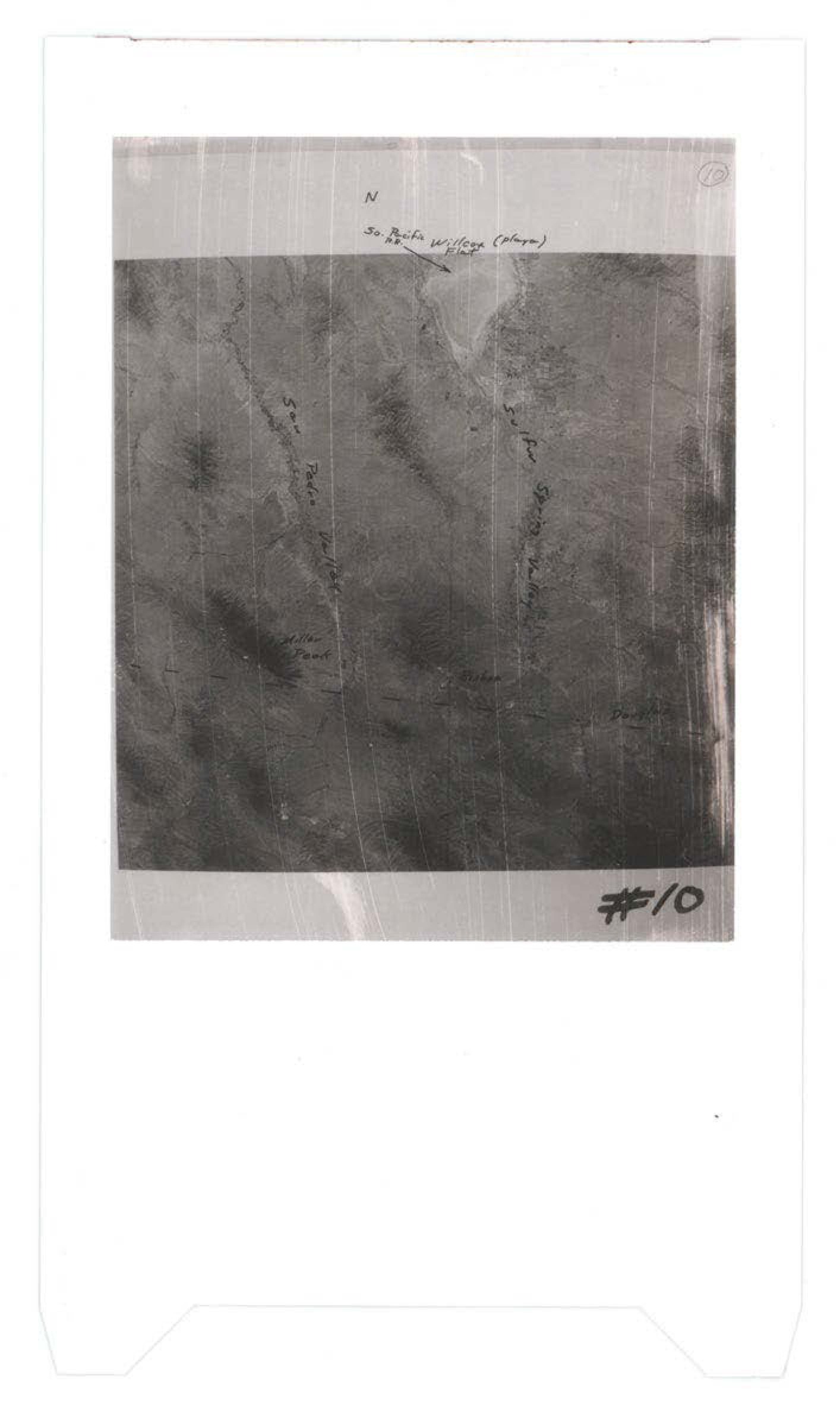
Aerial photograph with handwritten annotations showing terrain features and directional marker N
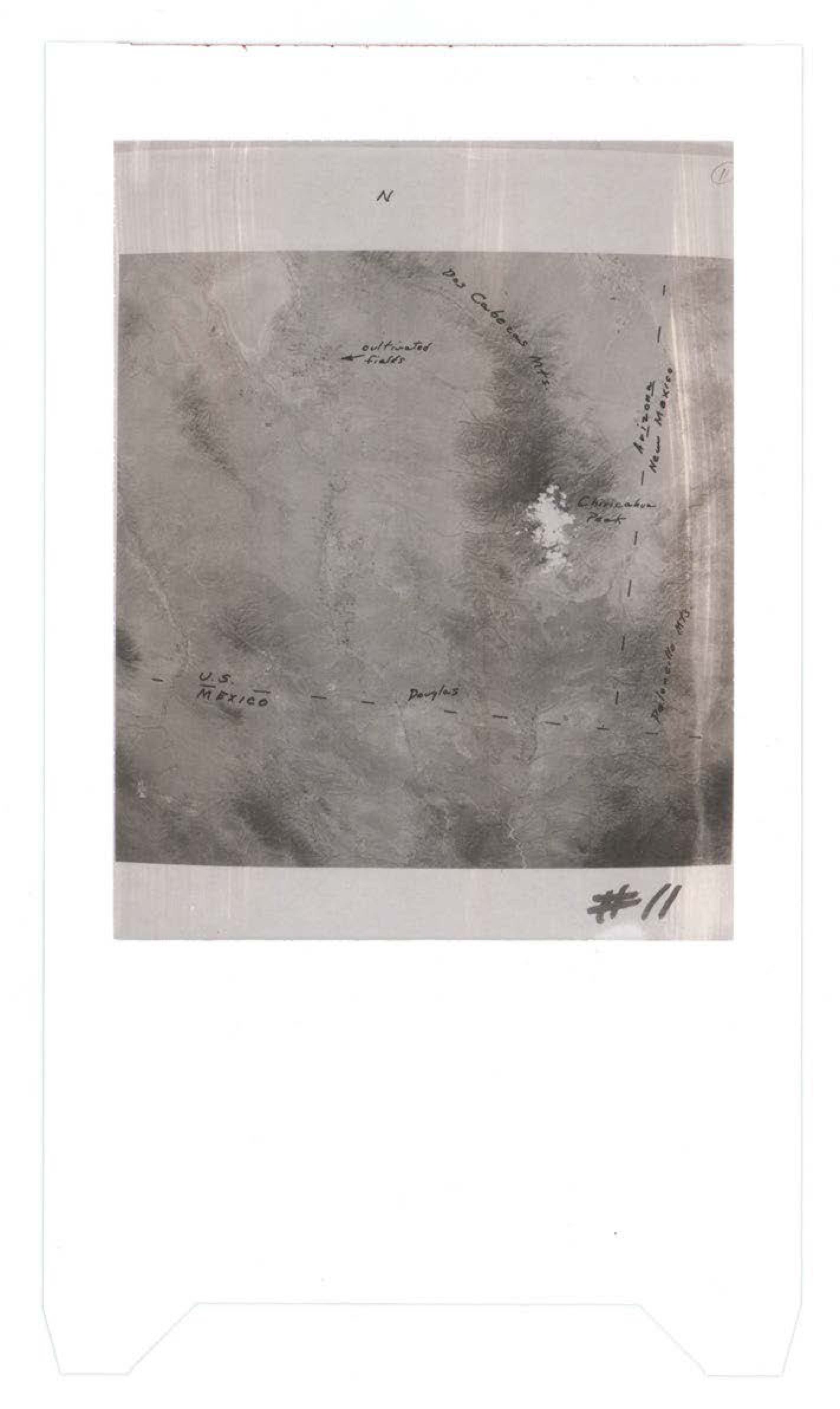
Aerial photograph showing terrain with handwritten annotations including directional marker N, continental trader, U.S. RESTRICTED, Douglas, and numbered #11
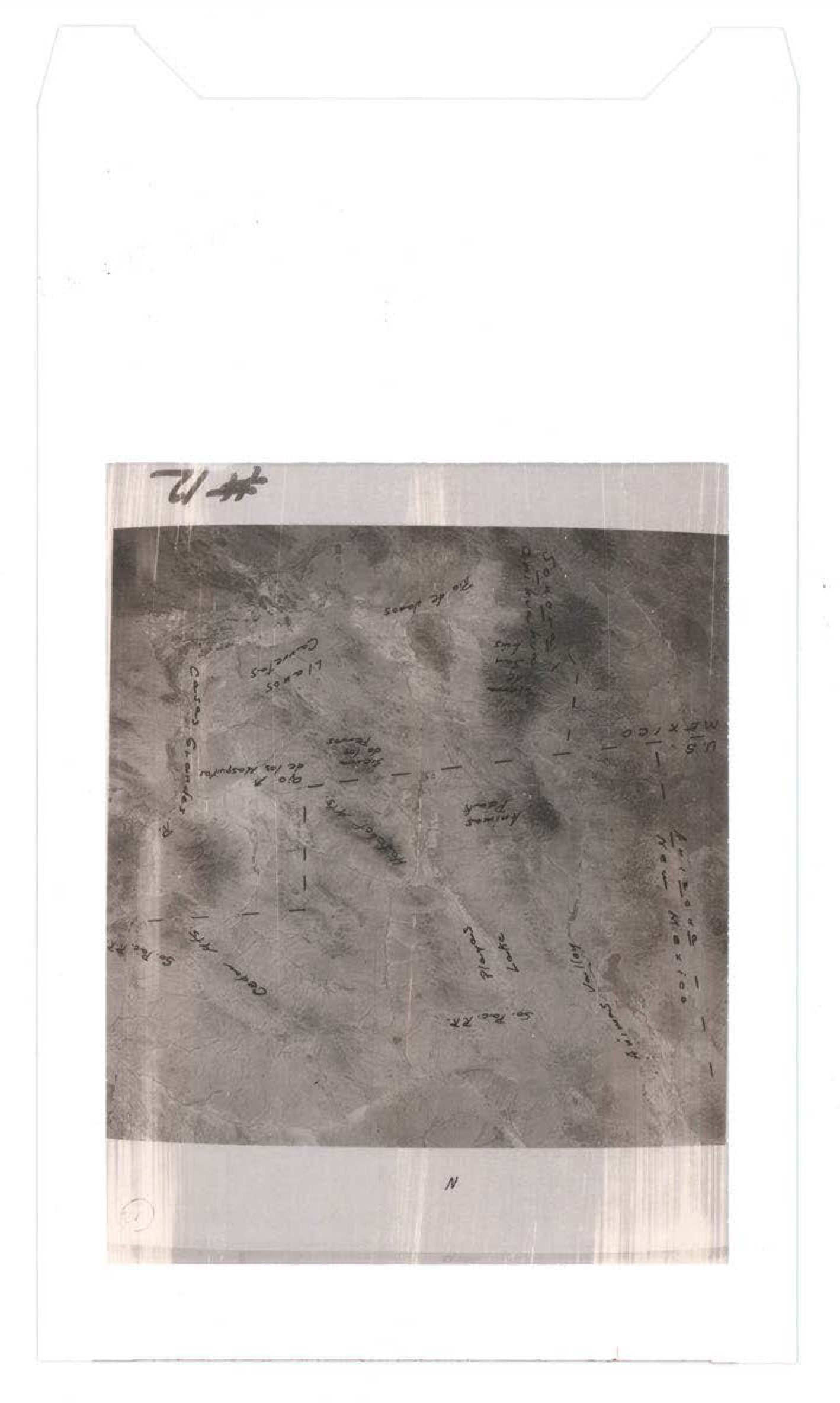
Heavily degraded or damaged photograph with handwritten annotations overlaid; image quality poor with significant deterioration making details illegible
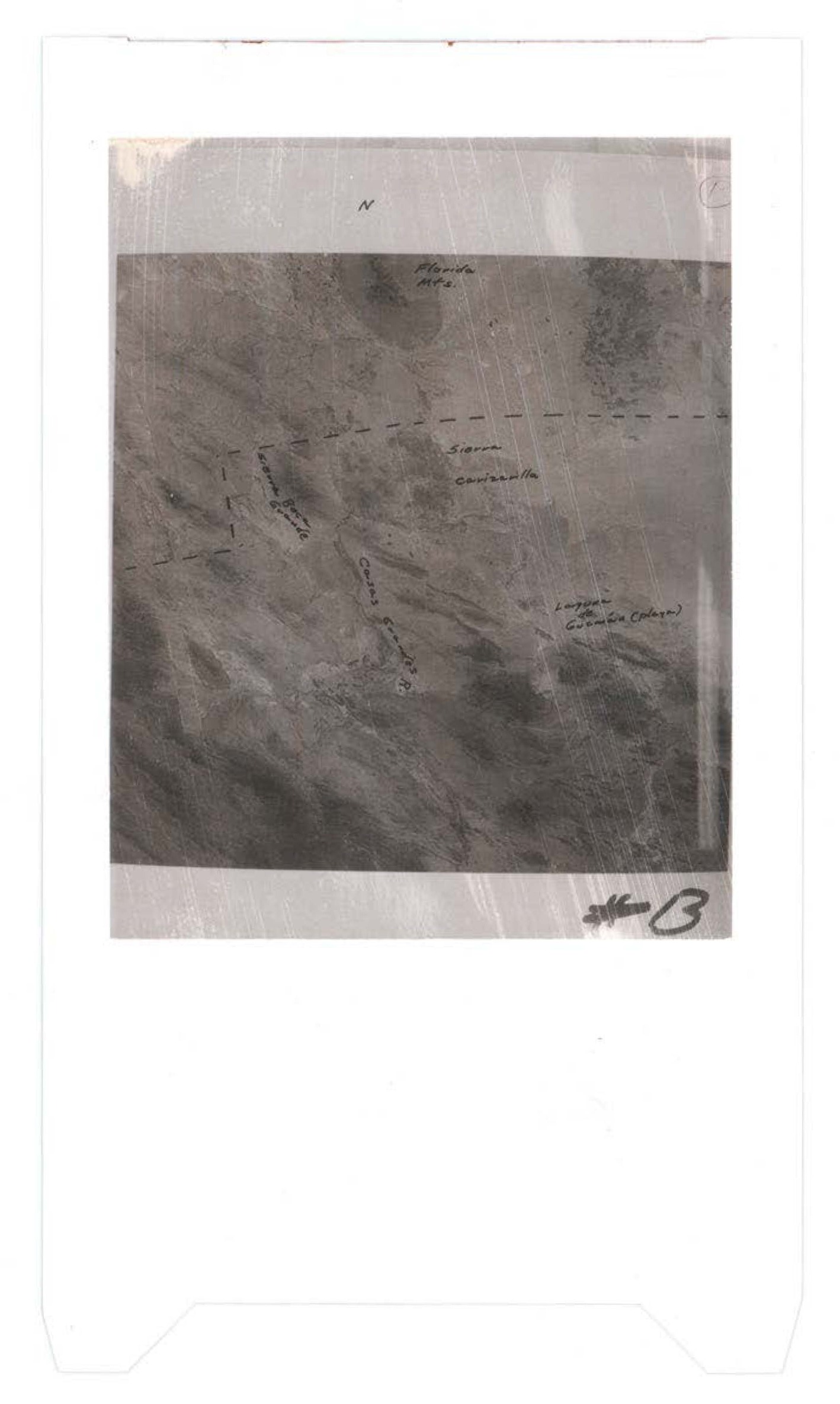
Aerial photograph with handwritten annotations indicating Florida location, storm contrails, and measurements
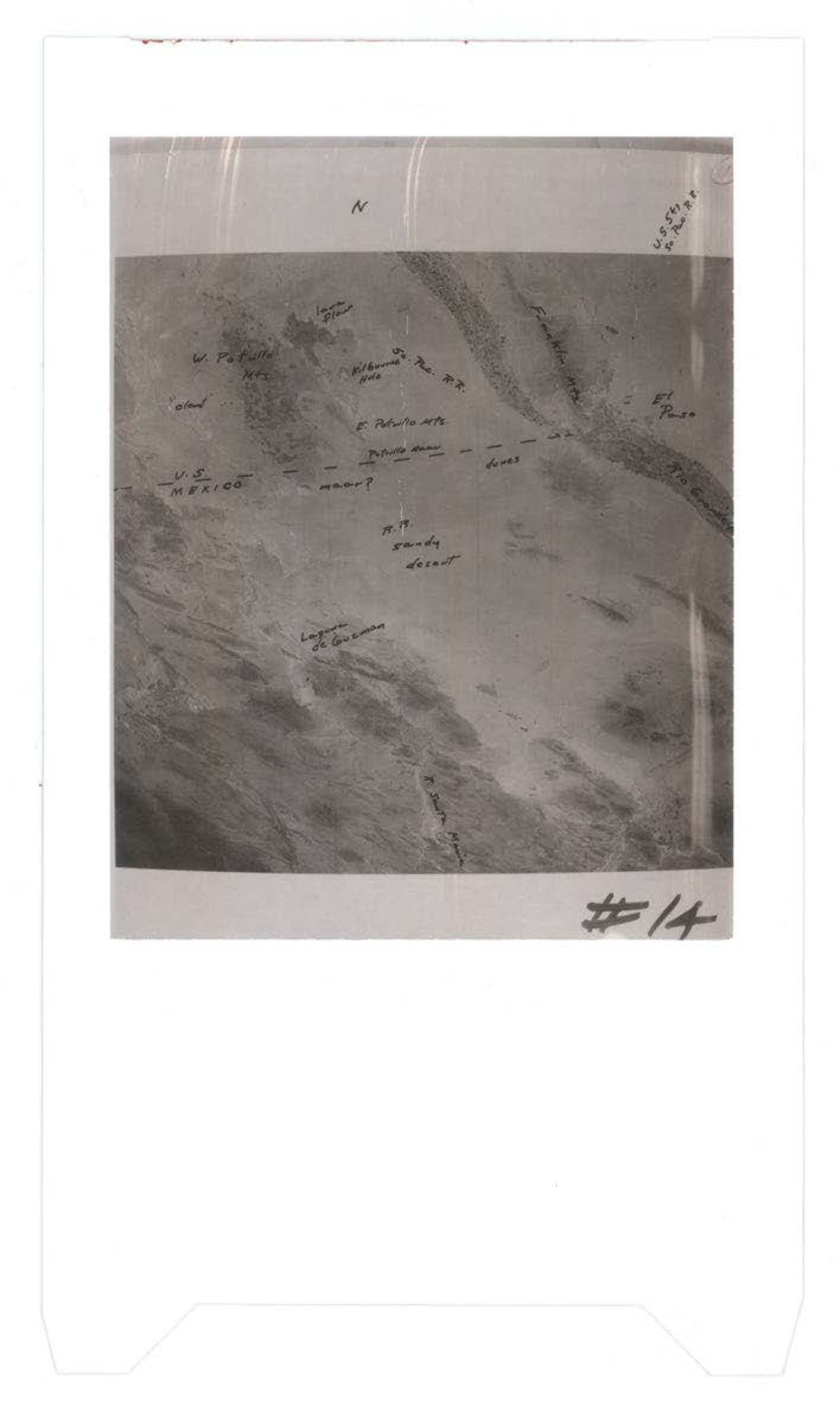
Aerial photograph with handwritten annotations including directional marker 'N', 'U.S. MEXICO' border notation, and various illegible handwritten notes; numbered '#14'
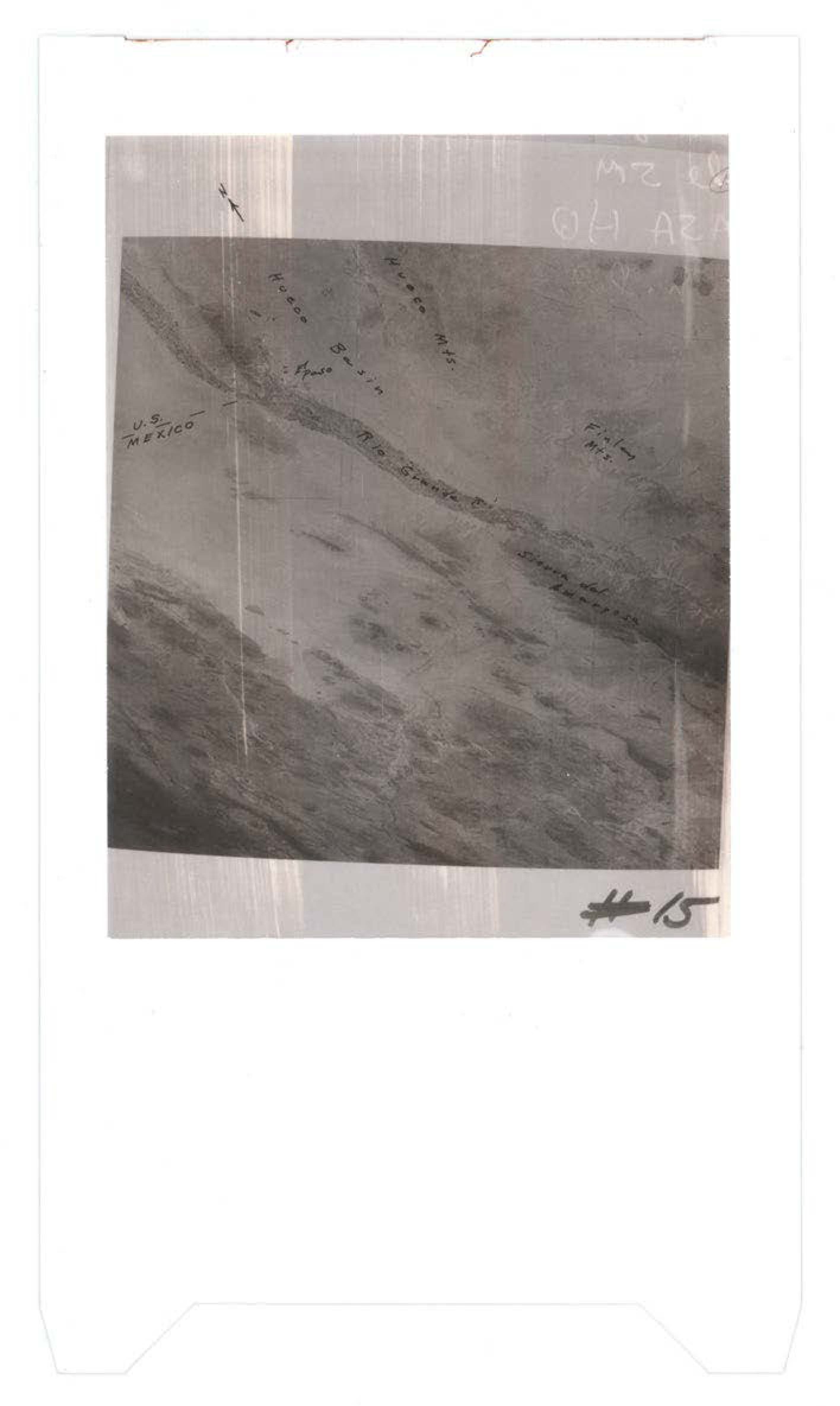
Aerial photograph showing terrain with border markings between U.S. and Mexico, with handwritten annotations and dotted lines indicating boundaries or features
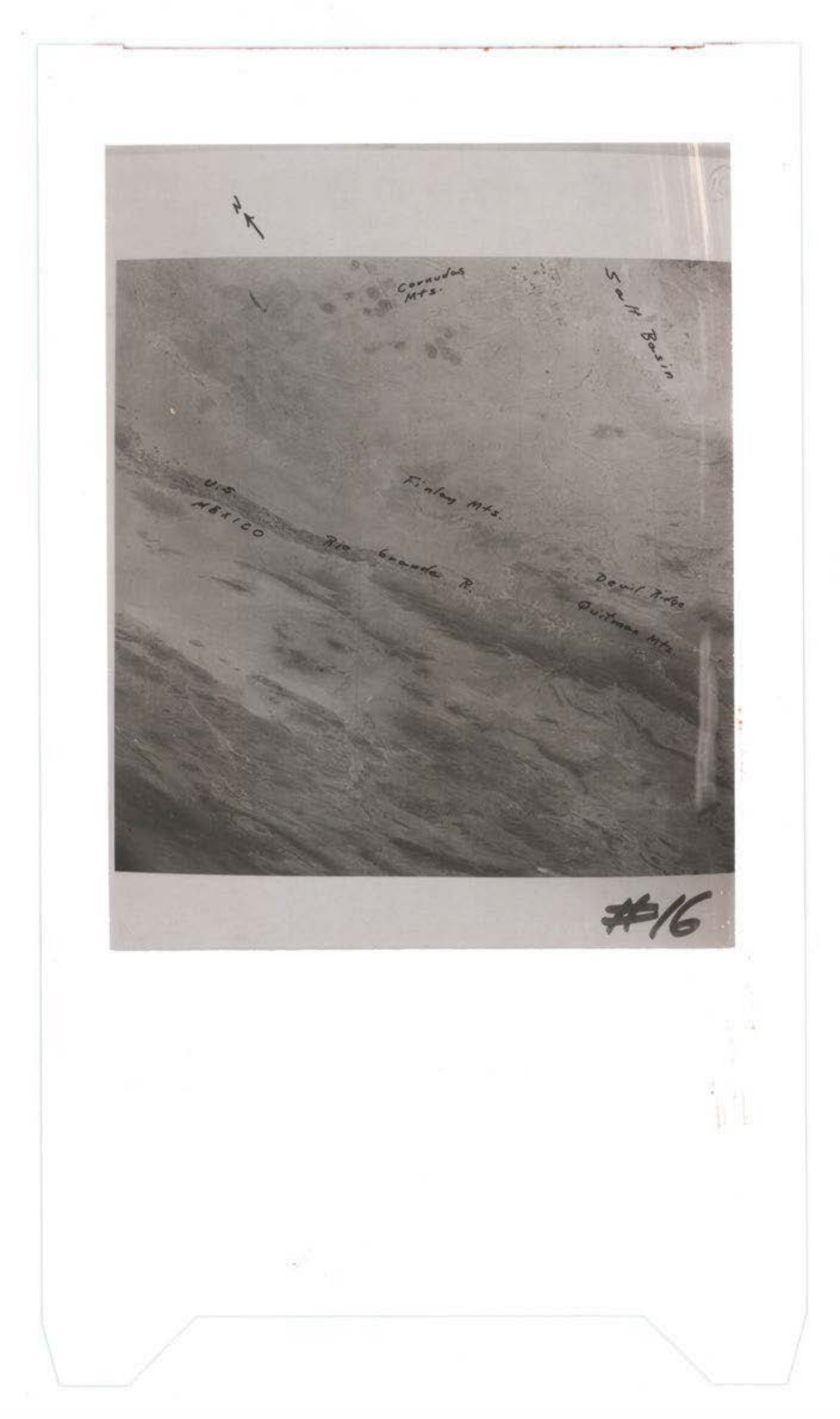
Aerial photograph showing terrain with handwritten annotations including location markers and what appears to be route or boundary markings
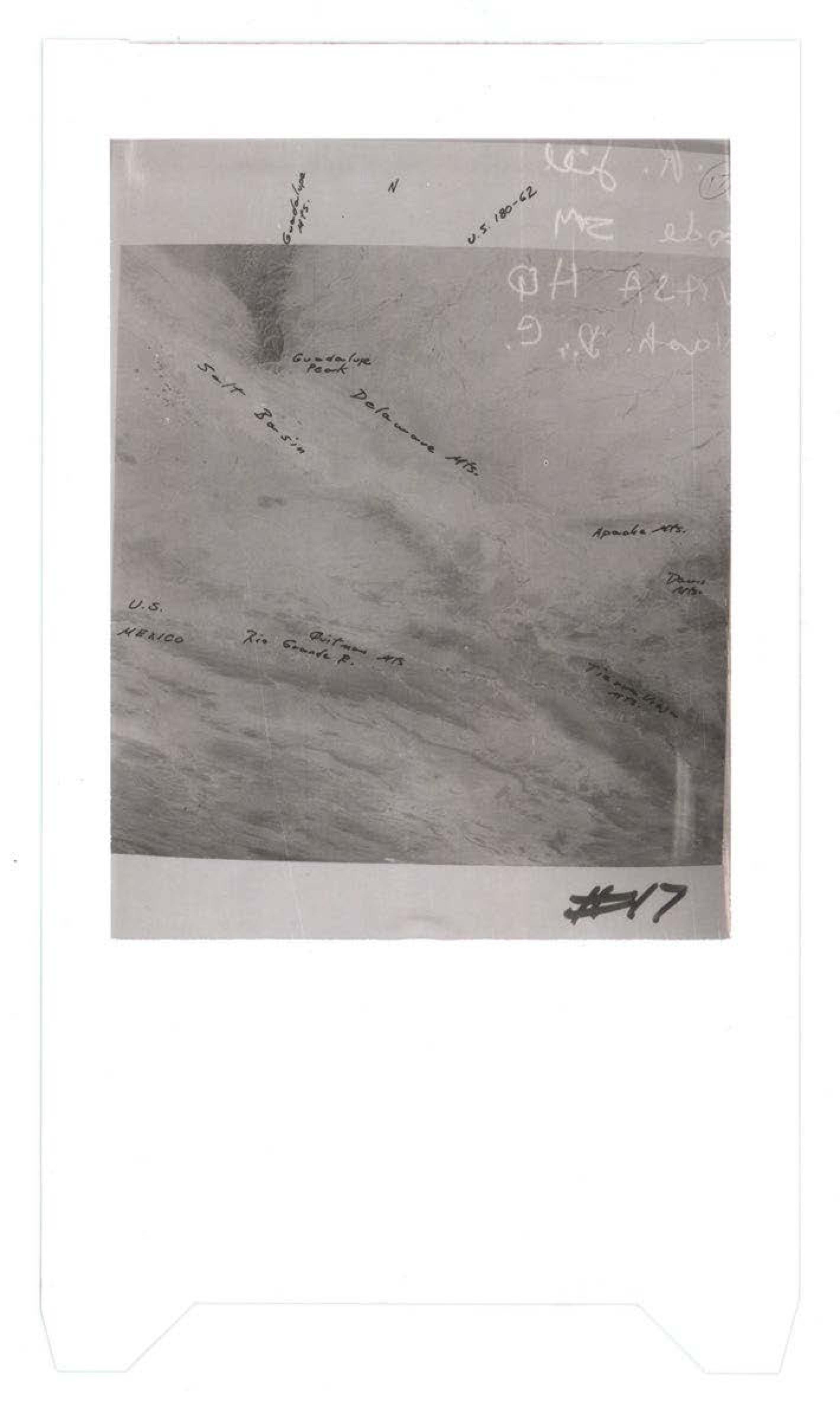
Aerial photograph showing mountainous terrain with handwritten geographic labels including Guadalupe Pass, Salt Basin, Delaware Mts, Apache Mts, and Texas State, marked as #17
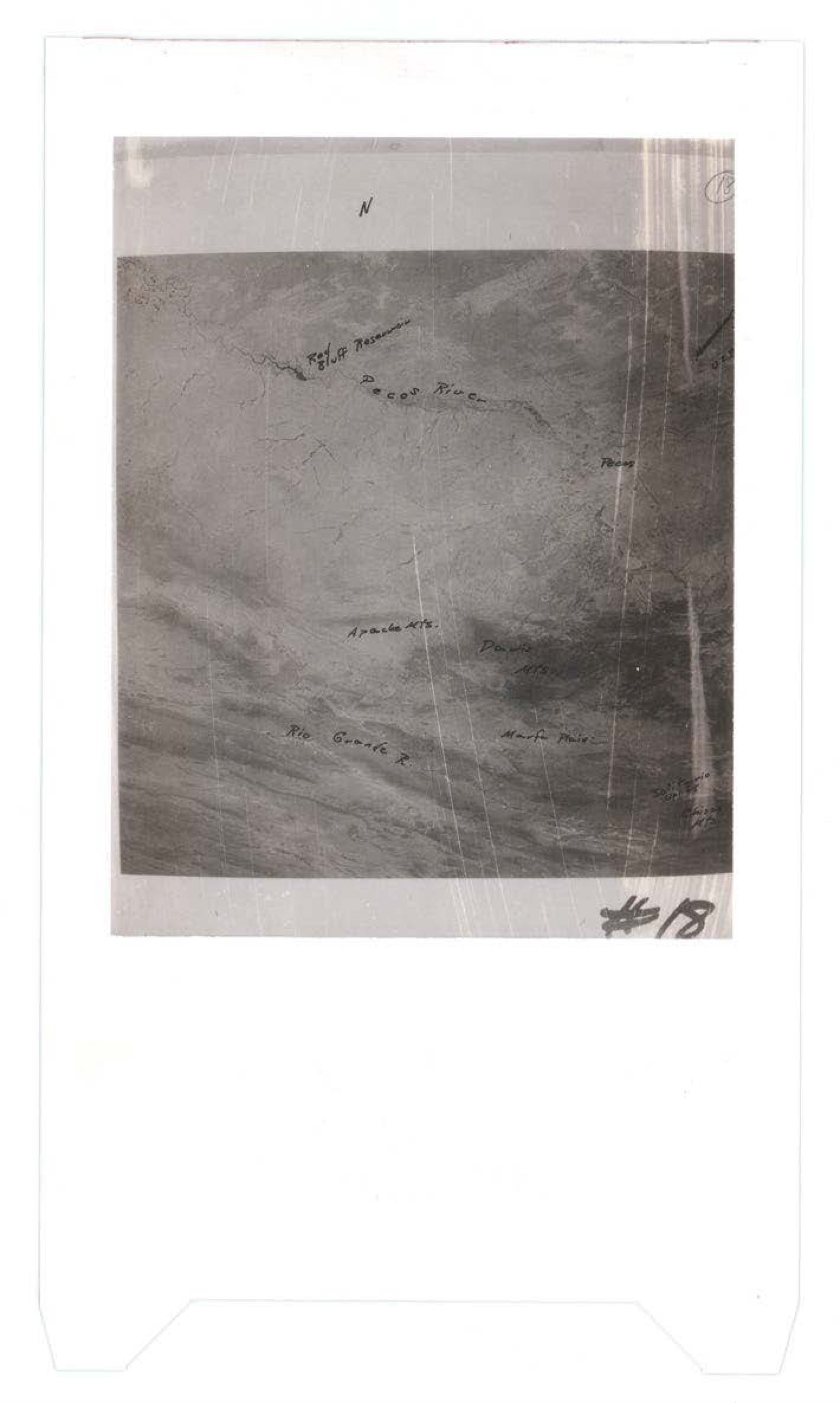
Aerial or topographic photograph with handwritten annotations indicating Old Road, Pecos River, Apache Mts., Mt. Granite, and Maria Mts., marked as #18
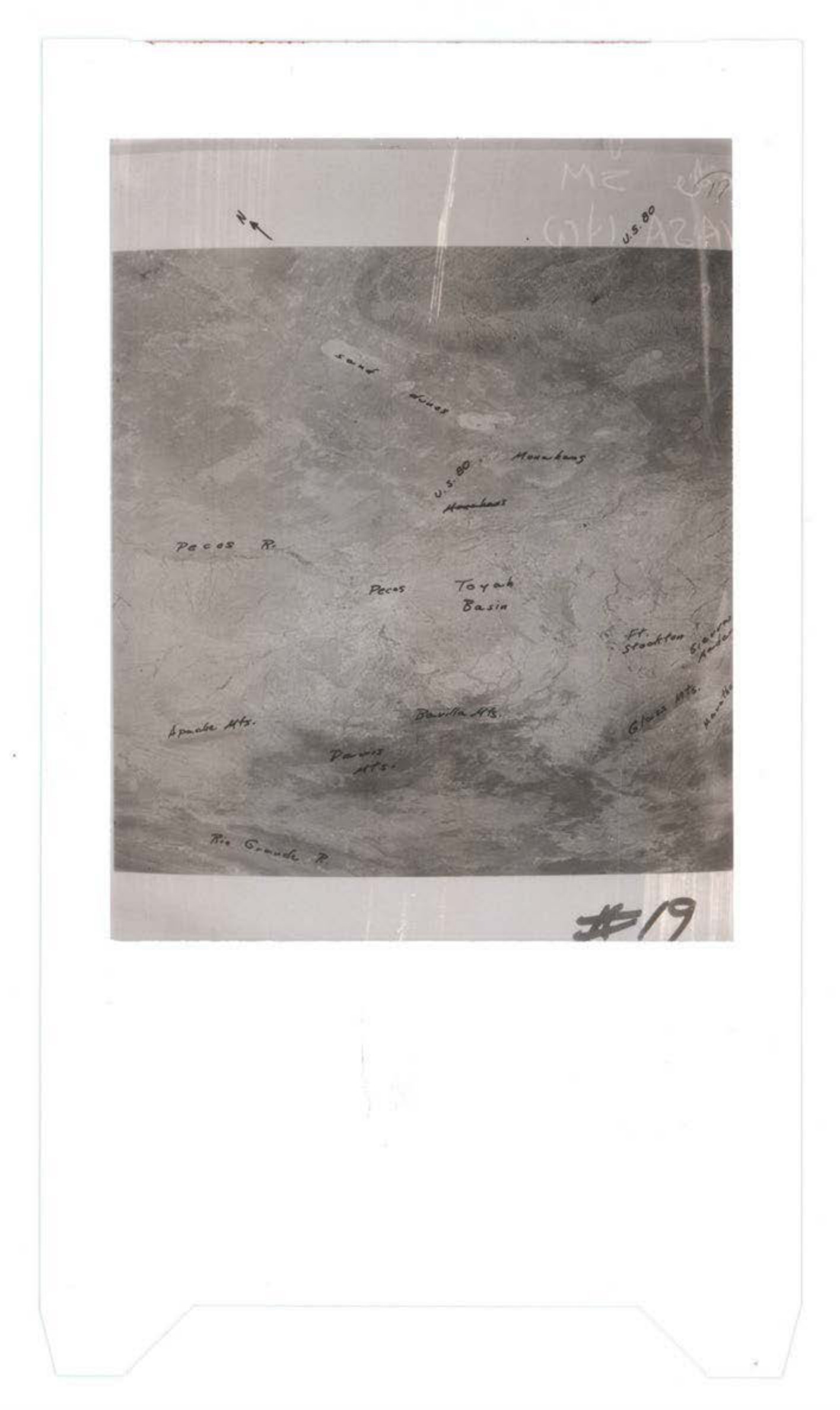
Aerial or topographic photograph with handwritten annotations marking locations including Teyuk Basin, Apache Mts., and various other geographic features
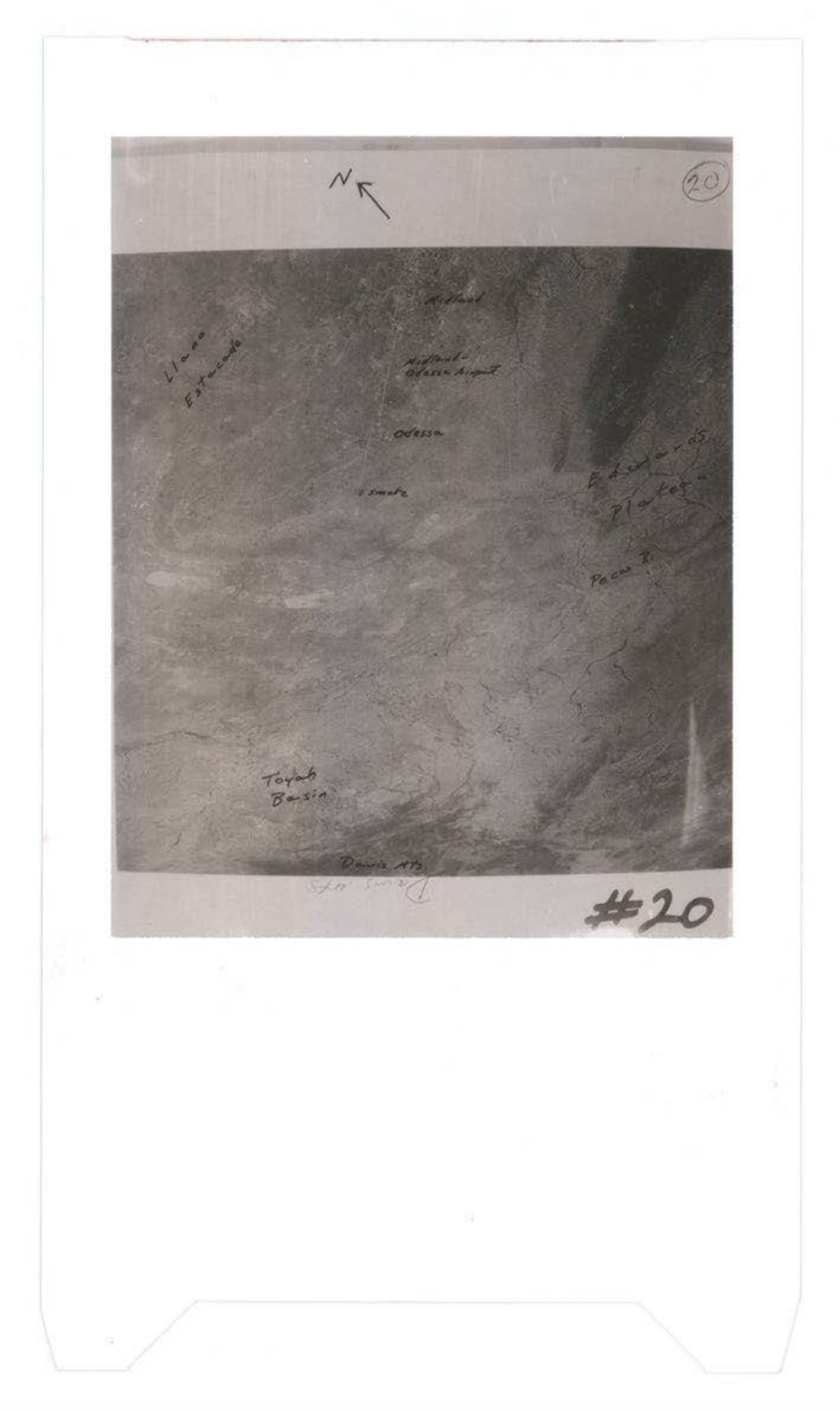
Aerial or satellite photograph with handwritten annotations indicating directional markers and geographic features including ocean
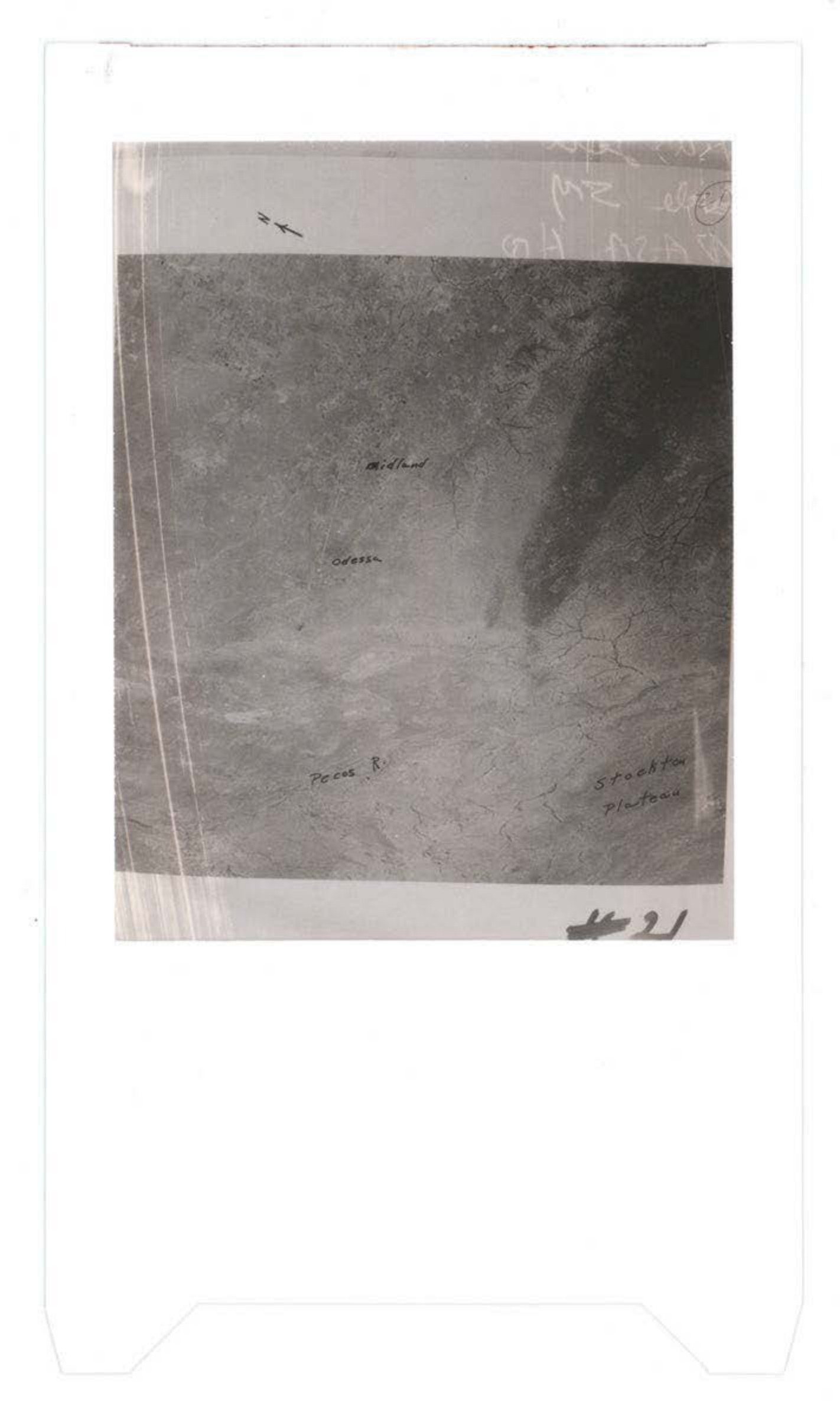
Aerial photograph showing terrain or ocean surface with aircraft silhouettes visible in upper portion and handwritten annotations
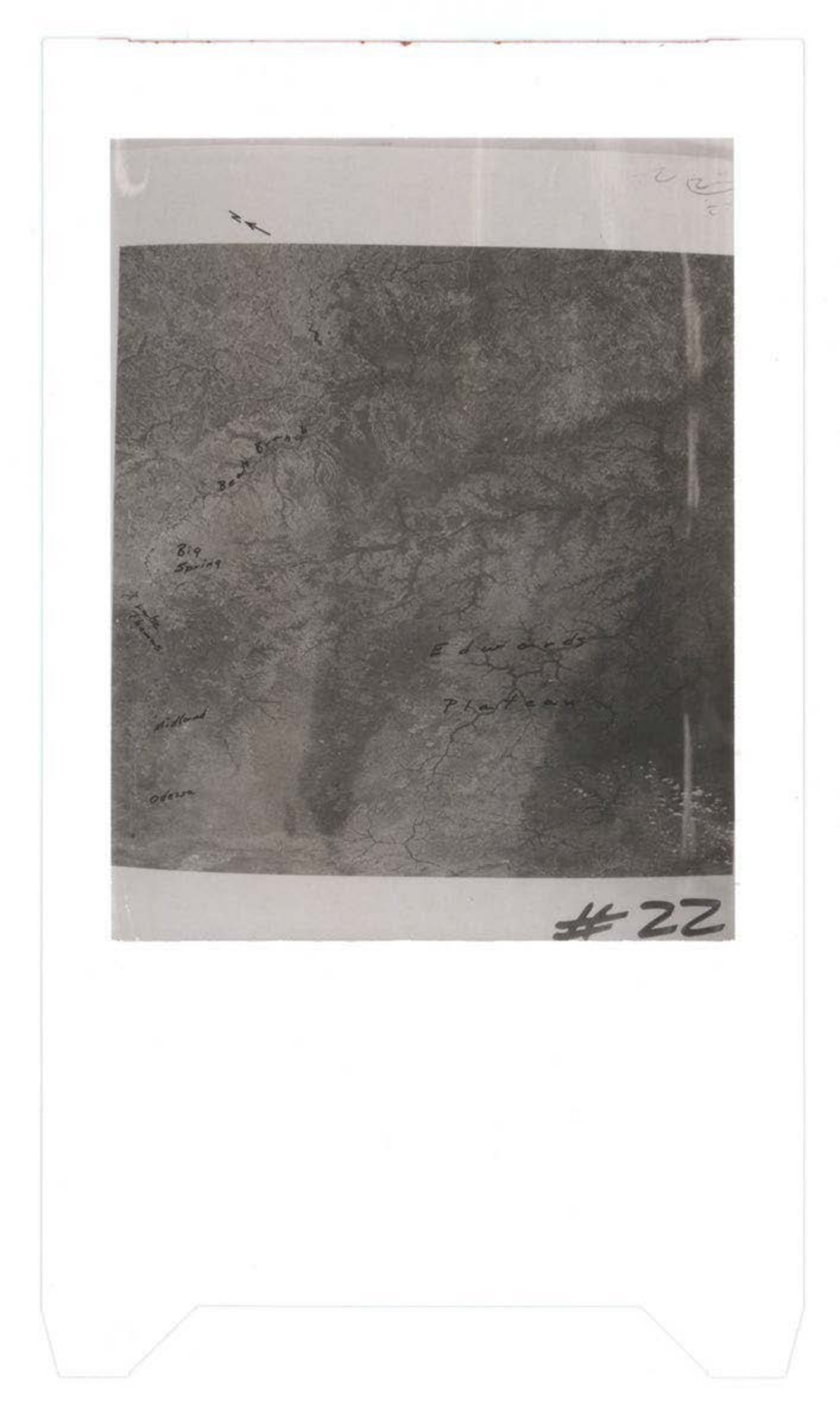
Grainy black and white photograph showing textured surface or terrain with handwritten notations and markings, labeled #22
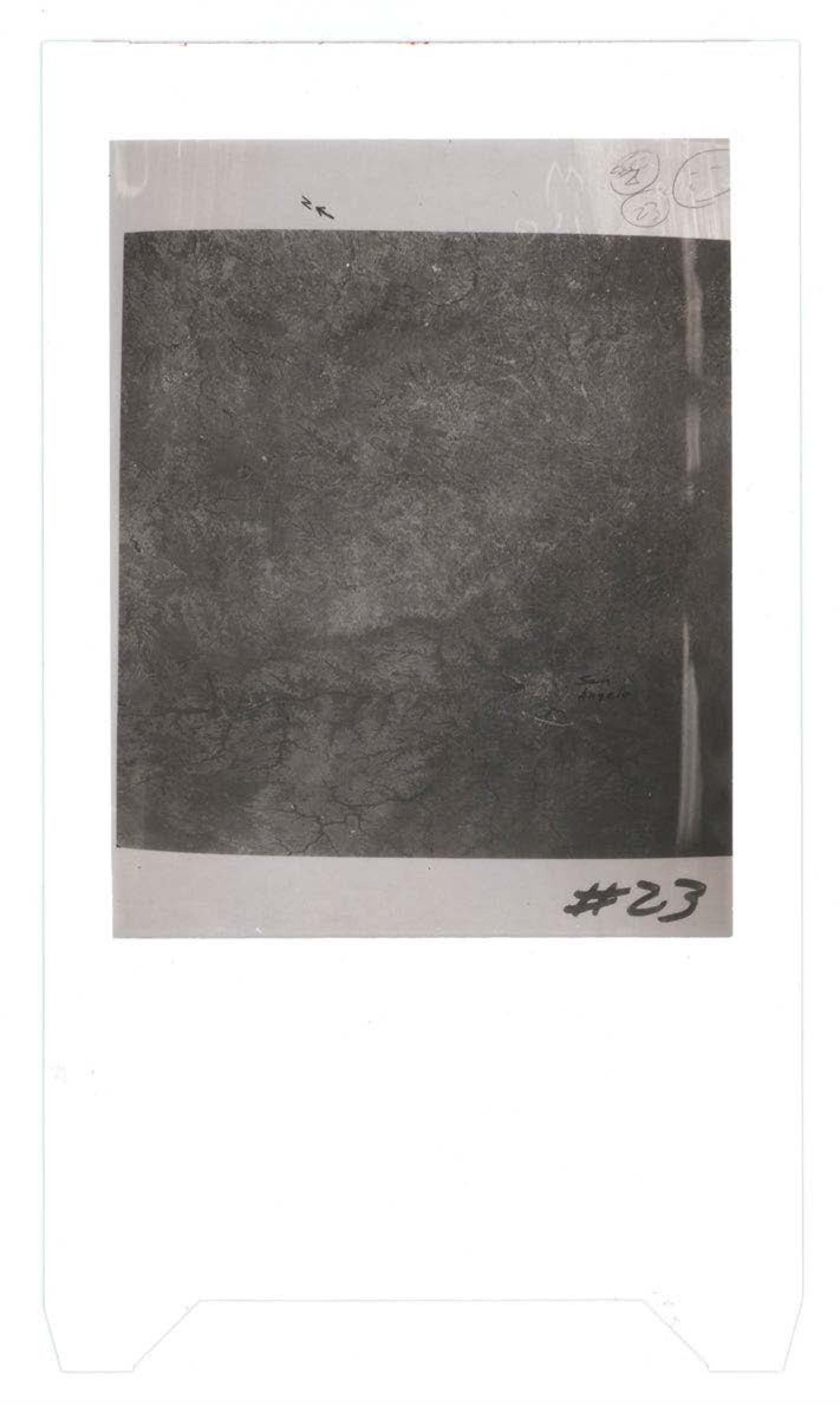
Grainy black and white photograph showing textured surface or terrain, possibly aerial or ground-level view of debris field or landscape
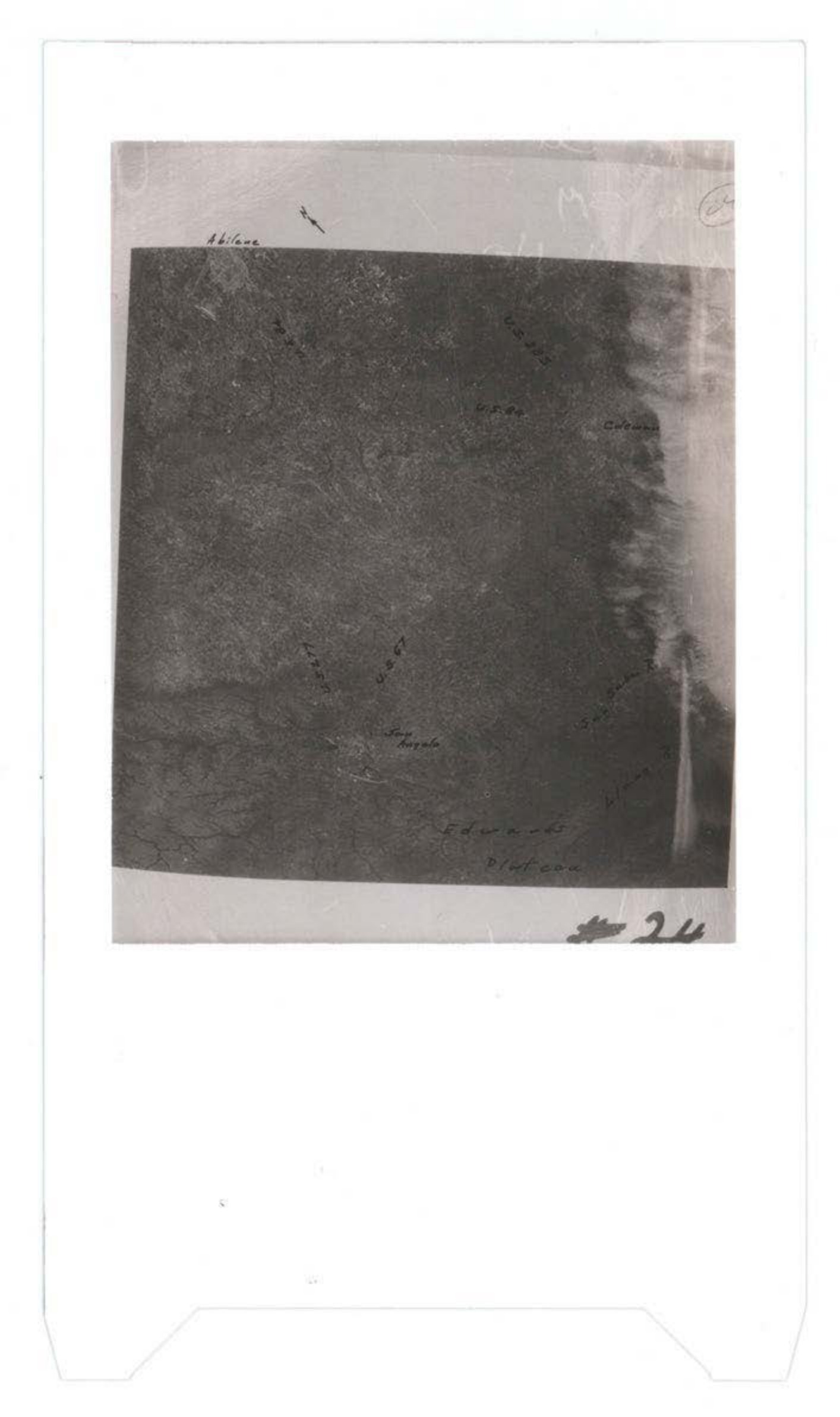
Aerial or ground photograph with handwritten annotations, appears to show terrain or debris field
Pages (224)Machine-extracted text; expand to inspect pages and cite exact anchors. Verify against the PDF.View more ↓
NATIONAL AERONAUTICS AND SPACE ADMINISTRATION ROUTING SLIP
NATIONAL AERONAUTICS AND SPACE ADMINISTRATION ROUTING SLIP MAIL CODE | NAME | Action | | Approval | | Call Me | | Concurrence | | File | | Information | | Investigate and Advise | | Note and Forward | | Note and Return | | Per Request | | Per Telephone Conversation |…
Mission Operation Report No. M-913-65-04
Mission Operation Report No. M-913-65-04 MEMORANDUM June 1, 1965 To : A/Administrator From : M/Associate Administrator for Manned Space Flight Subject: Gemini Flight Number Four (GT-4) Additional Flight Activities Subsequent to the preparation of the GT-4 Mission Operation…
M-913-65-04
M-913-65-04 ADDITIONAL GT-4 FLIGHT PLAN ACTIVITIES Three additional special engineering and operational objectives are now planned for the first four orbits of the GT-4 Mission: 1. Demonstration of extravehicular activities (EVA) using a 25 foot umbilical. Potential future app…
M-913-65-04
will trail 16 miles behind the booster. At this point, a spacecraft retardation maneuver of 13 feet per second will initiate the visual rendezvous sequence. The spacecraft will approach the booster from behind and below. Because of unknown variation in the atmospheric density and…
M-913-65-04
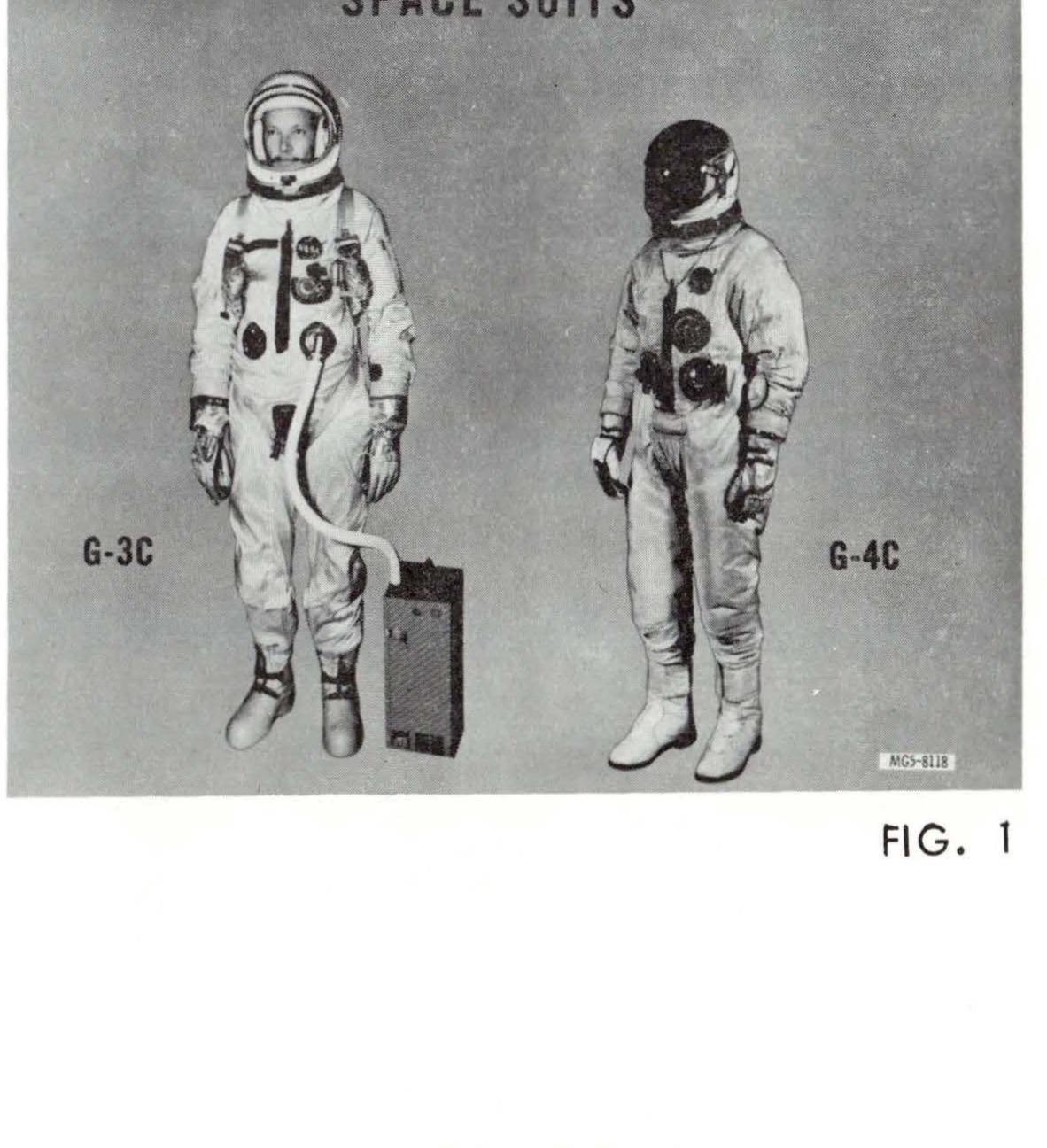
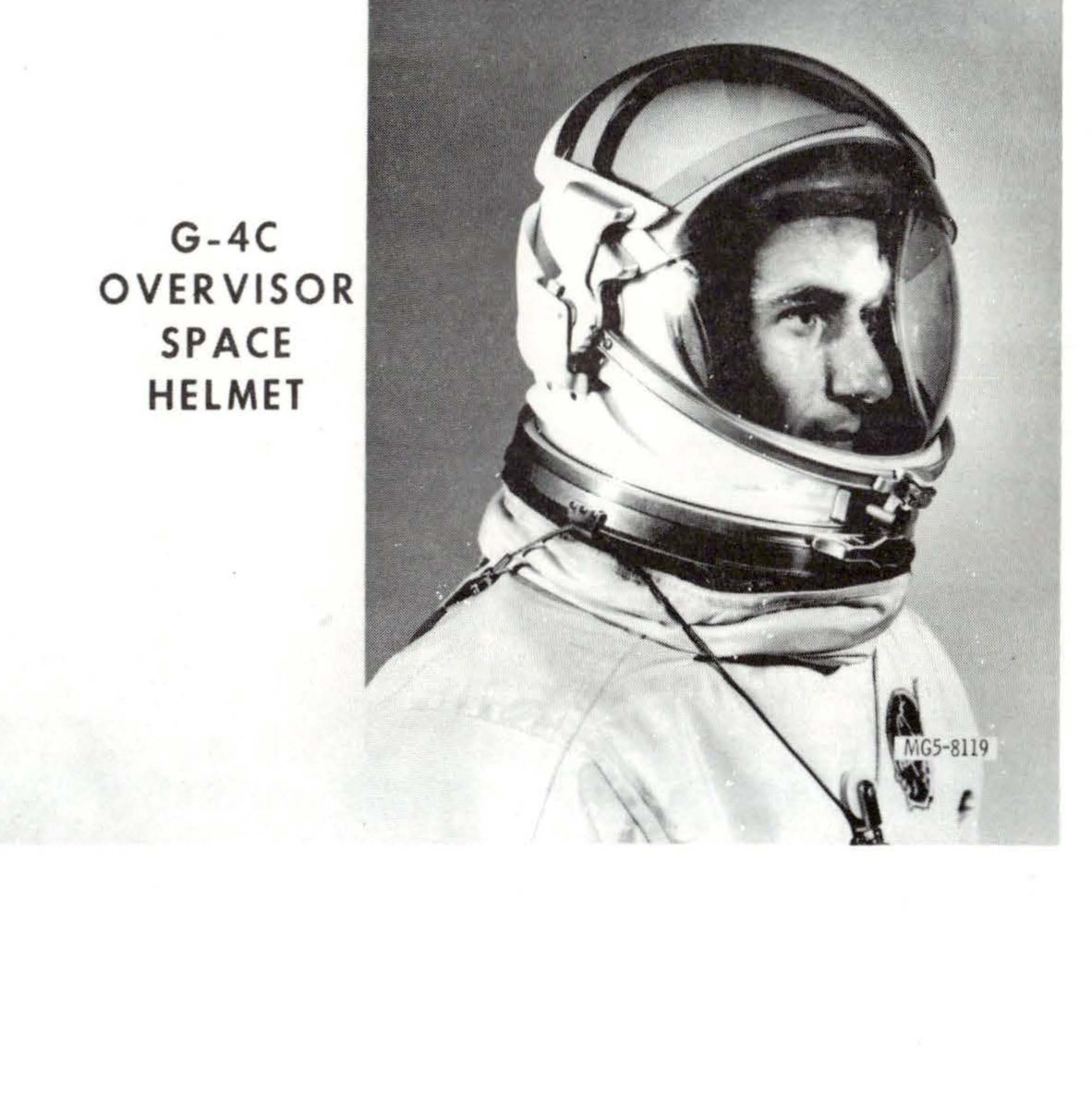
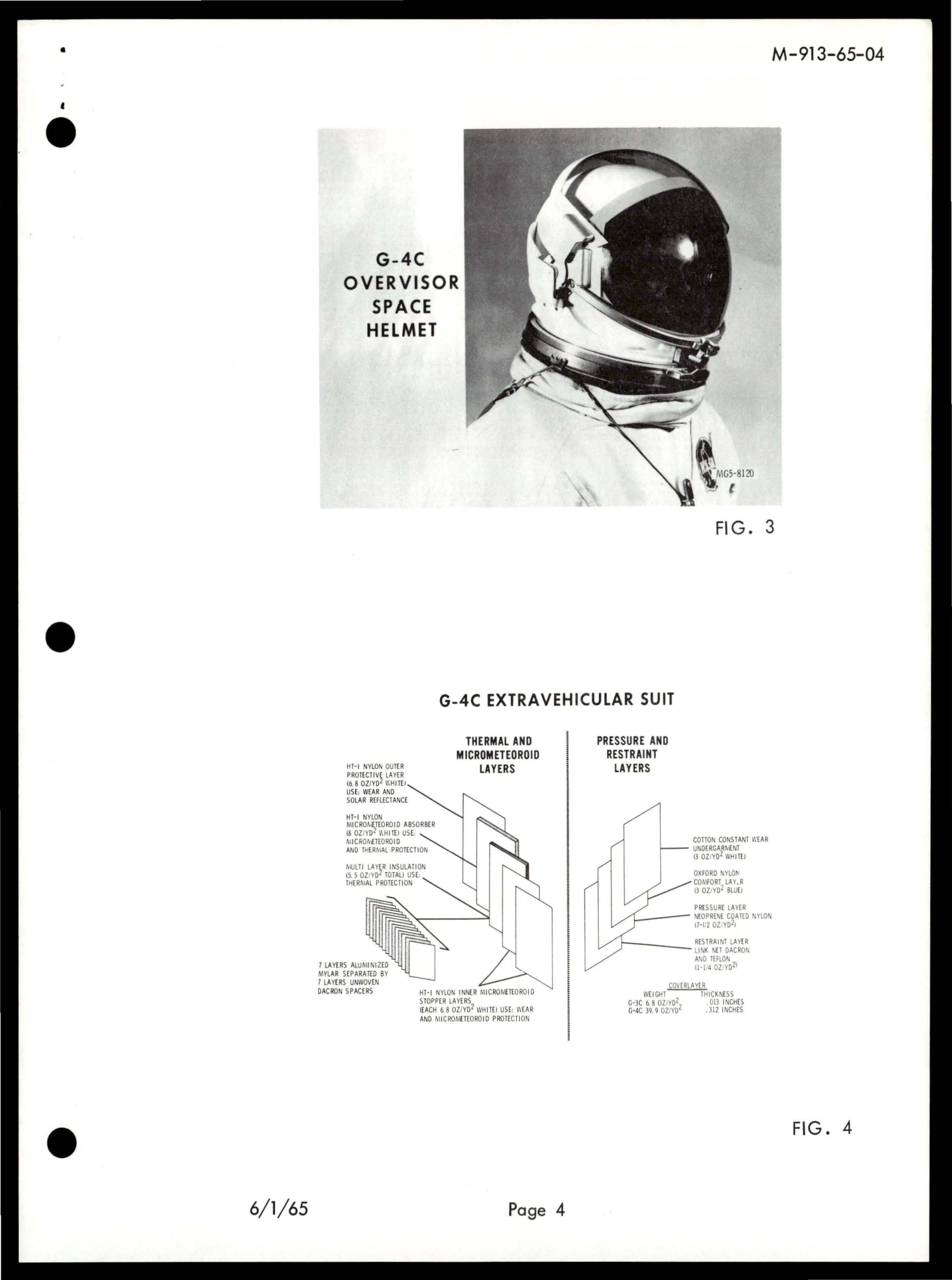
Figure 1 depicts the principal physical differences between the old G3C suit and the new EVA G4C suit. Figure 2 shows that with one visor down on the new G4C helmet, there is practically no attenuation of light entering, whereas Figure 3 shows that with two of the visors down the…
M-913-65-04
M-913-65-04 G-4C OVERVISOR SPACE HELMET FIG. 3 G-4C EXTRAVEHICULAR SUIT THERMAL AND MICROMETEOROID LAYERS HI-1 NYLON OUTER PROTECTIVE LAYER PROVIDES ABRASION, USE, WEAR AND SOLAR REFLECTANCE HI-1 NYLON MICROMETEOROID ABSORBER LAYER PROVIDES USE, WEAR, ABRASION, METEOROID AN…
M-913-65-04
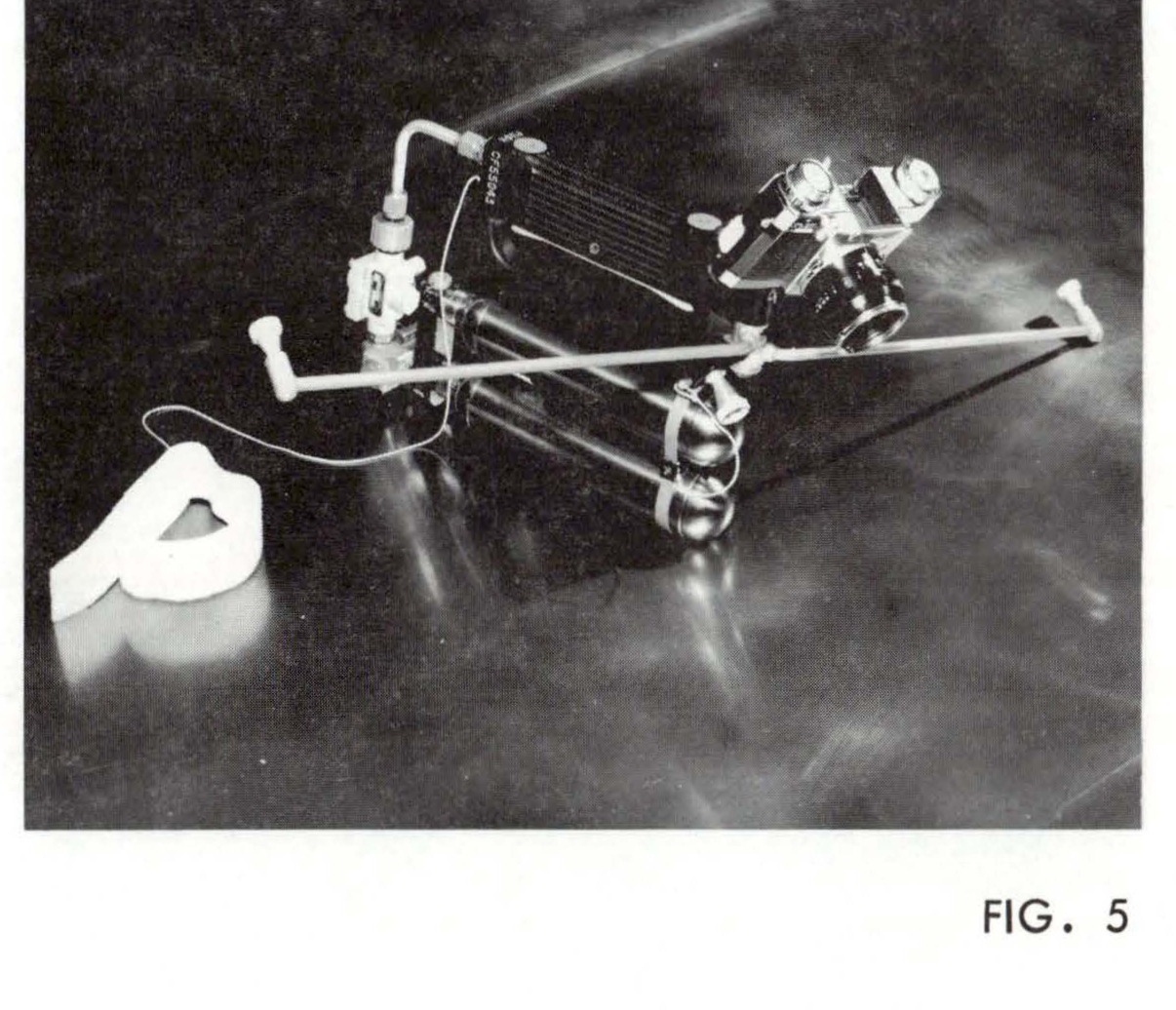
a. Leakage b. Proof pressure c. O2 compatibility d. Ejection envelope e. Cold temperature f. Rapid decompression g. Life cycling h. Visor testing Should the 25-foot long tether fail in some manner, the pilot will be carrying a chestpack that has been compatibility qualified with…
Mission Operation Report No. M-913-65-04
Mission Operation Report No. M-913-65-04 MEMORANDUM May 24, 1965 To : A/Administrator From : M/Associate Administrator for Manned Space Flight Subject: Gemini Flight Number Four (GT-4) GT-4, the fourth in a series of twelve planned Gemini flights is scheduled to be launched…
Report No. M-913-65-04
Report No. M-913-65-04 MISSION OPERATION REPORT GEMINI FLIGHT NUMBER FOUR (GT-4) OFFICE OF MANNED SPACE FLIGHT FOR INTERNAL USE ONLY
FOREWORD MISSION OPERATION REPORTS are published expressly for the use of NASA General Management as required by the Administrator in NASA Instruction 6-2-10 dated August 15, 1963. The purpose of these reports is to provide NASA General Management with timely, complete and defin…
M-913-65-04
M-913-65-04 GENERAL Gemini Flight Number Four (GT-4) is the second manned orbital flight in the Gemini Program and the fourth flight in a series of twelve planned to develop long-duration and rendezvous capability, docking techniques, extra-vehicular activities, and controlled…
M-913-65-04
M-913-65-04 • MSC-2, Proton Electron Spectrometer • MSC-3, Tri-Axis Magnetometer • MSC-10, Two-Color Earth's Limb Photos • S-5, Synoptic Terrain Photography • S-6, Synoptic Weather Photography UNUSUAL TASKS OF THIS MISSION One of the interesting tasks of this mission is the du…
M-931-65-04
M-931-65-04 LAUNCH VEHICLE DESCRIPTION The Gemini Launch Vehicle (GLV) has been modified by man-rating an Air Force Titan II missile. The GLV has two stages, the first 71 feet long and the second 18 feet long; both stages have a diameter of 10 feet. The gross loaded weight of t…
M-913-65-04
batteries will be required, radial thrusting TCA's and burst diaphragms in the "B" package that were removed for GT-3 are both installed on GT-4, and will act through the Spacecraft Centers of Gravity. An HF antenna has been added to the adapter section for orbital use and the HF…
M-913-65-04
2. D-6. Surface Photography This experiment will investigate the technical problems associated with an astronaut's ability to acquire, track, and photograph terrestrial objects from a space-craft with more elaborate photo-optical equipment than that used previously. The astronaut…
M-913-65-04
4. D-9, Simple Navigation This experiment is designed to develop and test navigation procedures which employ a simple stadimetric device and a sextant to make sightings and measurements in space using the horizon and stars as references. Data from sightings will be used in compu…
M-913-65-04
M-913-65-04 6. M-4, In-Flight Phonocardiogram The purpose of this experiment is to measure the fatigue-stage of an astronaut's heart muscle during a long-duration flight. A microphone will be applied to an astronaut's chest wall at the cardiac apex. Heart sounds detected during…
M-913-65-04
8. MSC-1, Electrostatic Charge Before rendezvous missions are attempted, an investigation must be made of the possibility of inadvertent ignition of pyrotechnics and other detrimental effects due to discharge of electrostatic charge potentials during rendezvous. In this experimen…
M-913-65-04
10. MSC-3, Tri-Axis Magnetometer In this experiment, the direction and magnitude of the earth's magnetic field with respect to the spacecraft will be measured. A tri-axis fluxgate magnetometer, mounted in the adapter assembly of the spacecraft will be used. The equipment installa…
M-913-65-04
M-913-65-04 12. S-5, Synoptic Terrain Photography The objective of this experiment is to obtain high quality photographs of selected parts of the earth's surface. The spacecraft will be manually oriented from an orbit mode attitude to a moderately high camera depression angle a…
M-913-65-04
M-913-65-04 ASTRONAUTS The Command Pilot for the GT-4 mission will be James A. McDivitt and the Pilot will be Edward H. White, II. The backup flight crew will consist of Frank Borman as Command Pilot and James A. Lovell, Jr., as Pilot. Their pictures and biographies follow: FI…
M-913-65-04
the University of Michigan. He is married to the former Patricia E. Finegan of Washington, D.C. and has two children. White, an Air Force Major, received flight training in Florida and Texas, following his graduation from West Point. He attended the Air Force Test Pilot School at…
M-913-65-04
aviator assignments including a three year tour as a test pilot at the Naval Air Test Center at Patuxent River, Maryland. His duties there included service as program manager for the F4H Weapon System Evaluation. Lovell was graduated from the Aviation Safety School of the Univers…
MANEUVER | ΔV | HP/HA AFTER MANEUVERS | POINT OF APPLICATION | DIRECTION OF THRUST | TRANSLATIONAL THRUSTER | PURPOSE Separation | 10FPS | 87/161 N.M. | SECO+2- | FWD | AFT | S/C-Booster Separation 1 | 7FPS | 91/161 N.M. | 2d Apogee | FWD | FWD | Adjust lifetime (for insertion…
M-913-65-04
M-913-65-04 TABLE III IN-FLIGHT ACTIVITIES Time HRS:MIN | Revolution No. | EVENT | Function CP | P | Day | Night 0:12 | 1 | Insertion Checklist | X | X | X | 1:45 | 2 | D-9 Experiment | X | X | X | | | Translation Maneuver | X | | X | 4:35 | 3-4 | D-6 Experiment | X | | X | 7…
M-913-65-03
M-913-65-03 TABLE IV GT-4 CONSUMABLE LOADINGS ITEM | QUANTITY | REMARKS Batteries | 703 lbs. based on a 2400 A-h | Each battery has a 400 A-h capacity OAMS Propellants Odixizer | 246 lbs Fuel | 164 lbs Oxygen Primary | 52 lbs | Egress bottle are also Secondary | 13 lbs | car…
M-913-65-03
M-913-65-03 MISSION MANAGEMENT RESPONSIBILITY The Gemini Program is managed by the Gemini Program Director who exercises his direction through the Project Manager at the Manned Spacecraft Center. The direction of a specific mission is accomplished by a Mission Director acting u…
M-913-65-04
M-913-65-04 TRACKING AND DATA ACQUISITION The ground support network for GT-4 will be the Gemini Manned Space Flight Network (MSFN) illustrated in Figure 22 and tabulated in Table V. There will be, however, some minor modifications to the MSFN for the GT-4 mission. These change…
GT-4 MANNED SPACE FLIGHT NETWORK GEMINI THE WORLD FIG. 22
M-913-65-04
M-913-65-04 BACKGROUND Project Gemini is the stepping stone between the comparatively simple one-man orbital flights of Project Mercury and the complexities involved in the multi-man lunar flights of Project Apollo. As such, Gemini's prime reason for being is to increase knowle…
M-913-65-04
M-913-65-04 GT-4 PRIMARY AND SECONDARY LANDING ZONES. RECOVERY SHIP SUPPORT AND CONTINGENCY RESCUE FORCES FIG. 23 of Figure 24. Other areas in the world along the ground tracks are called contingency landing areas. Because these contingency landing areas are world-wide, it has…
M-913-65-04
LAUNCH AREA RECOVERY FORCES 2 MINESWEEPER OCEAN GOING SHIPS (MSO) USA M 113 LARK TANKS USMC AMPHIBS FOUR HELICOPTERS TWO PHOTO JETS LANDING FOOTPRINT (27 MILES LONG) 72° AUXILIARY RESCUE SHIP ~ 50 MI N FIG. 25
NASA ROUTING SLIP
NASA ROUTING SLIP CODE | NAME (if necessary) | ACTION 1. | Strach | APPROVAL | | CONCURRENCE | | FILE 2. | | INFORMATION | | INVESTIGATE AND ADVISE 3. | | NOTE AND FORWARD | | NOTE AND RETURN 4. | | PER REQUEST | | RECOMMENDATION 5. | | SEE ME | | SIGNATURE 6. | | REPLY FO…
NASA ROUTING SLIP
NASA ROUTING SLIP CODE | NAME (if necessary) | ACTION | | APPROVAL 1. | Pen IV | CONCURRENCE | | FILE 2. | File | INFORMATION | | INVESTIGATE AND ADVISE 3. | | NOTE…
EXI3 ROUTING SLIP
EXI3 ROUTING SLIP NAME INITIAL N. G. FOSTER R. L. COX W. A. EATON G. C. HRABAL R. A. MOKE F. B. NEWMAN O. SMISTAD B. BROCKER M. M. MALINAK FILE REMARKS
30 or something like that down from looking at the air glowedge on Now the air glow was discovered quite a number of years ago when it was studied from the ground the hard way and, uh, uh, by betometer (?), and by (triangulation), by trying to determine how high it was, it was ma…
Belt 11 2
Belt 11 2 to use it, but he, uh, did, uh, have a chance to observe the air glow with the naked eye and he saw it edge on and he called it, uh . . . . name for it at the moment and . . . . . and really the first time you see a thing like that you don't know whether…
Belt 11
Belt 11 3% or so degrees below the horizon. We sometime see astronauts might be able to see that. Uh, Cooper was able to see the . . . light, and uh, White and McDivitt saw the . . . light, very well. Uh, the let's see there's another point here; well, we'll go back to that in a…
Belt 11
spectacular than sunsets. I will try to explain that in a moment if I can. Uh, . . . . going to go back a moment to what Cooper, uh, what Schirra uh, saw during a twilight right after sunset. He observed, uh, the planet Mars and he observed at twilight, the sun had just set, a ve…
Belt 11
Belt 11 in fact complete absorbant below 3000 for solar radiation coming . . . does not penetrate. There is another weak band of ozone in the red, yellow, and green . . . in the . . . band uh, at, uh, distance 5000 . . . 4000 . . . . 6000 . . . . 7000 and if by clock uh, absorpt…
Belt 11
Belt 11 Anyway, there's a case where Schirra's visual observation has been confirmed by photography, motion picture photography. The explanation I give may or may not be right, I don't know. I haven't had a chance to look at all the other problems. There's also a dust layer in h…
Belt 11
Belt 11 reasonable too, because uh, as you look in this direction you see the always the edge on air glow. But you also are looking through the air glow, as it is coming around; you're looking sort of taking two passes through the air glow instead of one, long big path and you a…
Belt 11
the air glow from the continuum we may have caused people to think that there's something very magic about the green (line).
Belt 12 1
5577 4477 Atomic oxygen green line of the air glow from the continual we may have caused people to think that there's something very magic about the green (line). If you are starting the green line certainly you want to observe the green line . . . . . . . are built very carefull…
starting with Glenn who had trouble getting . . . . . . . . . . . . . . . Well, I really don't want to get into that too much for this reason. Finally, there will be a very fine experiment carefully planned through the . . . . I mean sensitivity uh, Oh, uh, uh, O. K. Well, Glen…
BGJL 12
(utation) and I hope some day there will be sensitive enough to . . . . on board so that during the day side one can look and observe physically what the day air glow is. Now this is very important because here we have the orbiting . . . . next year and very important background…
Belt 12
Belt 12 relatively black compared to the outside. And this is true and they looked out through the window uh, there seemed to be a change. In fact, they have aphotograph of this (spot) . . . . . talk about that. Uh, they are very uh, they say the astronauts have taken advantages…
Reel 12
Reel 12 5 than other kind, uh portions. Now here again an image converter will convert.... light to visible light. Uh, their observations that have been made of these nebulocities(?) which may or may not be so, t…
Belt 12
and, uh, choice as to how you.......... (Actually) two hours in space. I don't think there are any questions on that. Ha, Ha. The X-rays (?) didn't cause any significant hardships as far as the...... to flight. They made us get up what, 10 minutes earlier. Yeah. Well, you…
Belt 13
Belt 13 and the.....man on the tape. The EKG? On the biometry tape recorder. They were arranged in such a manner that the - the phonocardio-gram by itself was not recorded on both tape recorders. It was only recorded on one tape recorder. And since we were not necessarily int…
we do provide extra shielding on the right side of the pilot's heel until a couple of weeks from now we will check it again out of curiosity. It is not part of the protocol or anything else. That's all right. But, we are just curious to find out. Now we realize that you have jus…
Melt 13
probably 4 or 5 percent below what you were when we took our pre-flights, and those were very constant, especially the first two. Well, if we are still 4 or 5 percent down, then we only went down about 8 percent. Right. What is the sensitivity in your method? Well, as I pointe…
Belt 13 4
Belt 13 4 had a lot of, a fair amount of exercise there. Then I found I could reach everything that I needed to reach without really....myself all over the inside of the spacecraft. I managed to get all the food out which is a - in a 1g is a fairly difficult t…
Belt 13 5
Belt 13 5 exercise, and I think - I guess because - you probably - might have guessed he had about 60 pulls that you were really heating yourself up a little bit under those conditions. Well, I made the comment that 30 was kind of trivial. Right. Then I sai…
Belt 13
Belt 13 6 But, the hot air went out, went through a bunch of contraptions, and eventually came back into both of our suits again, same way that mine did. He didn't have a closed loop for himself only, and I had a…
some Posline. Did your freak electric static charge worked on electron and magnometer, we didn't get any performance at all on those three. First, from an instrumentation standpoint, we had - the switches were acceptable, even to me, I thought Ed was asleep when we had to turn t…
As soon as it was extended, after about 30 seconds or so. What ever it said in the flight. 30 seconds. Have you got any data back on it yet? Seven on the computer. Any other questions on those three? What was the cost of the photography? The weather and marine photography.…
Belt 13 9
Belt 13 9 I think you could get some degree of pictures, but I don't think that you could get the same set that you got. The set we lostin the southern part of Mexico, I believe I did one time when Jim was asleep…
Belt 14
Belt 14 O. K., I'm going to put that....address prefer request for my experiment if that is at all possible to have both pilots on the job for any of your sequence pictures. Another one's Target of Opportunities if you don't need the controls..... ...........the ones that we'v…
Belt 14 2
Belt 14 2 an....because he was actually moving the spacecraft or whether I felt it moving around because he was bumping it, either that, now I didn't move you really, but I'm sure that you quite felt some (stable?), so I don't know whether it was that kind of a th…
Belt 14
Belt 14 3 ......do you have any figures on what the....used to stabilize the spacecraft.......... I used, uh, translation of bigger percentage than mine was........ 'Cause you're only translating your..........…
Reel 14
in altitude. One time I got pitched over backwards and I did use the gun to take that out, because I just didn't want to use the oxygen. One more quick question: .....some of the {numbers? members?} say that you were moving the structure about in a one-side configuration...... I…and I don't know what happened--unless I knew where that was I could really very well get pretty close. I knew where mine was. These things, these things are weightless up there but they're not baskets that fly away, once you get these things going, you gotta stop them again, i…
just a second, Bob. You had a system that was strapped to you that had automatic stabilization and translation of a person, well, than you've got the whole of a box or something that you were holding when you were down in one corner of it. I'm sure that you would'nt have engouth…
Belt 14 7
Belt 14 7 you have to go back and get moment of impulse of the control system, then apply it to the moment of inertia of the spacecraft, and then do the same with the Gemini.... No, in this case he'd be moving a camera. Pardon? Move the camera to control th…
Belt 14 8
and get a fixed attitude stabilized in this manner. It would probably be rather.....(unstable?) I have the feeling it would be very stable. Some of our section sittings over there, particularly when we were working on the Apollo siting, where I was keeping a certain fixed two st…
Belt 34 9
of the 35-millimeter? Uh, yeah, .... Most of them are, I think, blocked, because we have to be over the water, but, if I'm not mistaken, on the little bit I just caught a look, there might be some land bands. Oh, yes, as a matter of fact, you got three or four, uh, they're tow…
Belt 14 10
Belt 14 10 Over North Africa a couple of times we commented on dust storms, although they weren't really dust storms? We weren't sure that was a dust storm, right. Remember I said that is a ........, and then we said well maybe not. It wasn't a dust storm as…
Belt 15
Belt 15 This was a sort of a chance observation. No, I wouldn't say that I did . . . . . . . . . I guess you would call it but you couldn't . . . it didn't at any rate. Did you notice the . . . . with the flash if lightning . . . . There was an awful lot of lightning . . .…
Belt 15 2
You see the big problem is finding these things. In looking for objects on the ground and things like that you just don't find them 500 miles in front of you. How about something in the sense of a target of opportunity? You see it without advanced warning. I would think you'd…
Belt 15 3
Belt 15 3 found the object, and then tracked it all the way. And as soon as they get that film and put the pieces in to make it — it's a sequence camera — it's not a real movie camera — as soon as they put the pieces in and insert the extra frames so it is in such a movie ca…
Belt 15 4
Belt 15 4 these targets of opportunity. Let's take the airglow for a moment here. There's the night airglow, the twilight glow, and the day glow. Now there are no . . . . . . of day glow. That would take (perhaps a) second exposure, and you know where to look…
Belt 15 5
that— No, no. You'd have to be spacecraft-modern. You could get the rates down low and you could— O. K.— You could certainly hold it within a half a degree. But now your half-degree— You'd have half-degree tones within the spacecraft . . . (I think that would do it). That's…
Belt 15 6
. . . . . airglow over lighted areas, I think that that would be more easily done than trying to track a certain spot in the airglow because that means that if your flight path is this way, you've got to aim the spacecraft over here and then you've got to track it along like this…
Belt 15 7
Belt 15 7 below the horizon, I thought that was a good place to look for small objects. When we say small objects, they have to have large identifying features near them; maybe if we're going to start looking for something like the - . . . . . . . . . . . . .…
Belt 14 9
. . . . . . . . your real key, though is the first time you look at it it's pretty hard to find it. As soon as you've gone by it once, maybe missed it once, the next time you come through, you can give it up there at 10° if you want. You know exactly what you're looking for and y…
Belt 15 10
Belt 15 10 The document out on the tape and I think that's probably the part where the tape . . . . I believe it's in the book there, Tim. Do you recall how they came out? You could see . . . . . . light or . . Oh, no. No. It's in the same ball park, but the diagonal ligh…
Belt 16
Belt 16 I don't think you could help - - ........ You discussed yesterday particles of space junk? Yes we did, do you have any particular question? I would like to have the information later though. We.. what was your question? I was just curious about the amount of junk y…
all over. Millions of them. And it doesn't make any difference which way they are going but you can see them come off by the window and they look like they are going off spherically, from what you can see. Now maybe they are not going out the back, but I doubt that. Did you see t…
Belt 16 3
The particles coming out the back. But then we saw that he could absolutely could not use it as a yaw reference. They were going straight forward. Any way you were going, they were always flowing with you, and it was there were two urine dump systems on the spacecraft, one dum…
Belt 16 4
Belt 16 4 you would visually, you would observe something down below you. We were essentially doing something like that on our flight - on our flight plan, and we didn't follow it exactly. We were getting information from the ground on when to do certain thin…
Belt 16
Belt 16 5 Some time later, but we don't know whether we got gimmied around in the spacecraft or whether it was my big fat handed glove I turned the wheel and actually turned it about - you have to turn it this wa…
We are not sure what they are at all. There is a symmetrical one on each one of them. Well, it goes back across the film, about 90 degrees. Is it straight? Straight, it's a pretty, the same width all the way across. It might be my helmet tie-down strap. No, this was a diffe…
setting I think is about 500 that you would have some type of an underexposed something you can see........ I think so. Our measured success of that camera hasn't been high. I'm afraid every time we used it, it failed. Of course, we are getting a lot of these things, but when…
Welt 16 8
your pictures would be black and maybe if you had a random failure of the mirror back there it might take a picture sometime, sometime not. The back plate - there were exposures on almost every frame. There weren't these, I guess a fairly large number of frames that were black.…
Belt 16
Belt 16 9 Anyway, my suit leaked, they all do you know so that there is getting something on the inside, also, we had a lot of things in there that were probably outcast. Also, the insides were dirty. I don't agree…
Belt 16 10
chainlink was screwed onto the instrument panel, so that there really was - the metal a link, then another fixed link, and there were, we had a fan in our suit loop, and you could feel that inlet valve underneath the instrument panel, and I really shouldn't be very much air going…
Eelt 17
Eelt 17 1 and the Spacecraft tended to pull down to here the redefinite streamline down through my legs and this metal was mounted just above that, but up against a flat panel so that the ballad of the panel is h…
Belt 17 2
It continued right on out. You can see there was a fair amount of sun in and out of the cockpit. Quite a bit. You could see all the dust particles. You can count the streamline on the way out. Maybe we'll have a touch on these last two experiments and then come back if there -…
Belt 17 3
Belt 17 3 And I personally asked Glen, Cochran, Schirra, and Cooper if they saw a meteor and they all said negative. And then you both said you saw a meteor. No, a falling star. Ha Ha. I think there's a difference between what we say and what we were expected to see as f…
Belt 17 4
They were quite bright. O. K. You saw only bright ones. About how many did you see? About how often did you see any? Could you have made a count of them and said, "Let's look at meteors for awhile"? Yes, we could have. Could you have sat down there and counted them all off as…
Belt 17
They don't occur up in the heavens, they occur down below you. This is the area that you spend a great deal of time looking at in the night. You're looking up at the stars. We came to the conclusion that you looked at the ground in the daytime, you looked at the horizon starting…
Belt 17 6
Belt 17 6 But what you're looking at right here then if it was dark. To tell you the truth, I think what's more important is the angle that you're looking at them at. Well anyway, we did see a lot of them. And they're not difficult to see. And I don't think…
Felt 17 7
Do you remember on your consumption of oxygen . . . . . . . . . You shouldn't ask. That's a hard one for me to answer. I know what the flow into the suit was and— Look, somebody might have given you the . . . . . I don't believe that you could get that figure because you see i…
Belt 17 8
. . . . . . It's the same kind of problem we have associated with the booster. We spend quite a bit of time ahead of time trying to determine exactly how much of the tumbling booster we could plan to go up and take a look at and we finally came to the conclusion that it was up to…
Belt 17 9
couldn't do any more than look out. You couldn't aim at a particular point and correct for— No, because it amounted to looking over this way and then controlling the spacecraft back that way. In addition to that, you had up and down, which is worse. A reduced . . . . That's…
Belt 17
when I get a little - let me look at the site again. There's . . . . . . . visual observations. Excuse me. Let me answer one more. Have you seen the tracking film? No. Look at that - you could probably . . . . . putting a grid on a screen. I could show you what I was using a…
Belt 17 11
Along the horizon? You can see the curvature in the horizon when you're just looking out the window of the spacecraft. And then when you're looking out there you see— O. K. then, you could compare one part of the horizon to another to look for variations. Yes. In daylight. Ye…
Belt 18
...........deep shade, behind the door, places like that. Were Cooper and Schirra in the daytime? Sort of date-low. ................ Could you see that also? What did they describe as the basis? They......the sky had a brightness to it.....above them. And when Cooper woke u…
Belt 18
Belt 18 sticking out on that spacecraft; and if the sun is shining on that nose, you know darn well it's based on it. Also the light on the nose is reflected back into the windows gives you a light. And there's a lot of things outside that window that give light to your eyes. We…
Belt 18
over the place. It follows, then, if you switch that, I mean the next time is terical and the next time was great...........that if you could get out in the spacecraft at night,....... You'd see a lot more. You say it's "great" because you saw 7th magnitude stars, but Ed and I…
Belt 18
Belt 18 I think you're drawing improper conclusions. O. K. I don't see why you say that the seeing conditions in the daytime were extremely poor. In terms of visual accuity, for looking, for example, at stars,-- Well, how about for turning down and looking at objects on the…
Belt 18
Belt 18 windows, the light coming through, that I couldn't tell you whether there's anything that if I looked up above I could see an image, or not. But I think that possibly, if we could find a long black tube and a window with no film on it and some way of closing off all the…
Belt 18 5
Belt 18 5 and that's vision outside the spacecraft, and I (can) make a comparison between those two and I have already; but you can see clearer from outside the spacecraft. And I was quite surprised at this because I had three visors on: one of them was a left-hand visor whi…
Belt 18 6
Belt 18 6 Yeah, this is a unique situation. He happened to be in a situation where the earth was beneath and the sun was behind him and there was no lightning scattered into his window or anything or at least app…
Belt 18 7
see one" because you don't have any idea what it is certainly can't get into measurement. Results of this............. Maybe we can give Dr. (Ritch) a chance. Did he have any questions? I was curious as to what the difference is between sunset and sunrise. ............ Well,…
Felt 18
Is the sunset more billiant than the sunrise? Yes. Contrast-wise? Right. How about the elongation? Wait a second. When you say it's really ......... That was brightness. Sunrise is more brilliant. Sunrise is more brilliant. Up it comes. See it's dark and then the next th…
Belt 18
Belt 18 it's in the processing - must be in the lens under the film. The - down at the bottom part kind of duplicates and lets magnitude look on top and that's really not fair. It doesn't reflect down and what you see is only on top. Did you see any difference between moonsets…
Belt 19 1
...the air glow. Can y'all tell if it's dark? Some little (Supplemental? Sublimal?) picture of the horizon? Well if you watched a certain star, you could tell when it went below the horizon. You just can't look out there and say, "O. K., that's the horizon." It depends on the s…
Belt 19 2
Belt 19 2 it means a little more to me....now that I think about it. Expecially as you look at it now and the artist has taken these things and he's put them in very clearly on a stark black background--and you know and you say, "Gee, isn't that artificial looking?" But that's n…
Belt 19 3
not sure until you start looking for it like this and you can search around for a long time. You can search a long time... And never get back down to the horizon, but if you establish (a per rate) well you can get there. The big thing is how much fuel you've got to expend. You…
Belt 19
Belt 19 them, so we're prejudiced. Ha Ha Ha. No, as a matter of fact, we have a flight planner over in the spacecraft center. You roll three times during flight--You roll (when you come down to) liftup from the launch bases which you have never looked at and about 20 hours later…
Belt 19
Belt 19 in the early stage. I think probably three hours per page or something like that would give us more room to write the notes. Has that book been reproduced? Yes, it has. There are copies for everyone. Let me ask you one here. Do you think you could hold half a degree i…
Belt 19 6
Belt 19 6 hold............7 points. I'd like to get your feeling on calcium balance coming up on the seven.....what do you think how it will affect your post-flight. I don't know how it's going to affect your postflight, but I know it's going to be a real problem. You've just…
Belt 19
Belt 19 is this a ball-jocket-socket type of junkhead or something. It's not a ball and socket, but a pitch.....for holding a pitch attitude. Oh, for the air glow. For the air glow, yes. This would be for one minute photographing. For minutes Some of them may be up to 22 m…
Belt 19
Belt 19 magnitude and brilliance that it really appears up there. It's a beautiful sight. After the dark up there, it's very brilliant and much more large as far as I was concerned and bright in magnitude than anything I've seen looking from the ground. (Mercury)proved very, ve…
I think the dim gradation is excellent. I think we need a little variation of brightness. Did you find any difference in the two windows? Did you see any ventigral difference in those two windows? We couldn't change places. Ha Ha Ha See I looked in mine, he looked in his, and…
Belt 19 10
Belt 19 10 experiments go. There was nothing that could have been done to improve it. This is the way the guider shows it; this is the way the mock-up....... Even the experiment you didn't have a very successful flight.. Ha Ha Ha. Well, we've got how many more....8 more t…
Notes from the De-Briefing transcript
Notes from the De-Briefing transcript Meteors: Both LeDivitt and White mentioned seeing a number of meteors below them: "We saw quite a few fall and burn up below our altitude. They were about one-half to one-third as high as we were when they were consumed. We never saw one ab…
Zodiacal Light Xxxxxxxxxxx Mc Divitt and White were taking 16 mm. movies xxxxxxxx before one"capsule dawn" when they noiced the zodiacal light and described it xx thus, "it was a shaft of light and a long time before the sun came up." On the ground observers can note the cone Yo…
Katy: File GT-y mission JMY
1:30 MEASURE REL STATIC CHARGE TAPE PLAYBACK BLOOD PRESSURE (P) 3-1, 4-1 UPDATES 1:40 EGRESS PREPARATION UNSTOW AND ATTACH UMBILIGAL Y FITTINGS EMER O₂ PACK 1:50…
3:00 EGRESS S/C 3:10 INGRESS S/C CLOSE HATCH REPRESSURIZE S/C 3:20 ALIGN PLATFORM 3:30 SEPARATION ΔV ~5 FT/SEC COMPLETE INGRESS CHECKLIST 3:40 3:50 4:00 D/T TAPE PLYBK MEDICAL DATA PASS TYPE 1 4:10 4:20 D/T TAPE PLYBK MEDICAL DATA PASS TYPE 2 4:30
6:00 INITIATE TERMINAL REND PHASE MEASURE ΔV REQ'D 6:10 6:20 CLOSE WITH BOOSTER PHOTOGRAPHS DURING APPROACH 6:30 INCREASE SEPARATION WITH BOOSTER PRIOR TO DARKNESS 6:40 6:50 7:00 7:10 7:20 GO/NO GO FOR AREA 18-1 7:30
4:30 4:40 MANEUVER UPDATE 4:50 5:00 5:10 ALIGN PLATFORM CLOSING ΔV ~13 FT/SEC 5:20 5:30 5:40 ALIGN PLATFORM 5:50 D/T TAPE PLYBACK MONITOR BOOSTER ELEV 6:00
7:30 D/T TAPE PLYBK 7:40 MANEUVER UPDATE 7:50 8:00 ALIGN PLATFORM 8:10 SEPARATION ΔV~5 FT/SEC 8:20 SEXTANT BOOSTER/STAR OBSERVATION 8:30 FLASHING LIGHT EVAL. 8:40 8:50 9:00
NOMINAL GT-4 TRANSLATIONAL MANEUVERS
NOMINAL GT-4 TRANSLATIONAL MANEUVERS HP/HA Point of After Direction Translational Application ΔV Maneuvers of Thrust Thruster Purpose SECO +30 5 Posigrade Aft…
0:00 LAUNCH SECO+30 S/C SEP~5 FT/SEC YAW 180° NULL REL VEL~5 FT/SEC (340 FT SEP) INSERTION CHECKLIST 2-1 UPDATE 0:10 ALIGN PLATFORM CNTL MODE CK COMM. CHECK 0:20 DUMP LAUNCH DAY URINE BAGS SUIT INTEGRITY CHECK CHECK ACC BIAS 0:30 NULL REL VEL WITH BOOSTER 0:40 RADIATOR…
Dr. J. B. [REDACTED] - Metallurgy [REDACTED] DENVER RESEARCH INSTITUTE UNIVERSITY OF DENVER P. O. Box 8786, Denver, Colorado 80210 To: Dr. Jocelyn Gill NASA Headquarters 1512 H Street, N.W. Washington 25, D.C.
97-4 File clipping - Wash. Post 97-4
Astronauts Track Missile in Space In 'Typical Day' Aboard Gemini 5 By Howard Simons Washington Post Staff Writer HOUSTON, Aug. 24—Astronauts L. Gordon Cooper Jr. and Charles Conrad Jr. spotted, tracked and photographed a Minuteman intercontinental ballistic missile launched fro…
THE WASHINGTON POST Thursday, Aug. 26, 1965 A11
Water Excess Forces Cut in Gemini's Power By a Washington Post Staff Writer HOUSTON, Aug. 25 — A knot-new problem aboard the Gemini 5 spacecraft and a new American space-endurance record were reported today by activities of astronauts L. Gordon Cooper Jr. and Charles Conrad Jr.…
A10 Wednesday, Aug. 25, 1965 THE WASHINGTON POST
A10 Wednesday, Aug. 25, 1965 THE WASHINGTON POST How It Went on Gemini's 4th Day On their Gemini 5 space flight yesterday, Astronauts Gordon Cooper and Charles Conrad Jr. sighted a Minuteman launching and repaired an important sighting system aboard their craft. Here is a chron…
A6 Tuesday, Aug 24, 1965 THE WASHINGTON POST
GEMINI—From Page A1 Gemini Makes Precision Maneuvers Chronological Account of Orbits As Space Flight Enters 3d Day [Multiple orbit entries with times and descriptions follow, including technical details about the Gemini mission, astronaut activities, and spacecraft maneuvers.…
Neg gave O/S, meaning m.p.s on who windows shopping interv. by 2 & 3 py MPs- Dunkelson? expos. verified this. 5-10 feet Cot down MA-9 window got more during mission. worse Isabell. night Conlenzat. on window any during night - less expos.m film for the whole period on GTE…
type or print Signed - R + 10 days Sept. 8 Date a recd from Houston Best M
(a) Space Photograph Baumann, R.C. Pg. from Viking I Rocket at alte up to 158 miles NRL, 4489 20C Feb. 1955 (b) Baumann, Pg. from Viking 12 Rocket up to 143.5 miles NRL, 5273 Apr. 1959 (c) Lottrup, P.A. & Rush Report & missile & space Dept., G.E.C., Phila 1959
(2) Evans, Barryman native Neb. Photo Probe, NASA TN D-706, Feb 1962 (18) Conover, J. H o Filler, cloud- Patterns as seen 250-580 mi Control to Satell. Met. GRD Research Notes No 86, AFCRC-TN-60- 427, Bedford, June 1960, pp 31-45
Ques. to which Chas. Mathews would like answers 1. Pictures will be taken before opening the hatch:(Before de-pressurization) What will happen to the film when the hatch is opened? 2. During pressurization: A How long can you use the film? 30 mins? or what? 3. Pressurization…
Draverty Sauling Rockets & Satelly viewing Lunar 1963-YF6 will Tubular of 704 1964 Utley 9-10 adjustment focus power lines detected exptly .002 miles on optical bench .004 tonal film in large vacuum chamber cl check focus GSFC - ad hoc done under van candt Top of strange…
5/18/65 Rusty - Suggestion Government assignment of an estimant to NICAP HQ program office for 8-6 mos. Material Scientific (SM) Astronaut board to be in on planning 16 mm movie Stoddard - Huch briefing notes Roy Stokes underwater photos 124 several yrs ago Prof. 5/16 Ft Chu…
N. Fowler Philosophy 134 - 5781 problem of data in certain long espuele on sightings Locus, ota/Bvg GSFC perky min [ILLEGIBLE] immense reason 18H/yr Smithsonian Quinn rockets Kundersen UV spectroscopy forces not big temp
science not I, clear done Palin Eclipse & modeling picture - GSFC startyed set up (rocket) Austee 4 8 30 hon 19 6X flight in flown red disk-shaped Stereo, 385- cities Texas New Mexico finish de-briefing agent other astronauts morale 10 eights on
2 color-zenith lust x27557
Foi Norman Pasta Vacuum gg - E. Lain Earle - Berttie - Cunningham Statlinger Curtley - All Anatomy - What develops Phaendon - Cann for Camp? T. gold Apollo (or Demi) Hice in Houston Dontrai's group developing in Houston Sasses (tech. monitors in third stage Parallel career for…
Instrumentation Rg (external stuff) good source of info. Photography
church in Bethera - Write darks about (1) Before he pressing - Want will happens to film (2) during processing How long can you use film (3) 5/1 pressure in cabin How long for it recover so can put film press. 10° Fahrenheit temp. rolling film
Le Poer Sainte. 24-5-10 H.C. NET EST/AL TN 0-706 Feb. 1982 p. 14, 15, 16 NASA FCT 443 Lead to Eastham Kodak MSDrs. Solem & Betts Norm Faller Tell him don't apello contract
opk i' (Harin 60 mi. report q mysterious fantest disappear at 5 a mi. Susptest 40 mi. area. Set threed path scanter for finter, neteria & for those with tripod. Large fuetness of ten 20 mi. Single Longer obj. one 677 longer a obj. foneth o fifure Crain. fast- moving from est gro…
ST-4 flight order. Mexico Tex. F. Ranch Regardless other difficulties, meteors are reported between 40 and 60 miles in the earth's atmosphere. Bright meteors are seen about 40 miles, large fireballs often as low as 20 miles or so. The average height throughout the path is…
Wash.D.C. 10/9/65
BTY Viewed photo of Q in foreign lands No. = S 65 8477 seen at every sunset Renette all but 4. Airplane structure 7/1/77 ? new item in airplane obscent. "fluting" Pt. mago.unk sextant sketch in textbook Some bright dragon tails P.I. notes Parellin Girl to do: - 8:15 "Kenta on…
p 205 E.d. Ont. taking movies during the "it was a shaft of light & a long tree before sun came up." p 206 Shooting stars wrote saw quite a few, full a hundred below our altitude 1/2 - 1/3 as high as we were standing mcD- other tunnel. [never saw one above us] mcD- never p.20…
Temp Esk McO/White or Herein 1. Pictures & Answers? what causes? P. 202 (at 5 - Rel many setting) 250 at 5/4 what orbit? tape? Usable for 30s & min, or so (P. 203) 2. Airplane maneuvers (O. ) optical characteristics of all cameras. When did they take the movies? Times of…
Boulder Sept. 2, 1968 Gill S H = 35 km = 38 km S = 20.5 km = 20.8 km -1.2 20.8 19.6 mm S = 41.8 km > 21.7 km S = 15 m OK S horizontal = 21.8 Curved S earth B white layer = 20.2 km mm OK (1) VHOA Tech. Rep…
N3459MT at F145 (Houston) 20 of 30 min. Gill Planets, # sunsets all but the planet in it, w Venus - seen at every sunset sky - in June Mars in Leo VOI, P.205 PRSth y Vernon tarjan Ponder type image # ? S-65-34948-22 see original - S-65-34971
airplane structure (only saw thing) near just 2 of ant sharp line of demarcation - pything [ILLEGIBLE] 5579 in air San Diego ( about 20% of Ogen. Bromish jet thing Silver, Copper Rock Dry + Barren Little moisture Dumbells in Brigham - Jenn St. Hunger foods Depression + Dum G…
photos ask white/McD sgt beck material sketches of universe on fosel tape trivia of angular sightings flare (16mm) orbit # magnet from tape + ed estimate of t = en? foreign hand photo
GT-4 Refs. The Sky and Eye - F.Y.Roach S&T Vol 17 Feb 1958 Glowthreshold etc. 2+3- intera. ampere β-207
Zodiacal Light While probably saw it one & 4 sunrise
Planets Brightness Varia Venus Moon Nebulas (original nebulae) 70 - 10 km Classical astro - Background ag 11 - 17 Great Hawkins General Phenom - proper plot / Line of Azutha Fast reference for Report Sunsets vs Sunrises
Idea written Meteors - You some info on meteor heights to compare with height of spacecraft Sunsets
NASA ROUTING SLIP
NASA ROUTING SLIP CODE NAME (if necessary) ACTION APPROVAL CONCURRENCE 1. M&SD a. J. [ILLEGIBLE] FILE INFORMATION 2. M&S E. W. [ILLEGIBLE] INVESTIGATE AND ADVISE NOTE AND FORWARD 3. M& W. C. Schneider NOTE AND RETURN PER REQUEST 4. G-11 RECOMMENDATION SEE ME 5. Calis AC SI…
UNITED STATES GOVERNMENT Memorandum
OPTIONAL FORM NO. 10 5010-107 MAY 1962 EDITION GSA FPMR (41 CFR) 101-11.6 UNITED STATES GOVERNMENT Memorandum TO : SM/Manned Space Science DATE 22 JUL 1965 M-C MGS 1352.2 FROM : MG/Deputy Director, Gemini Program SUBJECT: Technical Analysis of Gemini (GT-4) Photography The…
NASA HEADQUARTERS
NASA HEADQUARTERS MR. ROBERT O. PILAND EXPERIMENTS PROGRAM OFFICE MANNED SPACECRAFT CENTER HOUSTON, TEXAS INFO TO: DR. PAUL LOWMAN, GODDARD SPACE FLIGHT CENTER, GREENBELT, MARYLAND MR. LEO CHILDS, CODE ET22, MANNED SPACECRAFT CENTER HOUSTON, TEXAS IT IS REQUESTED THAT YOU AUTH…
PAGE TWO
PAGE TWO DR. PAUL LOWMAN PRINCIPAL INVESTIGATOR ON THE S-5 EXPERIMENT HAS CONCURRED IN THESE ARRANGEMENTS. IT IS UNDERSTOOD THAT MR. LEO CHILDS WILL SAFEGUARD THE FILM IN TRANSIT AND AT DADA CORPORATION. AT DADA CORPORATION THE CONTACTS ARE MR. WILLIAM GOROS, CHAIRMAN OF THE BOA…
NATIONAL AERONAUTICS AND SPACE ADMINISTRATION
NATIONAL AERONAUTICS AND SPACE ADMINISTRATION WASHINGTON, D.C. 20546 IN REPLY REFER TO: SM(JRG:com) Dr. F. Saiedy U.S. Weather Bureau National Weather Satellite Center Suitland, Maryland Dear Dr. Saiedy: We are pleased to inform you that the Office of Space Science and Applic…
-2-
Experimenters are encouraged to publish experimental results promptly in order to form the scientific community as early as possible. A brief analysis of experimental results with illustrations where appropriate is required to be furnished to the experiment coordinator within two…
OPTIONAL FORM NO. 10
OPTIONAL FORM NO. 10 5010-107 MAY 1962 EDITION GSA GEN. REG. NO. 27 UNITED STATES GOVERNMENT Memorandum TO : SM/Manned Space Science DATE: 22 JUL 1965 M-C MGS 1352.2 FROM : MG/Deputy Director, Gemini Program SUBJECT: Technical Analysis of Gemini (GT-4) Photography The atta…
NASA HEADQUARTERS
MR. ROBERT O. PILAND EXPERIMENTS PROGRAM OFFICE MANNED SPACECRAFT CENTER HOUSTON, TEXAS INFO TO: DR. PAUL LOWMAN, GODDARD SPACE FLIGHT CENTER, GREENBELT, MARYLAND MR. LEO CHILDS, CODE ET22, MANNED SPACECRAFT CENTER HOUSTON, TEXAS IT IS REQUESTED THAT YOU AUTHORIZE THE APPROPRIA…
NAME OF AGENCY
PAGE TWO DR. PAUL LOWMAN PRINCIPAL INVESTIGATOR ON THE S-5 EXPERIMENT HAS CONCURRED IN THESE ARRANGEMENTS. IT IS UNDERSTOOD THAT MR. LEO CHILDS WILL SAFEGUARD THE FILM IN TRANSIT AND AT DATA CORPORATION. AT DATA CORPORATION THE CONTACTS ARE MR. WILLIAM GOROG, CHAIRMAN OF THE BOA…
SM (JRO:kbz)
SM (JRO:kbz) JUL 1 4 1965 Dr. Karl G. Henize Dearborn Observatory Northwestern University Evanston, Illinois 60201 Dear Karl: Thank you so much for your letter of 24 June telling me that you were not present at the GT-4 debriefing. I am sorry you could not make it, but I am a…
equipment for an actual flight, in the way that you would use it with a Boggess camera. I also plan to have this as an agenda item at the next Experimenters meeting. Best of luck with your membership on the Astronomy Subcommittee. You will certainly find it educational. Have a…
DEARBORN OBSERVATORY NORTHWESTERN UNIVERSITY EVANSTON, ILLINOIS 60201
DEARBORN OBSERVATORY NORTHWESTERN UNIVERSITY EVANSTON, ILLINOIS 60201 24 June 1965 Dr. Jocelyn Gill Chief, Inflight Sciences Branch Code SM Manned Space Science Programs NASA Headquarters Washington, D. C. 20546 Dear Jocelyn: In connection with the astronaut debriefing conf…
SM (JRO:cvd)
SM (JRO:cvd) JUL 1 4 1965 TO: Manned Spacecraft Center Chief, Photographic Division, Code BT3 FROM: NASA Headquarters Chief, Inflight Sciences SUBJECT: Request for duplicate movie films and color prints of all 70 mm, hand-held pictures One copy of each of color movie films w…
SM (JRG:kby)
SM (JRG:kby) JUL 1 1965 TO : Manned Spacecraft Center Mr. Robert O. Piland, Deputy Manager Apollo Spacecraft Program Office FROM : Chief, Inflight Sciences Branch Manned Space Science Programs SUBJECT: Request for copies of transcript of voice tape from GT-4 As per our telep…
SM (Jnclsn)
SM (Jnclsn) JUN 17 1965 Dr. Elizabeth Roemer U.S. Naval Observatory Flagstaff Station Flagstaff, Arizona Dear Pet: Thank you so very much for responding to the request for your photographs and ephemerides so that I could apprise the GT-4 astronauts on this subject. I do not…
SM (JRGill:kby)
SM (JRGill:kby) JUN 17 1965 Dr. Elizabeth Roemer Lowell Observatory Flagstaff Station Flagstaff, Arizona Dear Pat: Thank you so very much for responding to my request for comet photographs and ephemerides so fast. I could apprise the GT-4 astronauts on this subject. I do not…
GK (JRG:lbw)
GK (JRG:lbw) JUN 17 1965 Mr. Elizabeth Ramer U.S. Geological Survey Flagstaff Station Flagstaff, Arizona Dear Pat: I want to thank you for responding to my request for comet photographs and ephemerides so that I could apprise the GT-4 astronauts on this subject. I do not kno…
cc (JRGill)
JUN 17 1965 Dr. Elizabeth Roemer U.S. Naval Observatory Flagstaff Station Flagstaff, Arizona Dear Pat: Thank you so very much for responding to my request for information and opinions on this subject. I could apprise the GT-4 astronauts on this subject. I do not know how you…
NATIONAL AERONAUTICS AND SPACE ADMINISTRATION
NATIONAL AERONAUTICS AND SPACE ADMINISTRATION WASHINGTON. D. C. 20546 IN REPLY REFER TO: SM-(JRG:kby) Dear We are enclosing lists of Gemini photographs for Missions IV through VIII which you requested. These include the numbers that Creative Arts* can utilize in filing orders.…
From NORTHERN ARIZONA SOCIETY OF SCIENCE AND ART, INC. FLAGSTAFF, ARIZONA P. O. Box 1389 National Aeronautics & Space Admin. Code: [REDACTED] Dr. Jocelyn R. Gill Washington, D. C. 20546 Order No. .......................CLASS MAIL | EXPRESS | Contents: □ Insured | □ Prepaid…
J. R. ΣΩ Code 5M NASA HQ Wash. D.C.
J. R. Sill Code 379 NASA HQ Wash. D. C.
J.R. Gile code SM NASA-HQ Wash. D.C.
J. R. Sill Code 349 NASA HQ Wash. D.C.
#23
J. B. Jeel Code SMJ NASA 159 Wash. D. C.
J. R. Jill Code 39 NASA HQ Wash. D. C.